
BLOG
Refill Every 3–7 Days: Self Watering Strawberries for Home Gardeners

Yes, strawberries thrive in self-watering planters because their shallow roots crave the exact thing reservoir systems deliver: steady, even moisture without daily hand-watering. Extension horticulturists back this pairing for container-grown strawberries, and Farmdaddy’s reservoir design makes it simple to keep that moisture level right where your plants need it. Once you know the right container specs, you’re ready to plant.
TL;DR:
- Self-watering planters maintain consistent moisture necessary for healthy strawberry development, preventing small, misshapen berries caused by uneven watering.
- Choosing a container at least 10 to 12 inches wide and deep, with features like an overflow drain and water level indicator, is essential for success.
- Day-neutral strawberry varieties, such as Albion, Seascape, and Tristar, are better suited for containers due to their compact growth and continuous fruiting.
- Proper planting involves setting the crown at soil level, spacing plants 6 to 8 inches apart, and watering from the top once during planting to establish good moisture contact.
- Regular reservoir refilling every 3 to 7 days is necessary, along with vertical or stacked planter adjustments to prevent uneven moisture and avoid root rot.
Table of Contents
- Why self-watering planters work for strawberries
- Choosing the right self-watering container: size, reservoir, and materials
- Best strawberry varieties for containers and why it matters
- Planting and spacing: a step-by-step checklist for self-watering planters
- Watering, feeding, and seasonal maintenance with reservoir planters
- Common problems and troubleshooting for strawberries in self-watering containers
- Overwintering or replacing container-grown strawberries
- Farmdaddy perspective: what we’ve learned from customers and products
- How Farmdaddy planters meet the key criteria for container strawberries
- Sources
Why self-watering planters work for strawberries
Strawberry roots sit in the top few inches of soil, which means they dry out fast and punish you for forgetting a watering day. A reservoir planter solves that by wicking moisture up through the soil column as the plant uses it, so the root zone stays evenly damp instead of swinging between soaked and bone dry. That consistency matters more for strawberries than almost any other container fruit, because uneven moisture during fruit development is a leading cause of small, misshapen berries.
There’s a disease benefit too. Overhead watering splashes soil and moisture onto the crown and lower leaves, which is exactly how foliar diseases like leaf spot and gray mold get started. Self-watering systems deliver moisture from below, so the crown and foliage stay drier even when the roots are well hydrated.
That said, a reservoir isn’t a fix for every setup. Watch for these situations:
- Containers with no overflow drain can let the reservoir back up into the root zone after heavy rain.
- Dense, compacted potting mix breaks the wicking action, so water never reaches the upper root zone.
- Planters placed in deep shade or with poor airflow can stay too damp regardless of the watering method, inviting rot.
Used correctly, though, a reservoir planter is one of the most forgiving ways to keep strawberries happy.
Choosing the right self-watering container: size, reservoir, and materials
Size is where most container strawberry attempts go wrong; if you need ideas for small spaces, check out this Queen Bee mini planter from Sayhey Gifting as a retail-friendly option for tight spots. Extension guides and practical growing resources both point to the same baseline: a container at least 10 to 12 inches wide and 8 inches deep gives roots enough room to spread without competing for water. Anything shallower forces roots to fight for the same thin layer of moisture, which defeats the purpose of a reservoir system in the first place.
A few features separate a planter that performs from one that frustrates you:
- A visible fill indicator so you’re never guessing whether the reservoir is empty or full.
- A working overflow drain that vents excess water before it drowns the roots.
- A wicking column or fabric interface that pulls water from the reservoir into the soil consistently, not just near the bottom.
Material matters more than most first-time growers expect. Plastic planters retain moisture longer and warm up faster in spring sun, which strawberries appreciate early in the season. Terracotta breathes well and looks great on a patio, but it dries out faster and can undercut the whole point of a self-watering reservoir if the walls are porous. If you’re growing on a sunny deck, plastic or resin construction paired with a reservoir will outperform unglazed clay almost every time.
Vertical or stacked planters deserve a special note. Gravity means lower pockets get more moisture than upper ones, and upper tiers can dry out even when the reservoir below is full.
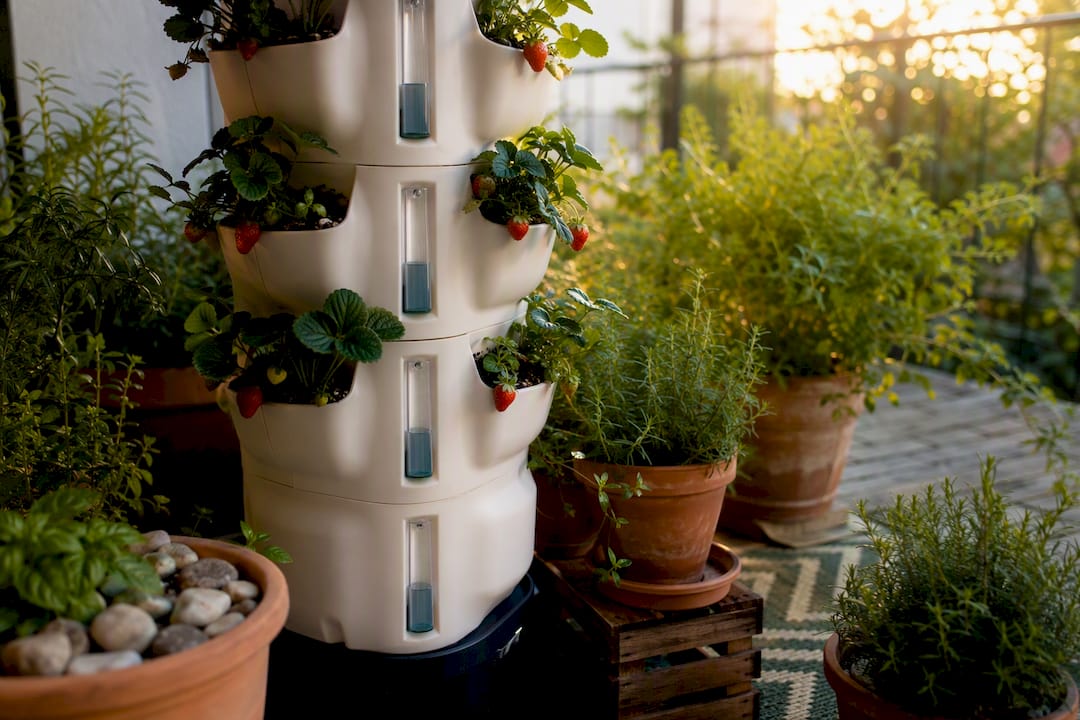
Pro Tip: If you’re using a stacked or tiered planter, plan to hand-water the top pocket every few days regardless of what the reservoir shows. Treat the reservoir as your baseline system, not your only one.
For a single large plant grouping, a multi-cell self-watering garden box gives you the depth and reservoir capacity strawberries need without the guesswork of retrofitting a standard pot.
Best strawberry varieties for containers and why it matters
Not every strawberry variety fits a container the same way, and picking the wrong type will cost you a harvest window. Three fruiting types dominate the market: June-bearing varieties produce one large flush in early summer, everbearing types give two or three smaller flushes across the season, and day-neutral varieties keep producing fruit continuously as long as temperatures stay moderate.
For containers, day-neutral is almost always the better call. Extension horticulturists specifically recommend Albion, Seascape, and Tristar because they stay compact, produce fruit over a longer stretch, and don’t demand the space that June-bearing runners eventually claim.
Variety choice shapes more than flavor:
- Day-neutral plants send out fewer runners, so you spend less time snipping them to protect airflow and moisture balance.
- Compact growth habits mean you can plant slightly closer without choking root competition in the reservoir zone.
- Continuous fruiting means you’re harvesting berries across months instead of one intense week, which suits a low-maintenance setup far better than a single big flush you might miss while traveling.
If you already have June-bearing plants on hand, they’ll still grow in a self-watering container. Just expect one harvest window and more aggressive runner management.
Planting and spacing: a step-by-step checklist for self-watering planters
Getting the planting step right sets up everything that follows. Follow this order and you’ll avoid the two mistakes that sink most container strawberry attempts: burying the crown and overcrowding the pot.
- Fill the container with a light, well-draining potting mix. Skip garden soil entirely. It compacts inside containers and blocks the wicking action a reservoir depends on. A quality potting mix with added perlite or a scoop of compost works far better.
- Set the crown at soil level, never below it. The crown is the thick, woody base where the leaves meet the roots. Bury it and you invite rot; leave it too high and roots dry out.
- Space plants 6 to 8 inches apart. A 12-inch pot comfortably holds 3 to 4 plants at this spacing, giving each one enough root room to tap into the reservoir without competing.
- Water from the top once, right after planting. This settles the mix around the roots and, more importantly, helps establish contact between the soil and the wicking system below. Skipping this step is one of the most common reasons new reservoir planters underperform in the first few weeks, because dry mix doesn’t wick water efficiently until it’s been saturated once.
- Trim early runners unless you’re intentionally letting a plant fill in bare spots in the pot.
Reservoir refill cadence typically runs every 3 to 7 days, depending on heat, humidity, and container size. Hot, dry stretches push you toward the shorter end of that range.
Watering, feeding, and seasonal maintenance with reservoir planters
Once plants are established, maintenance becomes a matter of rhythm rather than daily attention. Check the reservoir every few days during the growing season, refilling roughly every 3 to 7 days depending on weather. A planter sitting in full afternoon sun during a heat wave might need topping off every couple of days, while a shaded balcony setup can stretch closer to a week between refills.
Feeding follows its own schedule, separate from watering:
- Apply a balanced water-soluble fertilizer every 2 to 3 weeks, or follow the product label if it differs.
- Switch to a higher-potassium feed once flowers set fruit, since potassium drives berry size and sweetness during that stage.
- Add a thin layer of mulch, like straw or shredded bark, around the base of each plant to keep developing berries off damp soil and reduce splash-related rot.
Pro Tip: Every month or so, water from the top until you see runoff from the drainage holes. This flushes accumulated fertilizer salts out of the mix, something a reservoir alone can’t do since it only moves water upward.
Relying entirely on the reservoir for months at a stretch, without ever watering from above, is one of the few habits that can work against you. Salt buildup happens slowly, so this flush doesn’t need to happen often, just often enough to keep the mix from turning stale.
Common problems and troubleshooting for strawberries in self-watering containers
Most container strawberry problems trace back to one of four causes, and each has a fix that works specifically with reservoir systems.
Foliar disease shows up as spotted or moldy leaves, usually from poor airflow or moisture sitting on foliage. Space containers a few inches apart, remove any yellowing or spotted leaves promptly, and resist the urge to mist the plant, since self-watering systems already keep the crown drier than overhead watering does.
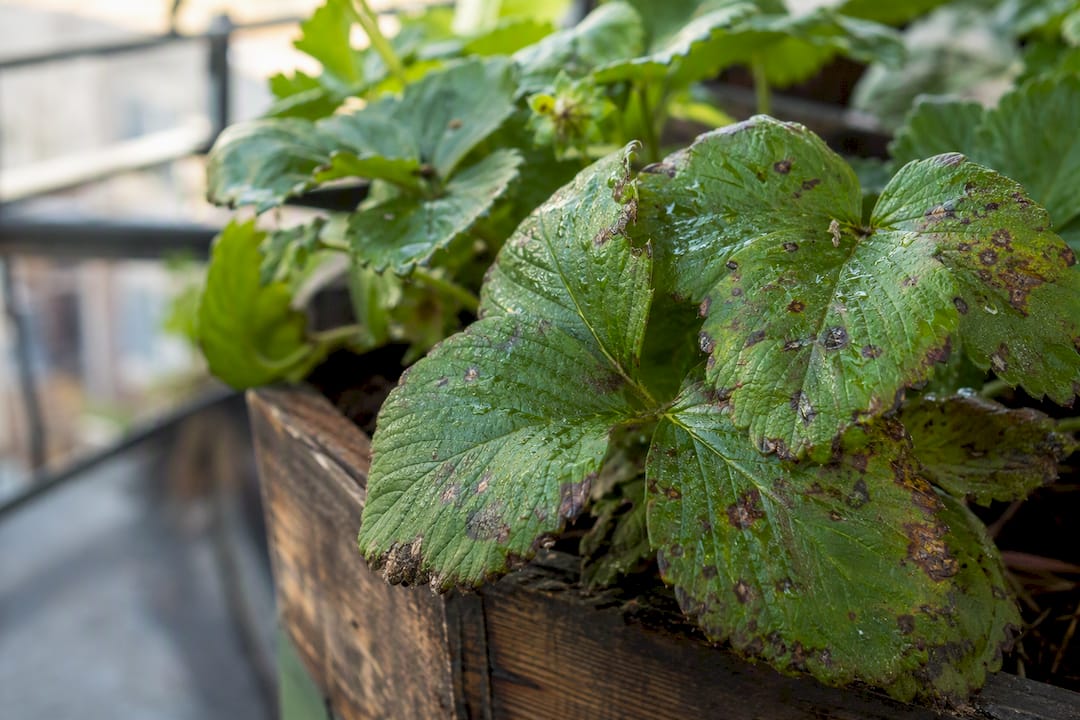
Crown or root rot usually means the crown got buried too deep or the reservoir isn’t draining excess water. Check that your planter’s overflow drain is clear, and confirm the crown sits right at the soil surface, not below it.
Pests are manageable in a container setting without much intervention:
- Hand-pick larger pests like Japanese beetles as soon as you spot them.
- Treat aphid clusters with insecticidal soap rather than a broad pesticide.
- Set out shallow beer traps at soil level to intercept slugs before they reach ripening fruit.
Uneven moisture in stacked planters is a design quirk more than a failure. Add a wicking material, such as a strip of felt or capillary matting, between tiers, and top-water upper pockets every few days as a backup rather than depending on the reservoir alone to reach them.
Pro Tip: Catching a problem in week one is always easier than fixing it in week four. Do a 30-second visual check of leaves and crowns every time you top off the reservoir.
Overwintering or replacing container-grown strawberries
Here’s a piece of advice that surprises a lot of new growers: most extension programs recommend treating container strawberries as annuals rather than fighting to overwinter them. Shallow root systems in a pot freeze far more easily than roots in the ground, and many container growers get better results replacing plants each spring instead of nursing survivors through winter.
If you want to try overwintering anyway, you have two realistic options:
- Bury the whole container in the ground up to its rim in a sheltered spot, then mulch heavily with straw to insulate the crown against hard freezes.
- Move the planter to an unheated garage or shed and insulate the sides, watering sparingly through winter dormancy.
Both methods carry real risk of crown loss, especially in regions with hard freezes.
For most home gardeners, the simpler path wins: refresh the potting mix each spring, plant new day-neutral crowns in late spring after frost risk passes, and let last year’s container strawberries go. You’ll get more consistent yields for less effort.
Farmdaddy perspective: what we’ve learned from customers and products
Farmdaddy’s patented design lets each connected container manage its own water supply independently, which turns out to matter more for strawberries than for almost anything else we sell. A tomato plant can tolerate a few uneven days. Strawberries, with roots barely a few inches deep, show stress within a day or two of moisture swings, so independent reservoir control per container isn’t a luxury feature. It’s the difference between a planter that merely holds soil and one that actually protects fruit quality.
Customers who travel or simply forget to water report the same thing: refilling every few days instead of watering daily is the change that finally made container strawberries reliable for them. That’s the pattern we hear most often in reviews. The setup stays low-maintenance not because strawberries got easier to grow, but because the watering variable finally got solved.
— Steven
How Farmdaddy planters meet the key criteria for container strawberries
Every specification covered above points to the same shopping list: a visible reservoir fill indicator, a working overflow drain, and enough depth to support a real root system. Farmdaddy’s self-watering container systems build all three in from the start, so you’re not retrofitting a standard pot and hoping the wicking works.
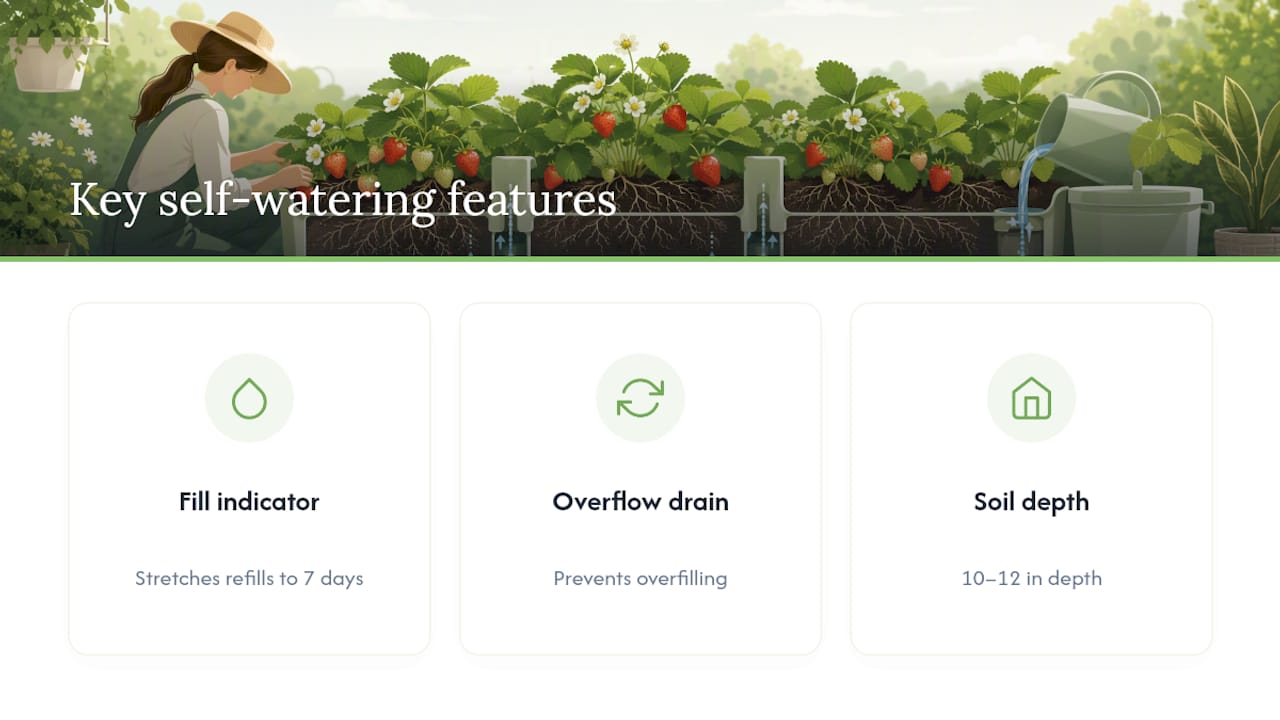
For a single grouping of 3 to 4 day-neutral plants, the self-watering garden box gives you the 10 to 12 inch depth extension guides recommend, plus the reservoir capacity to stretch refills toward the 7-day mark instead of the 3-day mark. If you’re planting strawberries alongside herbs or a second crop, the 2-Planter Self Watering Garden System lets each container hold its own water level, so a thirstier neighbor never steals moisture from your strawberries.
Setup takes minutes: fill the reservoir, add your potting mix, set your crowns at soil level, and top-water once to prime the wicking connection. After that, check the fill indicator every few days and adjust based on the weather. Browse the full lineup and pick the size that matches your plant count on the Farmdaddy container gardening page.
Sources
The recommendations above draw on established horticultural guidance rather than guesswork. Wisconsin Horticulture’s extension guide supports the sunlight, planting depth, and disease-risk guidance throughout this piece. The Old Farmer’s Almanac backs the specific container dimensions and spacing recommendations. Iowa State Extension informed the fertilization schedule and the annual-versus-overwintering guidance. And Plant Heroes provided practical confirmation that self-watering containers suit the busy, low-maintenance gardening style most container growers are after.
- Growing Strawberries in Containers — Wisconsin Horticulture
- Growing strawberries in containers — The Old Farmer’s Almanac
- How to grow strawberries in containers — Iowa State Extension

