
BLOG
Vacation Plant Watering Made Easy for Home Gardeners

For most home gardeners heading out on vacation, the most reliable approach is a self-watering planter with a built-in reservoir, paired with a few simple environmental adjustments and one neighbor check-in. That combination, recommended by Gardening Solutions (IFAS) and tested by Wirecutter, handles the vast majority of trips without drama. Farmdaddy’s self-watering containers are designed exactly for this scenario, delivering consistent moisture to each plant independently so you can actually enjoy your time away.
Quick-start checklist before you leave:
- Deep-water all plants until you see runoff, wait 30 minutes, then water once more
- Move pots to indirect light or a shaded, wind-protected spot
- Top off any reservoir to its maximum fill line
- Run a 72-hour test of any automated system before departure day
- Ask one neighbor to check for drooping leaves or standing water in saucers
Table of Contents
- How to match your vacation watering method to your plants
- What you need to do before you leave
- DIY options that actually work (and when they don’t)
- How automated systems work and how long they last
- How to test your setup and what to tell your check-in person
- When you still need a human plant-sitter
- Why Farmdaddy’s design fits vacation watering so well
- Key Takeaways
- What experienced gardeners actually learn about vacation watering
- Farmdaddy makes vacation plant care simple
- Useful sources
How to match your vacation watering method to your plants
The single biggest reason vacation watering fails is a mismatch between plant water needs and the method chosen. Wirecutter puts it plainly: hardy succulents need little prep, while ferns and peace lilies need consistent moisture and usually require automation.
Match your plants to a method:
- Succulents and cacti: Deep-water once before leaving. Most can go 2 weeks or more without attention.
- Moderate houseplants (pothos, snake plant, philodendron): A wick system or self-watering planter covers 1–2 weeks comfortably.
- Moisture-loving tropicals (ferns, peace lilies, monstera): Self-watering planters or drip timers are the minimum. A human check-in is wise for trips over 10–14 days.
Trip length matters just as much as plant type. A weekend away? Deep-water and move pots to shade. One to two weeks? A wick or self-watering planter handles it. Two weeks or more? You need a drip timer connected to a water supply, plus a sitter for high-demand plants. In hot, dry climates, shorten those timelines by 1–2 days and lean toward active drip systems rather than passive wicking.
Pro Tip: Match the complexity of your solution to the complexity of your plant collection. If you have three succulents and a pothos, a wick setup is plenty. If you have 20 pots with mixed tropical and vegetable plants, a self-watering system with independent containers is worth every penny.
What you need to do before you leave
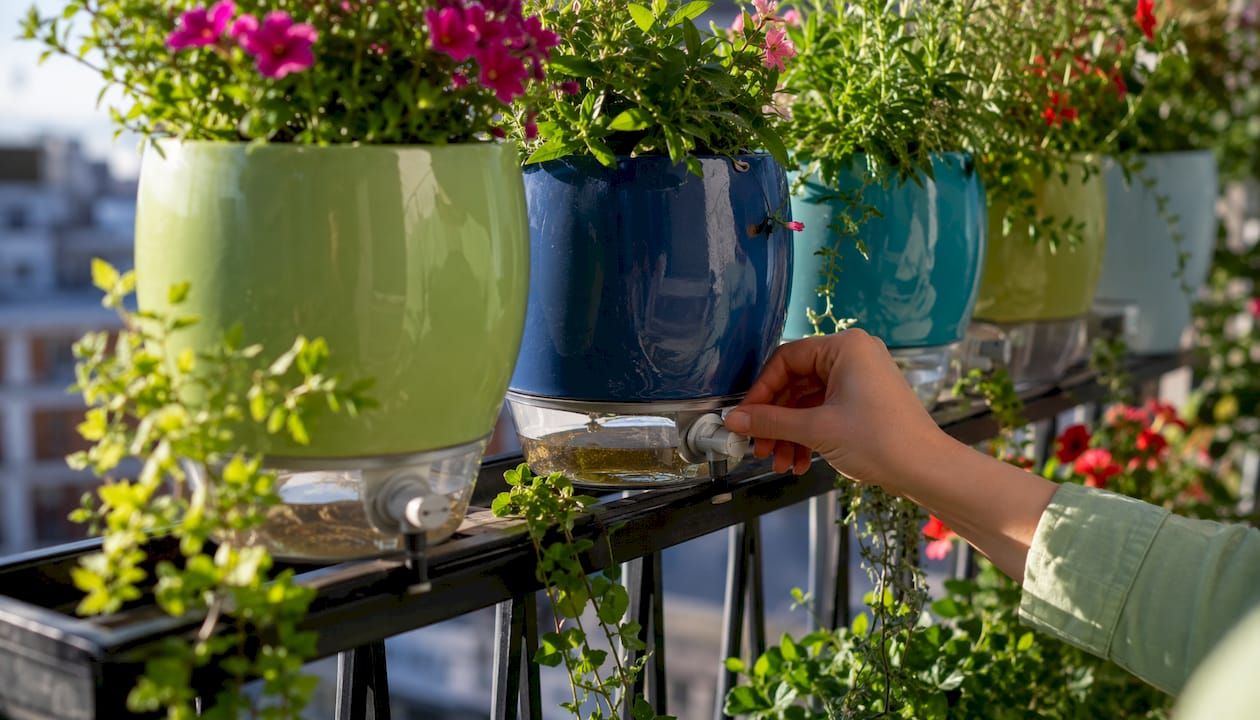
Preparation is where most vacation plant care succeeds or fails. Start at least three days before departure, not the morning you leave.
- Run a 72-hour system test. Set up any wick, drip, or self-watering system and leave it running for three full days. Check soil moisture on day one and day three. Fix any clogging or uneven flow before you pack.
- Deep-water thoroughly. Water until you see runoff from the drainage holes, wait 30 minutes, then water again. This saturates the root zone without leaving pots sitting in puddles.
- Move pots to indirect light. Outdoor containers lose moisture far faster than in-ground plants. Moving them to a shaded, wind-protected location reduces required watering frequency dramatically.
- Group plants together. Clustering pots creates a humid microclimate that slows evaporation for every plant in the group.
- Remove dead foliage and skip fertilizer. Trim yellowing leaves to reduce water demand. Avoid fertilizing right before a trip since fertilizer salts can concentrate as soil dries and cause root burn when plants can’t be monitored.
- Add mulch to outdoor pots. An inch or two of mulch over the soil surface slows evaporation noticeably.
- Label instructions for any sitter. Clear, simple notes prevent well-meaning over-watering.
Pro Tip: For outdoor containers, use plastic or foam pots rather than terra cotta before a trip. Plastic retains moisture significantly better, buying you extra days between waterings.
DIY options that actually work (and when they don’t)
Inexpensive DIY methods are genuinely useful for short trips, but they have real limits worth knowing before you rely on them.
- Wick from a reservoir: A cotton rope running from a water container into the soil uses capillary action to deliver moisture as the soil dries. A properly sized and raised reservoir can keep multiple small-to-medium pots moist for 1–2 weeks. The failure mode is clogging, so test the wick for 72 hours before leaving.
- Inverted bottle drip: A plastic bottle with small holes in the cap, placed upside down in the soil, drips slowly as the soil dries. It works for 3–7 days in moderate conditions. Uneven flow and rapid drainage in sandy soil are the common problems.
- Pebble tray or bathtub soak: Sitting pots on wet towels or in 1–2 inches of water lets roots wick moisture upward. This buys about a week for most houseplants. The risk is root rot if water levels stay too high or a heavy rain floods an outdoor setup.
- Terracotta spikes: These attach to a water bottle and regulate flow into the soil. They work well for individual medium-to-large pots for 5–7 days.
DIY methods work best as a tested, short-term solution for small collections of moderate plants on trips under 7 days. For longer absences or moisture-loving tropicals, passive DIY methods alone are not reliable enough. Combine them with environmental prep, or step up to an automated system.
When a DIY method shows uneven flow during your test run, use a larger reservoir, move the pot to a cooler spot to slow evaporation, or switch to a self-watering planter before departure.
How automated systems work and how long they last
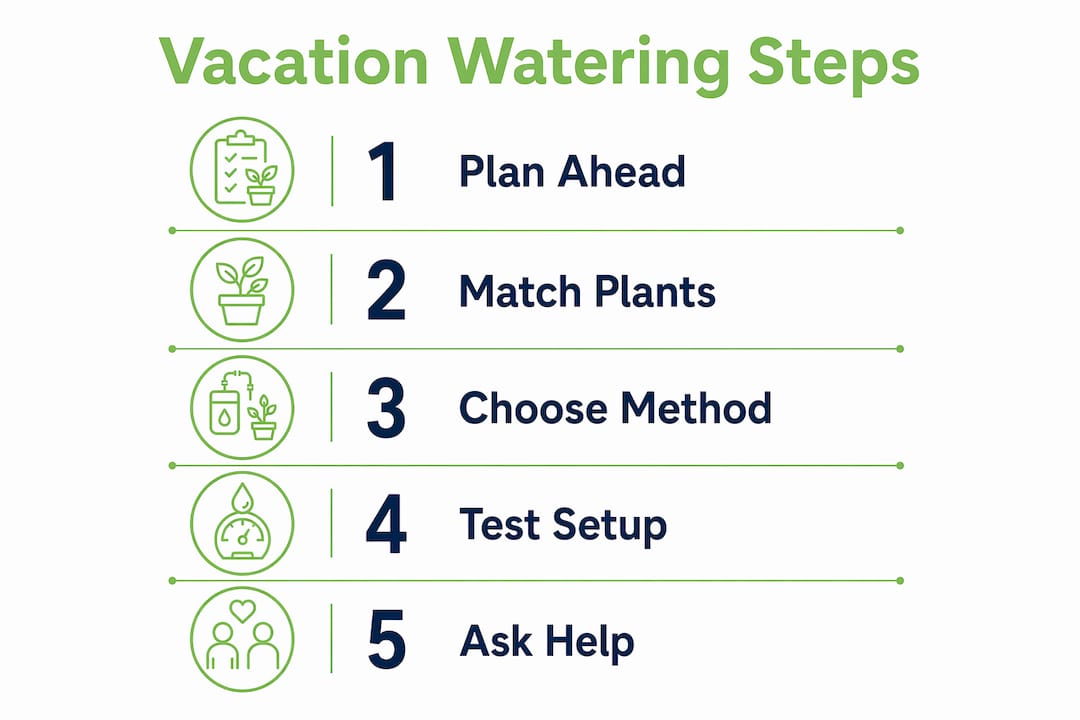
Automated systems fall into three categories, each with different mechanics and coverage windows.
Self-watering planters use a built-in reservoir below or beside the root zone. The plant wicks moisture upward through capillary action as the soil dries. No timer, no power required.
Drip/timer systems use a pressurized water source, tubing, and emitters controlled by a programmable timer. They can run indefinitely as long as power and water supply are available, making them the strongest option for trips over two weeks.
Smart controllers add soil moisture sensors that trigger watering only when the soil actually needs it, reducing both overwatering and underwatering risk.
| System type | Typical coverage | Best for |
|---|---|---|
| Self-watering planter | 1–3 weeks | Indoor and outdoor containers, 1–3 week trips |
| Drip timer (connected supply) | Indefinite | Outdoor gardens, extended absences |
| Wick from reservoir | 1–2 weeks | Small-to-medium indoor pots, short trips |
| Inverted bottle/spike | 3–7 days | Individual pots, weekend to 5-day trips |
Self-watering containers commonly extend coverage to 1–3 weeks depending on plant type and reservoir size. For drip/timer systems, schedule early-morning cycles to minimize evaporation. If your outdoor setup is in a region with watering restrictions, verify local rules before programming a timer.
Key insight: The best vacation strategy combines environmental adjustments with automation. Shade and grouping lower baseline water demand, so your reservoir or timer system lasts longer and has less work to do.
How to test your setup and what to tell your check-in person
Test any automatic system at least 48–72 hours before departure to catch clogging, uneven flow, or unexpected behavior under real conditions including temperature swings and wind.
- Fill reservoirs and set timers to your planned schedule.
- Leave the house for a full day on day one, then check soil moisture and system function when you return.
- On day three, inspect again: look for dry topsoil, standing water in saucers, and any leaking connectors.
- Adjust flow rates or reservoir fill levels based on what you find.
What to tell your check-in person:
- Check for drooping foliage (underwatering) or yellowing lower leaves and soggy soil (overwatering)
- Look for standing water in saucers and empty it if present
- Inspect connectors and emitters for leaks or clogs
- Top off the reservoir if it’s below the halfway mark
Pro Tip: Leave a moisture meter and a few pre-filled, labeled water bottles near the plants. A non-gardener can use a moisture meter reading to decide whether to add water, removing all guesswork.
When you still need a human plant-sitter
Automation handles most trips well, but some situations genuinely call for a person.
- Trip length over 10–14 days with high-demand plants like ferns, tomatoes, or tropical houseplants
- Mixed collections where some plants need weekly watering and others need daily attention
- Recently repotted plants whose root systems haven’t settled into a new reservoir rhythm
- Any sign of pests before you leave — spider mites and fungus gnats spread fast without monitoring
For absences over four weeks, practitioners recommend either moving plants to a sitter’s home or arranging weekly in-person checks to manage pests and unexpected stress.
Sitter instructions to leave:
- Water each pot until water drains from the bottom, then stop.
- Check soil moisture before every watering — if the top inch is still damp, skip that pot.
- Top off self-watering reservoirs when they drop below the halfway mark.
- Do not fertilize anything.
- Call or text if a plant looks dramatically worse than the photo you’ve left.
Why Farmdaddy’s design fits vacation watering so well
Farmdaddy’s self-watering planters are built around a core feature that makes vacation coverage genuinely reliable: each connected container operates independently, so a thirsty tomato plant doesn’t pull water from a neighboring herb that needs far less. That independent delivery means you can grow a diverse mix of plants without babysitting moisture levels across the whole system.
The built-in reservoir delivers water through regulated wicking, which keeps moisture consistent without flooding the root zone. Farmdaddy’s connector hoses and compatible accessories make it straightforward to link multiple containers and fill them from a single source before you leave.
- Reservoir capacity sized for multi-week coverage on most vegetable and herb plants
- Independent container operation so each plant gets what it needs, not what its neighbor demands
- Compatible with timers for extended outdoor setups where a connected water supply is available
- Easy setup that works for first-time gardeners and experienced growers alike
Pro Tip: Before any trip, fill Farmdaddy reservoirs to maximum, run the system for 72 hours using the provided connector hoses, and confirm each container is wicking correctly. That single test run catches the vast majority of setup issues before you leave.
Farmdaddy’s patented design removes the guesswork from vacation plant care. Each container manages its own moisture, so your plants stay healthy whether you’re gone for a long weekend or two full weeks.
Explore Farmdaddy’s self-watering container gardening tips to see real customer setups and find the right system for your garden.
Key Takeaways
Automated self-watering planters combined with shade, grouping, and a single human check-in give most home gardeners the most reliable vacation plant coverage.
| Point | Details |
|---|---|
| Match method to plant demand | Succulents need minimal prep; tropicals and vegetables need a self-watering planter or drip timer. |
| Test 72 hours before leaving | Run any system for three full days before departure to catch clogs and flow issues. |
| Prep the environment too | Moving pots to shade and grouping them together lowers water demand and extends reservoir life. |
| Get a sitter for long trips | Trips over 10–14 days with high-demand plants still need at least one human check-in. |
| Farmdaddy for reliable coverage | Farmdaddy’s independent-container design delivers consistent moisture to each plant for 1–3 weeks without daily attention. |
What experienced gardeners actually learn about vacation watering
The lesson most gardeners learn the hard way is that overwatering before a trip causes more damage than underwatering. Plants tolerate slight dryness far better than sustained saturation. Root rot sets in quietly while you’re away, and by the time you return, the damage is done.
The second lesson is that testing matters more than the method itself. A wick system that works perfectly in a test run will work on your trip. One that hasn’t been tested will fail at the worst possible moment. Spending 72 hours simulating your absence before you leave is the single highest-value step in any vacation plant care plan.
Farmdaddy makes vacation plant care simple
Leaving your garden behind shouldn’t mean coming home to stressed or struggling plants. Farmdaddy’s self-watering planters give you a built-in reservoir system that delivers the right amount of water to each container independently, covering most trips of 1–3 weeks without daily intervention.
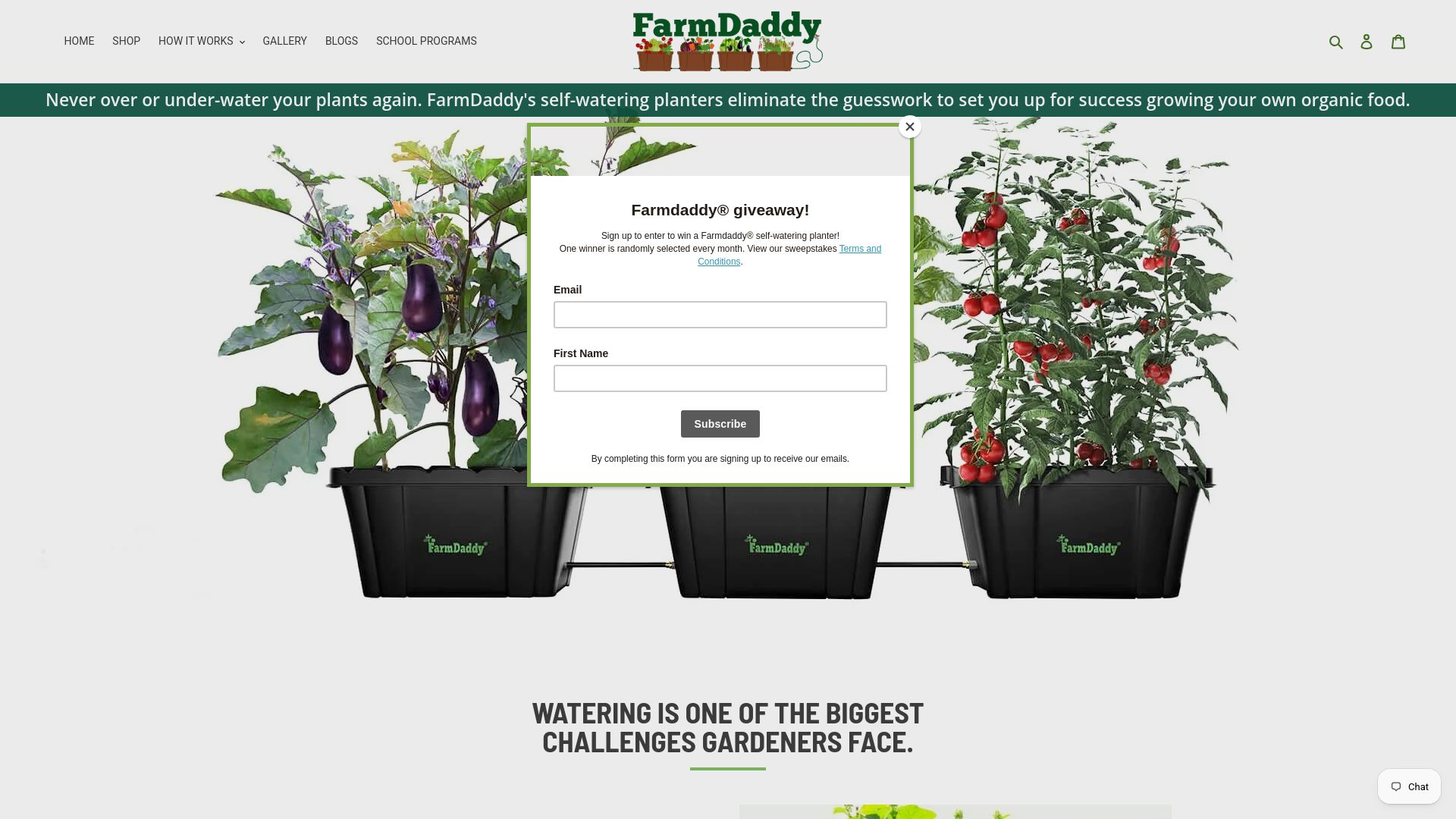
The Farmdaddy 2-Planter Self-Watering Garden System is a compact, travel-ready setup that connects easily and runs without power. For larger gardens or vegetable growers, the Farmdaddy Garden Box offers the reservoir capacity and independent-container design that high-demand plants need. Fill the reservoirs, run your 72-hour test, and leave with confidence. Visit farmdaddy.com to find the right system for your garden and your next trip.
Useful sources
These are the primary references used to build this guide.
- Vacation Plant Care — Gardening Solutions (IFAS): University of Florida extension guidance on outdoor container prep, shading, and when human visits are necessary.
- How to Water Plants While on Vacation — Wirecutter (NYTimes): Practical testing protocols, the 72-hour pre-trip test recommendation, and method-to-plant matching guidance.
- How to Water Plants While on Vacation — Garden Truth: Duration estimates for self-watering containers and drip systems, plus climate adjustment advice for hot and dry regions.
- How to Water Houseplants in Summer and While on Vacation — Houseplant101: Deep-watering protocol and the overwatering caution that applies to pre-trip preparation.
- How to Keep Plants Alive While on Vacation — PlantSolve: Wick system mechanics, reservoir sizing, and capillary action guidance for multi-pot setups.
These sources represent tested, practitioner-backed guidance rather than generic gardening advice. Cross-referencing them gives you a reliable picture of what actually works across different plant types, trip lengths, and climates.

