
BLOG
Best Self-Watering Planters: Top Picks for Low-Maintenance Gardeners

For low-maintenance home gardeners, the FarmDaddy 2-Planter Self Watering Garden System is the best overall pick for growing vegetables and herbs, combining a reliable reservoir, modular sizing, and patented independent container operation that lets each plant drink at its own pace.
Here are the top picks at a glance:
- Best overall for edibles and herbs: Farmdaddy 2-Planter Self Watering Garden System — modular, expandable, and designed for vegetables from the ground up
- Best for large houseplants: Lechuza Classico / Cube / Cube Rectangle — premium integrated reservoir with a polished finish
- Best budget pick: Ikea PS Fejö Self-Watering Pot or Room Essentials Self-Watering Indoor/Outdoor Planter — simple, affordable, and widely available
- Best for hanging plants: Melphoe Self-Watering Hanging Planters — visible reservoir tray makes monitoring easy
- Best for vegetables with multi-week autonomy: Quadgrow / Canopy system-style planters — feeder-mat technology extends refill intervals significantly
- Best for small indoor plants: Gardenix Decor Self-Watering Planters — a consistent editorial favorite for beginners
You can buy Farmdaddy direct at farmdaddy.com. Lechuza, Elho, and Gardenix Decor are widely available on Amazon. Room Essentials ships from Target, and Ikea PS Fejö is sold at IKEA stores and online.
Table of Contents
- How do the best self-watering planters compare?
- Short reviews of every recommended pick
- How do self-watering planters actually work?
- How do you choose the right self-watering planter?
- Which plants thrive in self-watering planters (and which ones don’t)?
- How these recommendations were chosen
- What does each type of self-watering planter cost?
- Are self-watering planters good for the environment?
- Indoor vs. outdoor: which self-watering planters work where?
- Key Takeaways
- What self-watering planters actually taught me
- Farmdaddy makes growing vegetables and herbs genuinely easy
- Useful sources
How do the best self-watering planters compare?
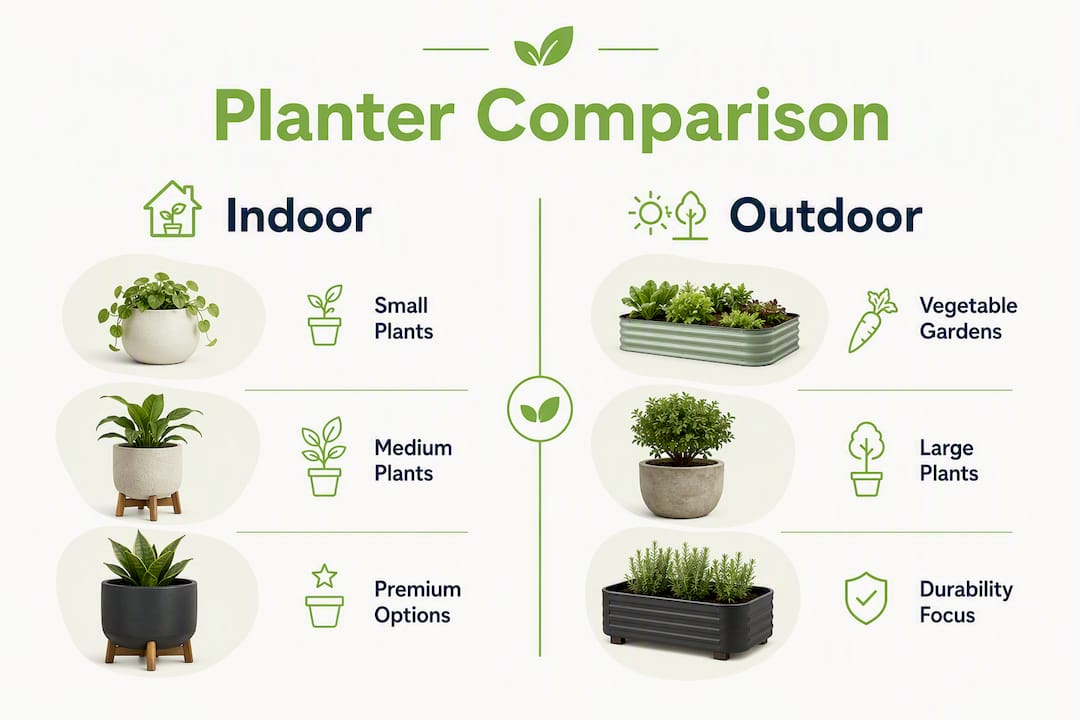
The table below covers the shortlisted options on the dimensions that matter most when you are choosing a self-watering planter.
| Product | Best For | Price / Typical Range | Reservoir & Water Indicator | Material & Durability | Ease of Setup | Plant Types |
|---|---|---|---|---|---|---|
| Farmdaddy 2-Planter System | Modular edible & herb gardens | $$ | Large reservoir; independent per-container operation | Weather-resistant; outdoor-grade | Very easy; modular connectors | Vegetables, herbs, fruits |
| Lechuza Classico / Cube / Cube Rectangle | Large statement houseplants & balconies | $$$ | Integrated reservoir; water-level indicator included | High-grade resin; very durable | Easy; all-in-one design | Large tropicals, balcony plants |
| Elho Self-Watering Insert | Converting existing pots | $ | Insert reservoir; basic indicator | Recycled plastic; lightweight | Very easy; no repotting | Most houseplants |
| Ikea PS Fejö Self-Watering Pot | Budget indoor gardeners | $ | Basic reservoir; no indicator | Lightweight plastic | Very easy | Small houseplants |
| T4U String Style / T4U Lechuza Style | Small pots on a tight budget | $ | Wicking string; no indicator | Lightweight plastic | Easy | Small houseplants |
| Melphoe Self-Watering Hanging Planters | Hanging plants | $ | Visible tray reservoir | Plastic; lightweight | Easy | Trailing plants, herbs |
| Sunnychicc African Violet Ceramic Planters | Small flowering houseplants | $$ | Integrated ceramic reservoir | Ceramic; decorative | Easy | African violets, small bloomers |
| Uncommon Goods Planter & Propagation System | Plant propagators & gift buyers | $$ | Reservoir with propagation chamber | Glass/ceramic; stylish | Moderate | Cuttings, small tropicals |
| Eva Solo Self-Watering Orchid Pot | Orchid growers | $$$ | Orchid-specific reservoir layout | High-quality materials | Easy | Orchids |
| Room Essentials Self-Watering Planter | Budget shoppers, multiple sizes | $ | Basic reservoir | Lightweight plastic | Very easy | Herbs, small vegetables |
| Gardenix Decor Self-Watering Planters | Small indoor plants, beginners | $ | Reservoir with indicator | Plastic; lightweight | Very easy | Small houseplants, herbs |
| Greenery Unlimited Franklin Self-Watering Planter | Outdoor vegetables & patio plants | $$$ | Large reservoir | Outdoor-grade materials | Moderate | Medium-large vegetables |
| Quadgrow / Canopy system-style planters | Vegetable growers needing multi-week autonomy | $$$ | Feeder-mat system; large reservoir | Durable outdoor-grade | Moderate | Tomatoes, peppers, edibles |
| OurWarm Windowsill Herb Planters | Windowsill herb gardens | $ | Basic reservoir | Lightweight plastic | Very easy | Herbs |
| Yarlung Self-Watering Planters | Small indoor plants | $ | Basic reservoir | Plastic | Very easy | Small houseplants |
| Ynnico Self-Watering Planters | Indoor beginners | $ | Basic reservoir | Plastic | Very easy | Small houseplants |
| Santino Self-Watering Planter | Indoor/outdoor general use | $$ | Reservoir with indicator | Durable plastic | Easy | Herbs, flowers |
| TCBWFY Self-Watering Pots | Small indoor plants | $ | Basic reservoir | Plastic | Very easy | Small houseplants |
| Pikkii Self-Care Planter | Gift buyers & novelty seekers | $$ | Small reservoir | Ceramic/novelty materials | Easy | Small succulents, herbs |
| Leizisure (discontinued) / The Tall Thin Random One | Legacy research only | — | — | — | — | — |
Quick guidance: Beginners growing vegetables or herbs will get the most from Farmdaddy’s modular system. For small indoor plants on a budget, Gardenix Decor or the Elho Self-Watering Insert are the easiest entry points. If price is the only factor, Room Essentials or Ikea PS Fejö get the job done for casual indoor use.
Short reviews of every recommended pick
Farmdaddy 2-Planter Self Watering Garden System
This is the system Farmdaddy built specifically for edible gardening. Each container operates independently, so a thirsty tomato plant does not drain water from the herbs growing beside it. The modular design means you can start with two planters and expand as your garden grows. It is available directly from farmdaddy.com, with U.S. shipping and direct customer support. One practical note: this system is sized for outdoor or patio use, so it is not the right fit for a small apartment windowsill.
Lechuza Classico, Cube, and Cube Rectangle
Lechuza planters are the premium choice for large indoor plants and balcony displays. The integrated reservoir and built-in water-level indicator are genuinely well-engineered, and the high-grade resin holds up outdoors through multiple seasons. The Classico suits round statement plants, the Cube works for modern interiors, and the Cube Rectangle fits long windowsills or balcony railings. The price is higher than most alternatives, but the build quality justifies it for plants you care about. Available on Amazon and at specialty garden retailers.
Elho Self-Watering Insert
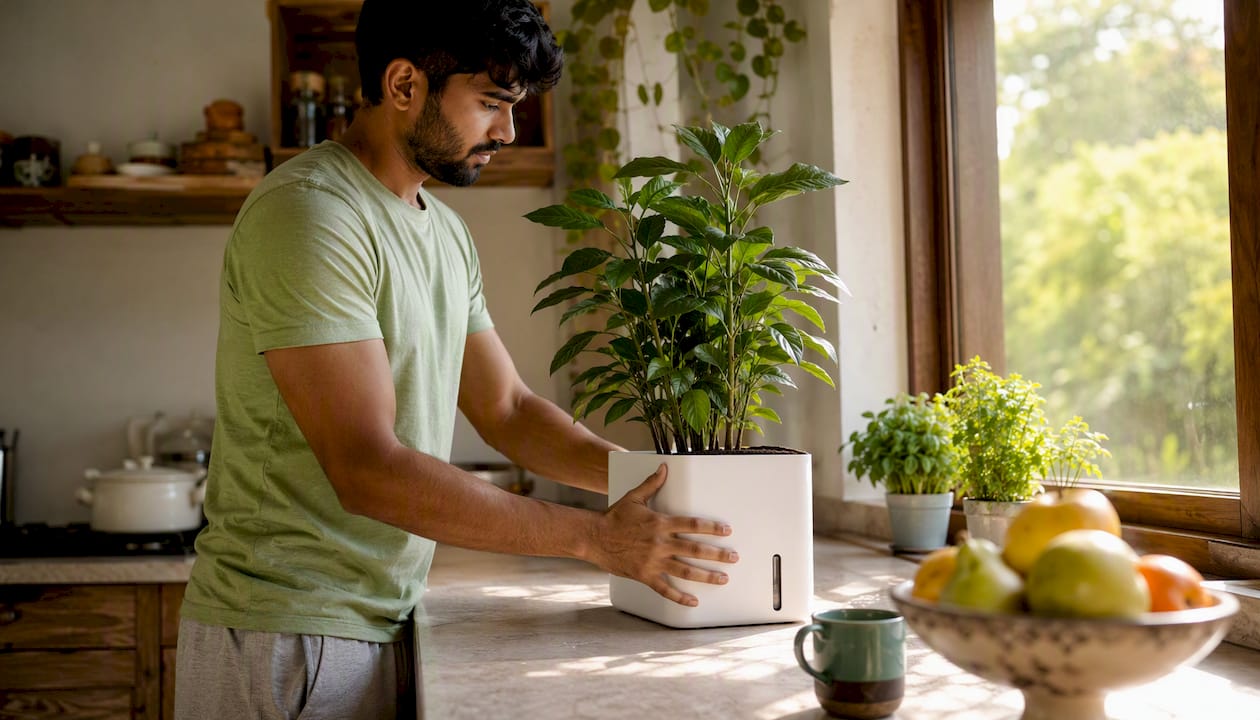
The Elho Self-Watering Insert is a clever solution if you already own pots you love. Drop the insert into your existing container, fill the reservoir, and the plant wicks moisture upward as needed. No repotting, no new soil, no drama. Elho makes its inserts from recycled plastic, which is a genuine plus for sustainability-minded gardeners. The main limitation is that the insert must fit your existing pot’s interior diameter, so measure before you buy.
Ikea PS Fejö Self-Watering Pot
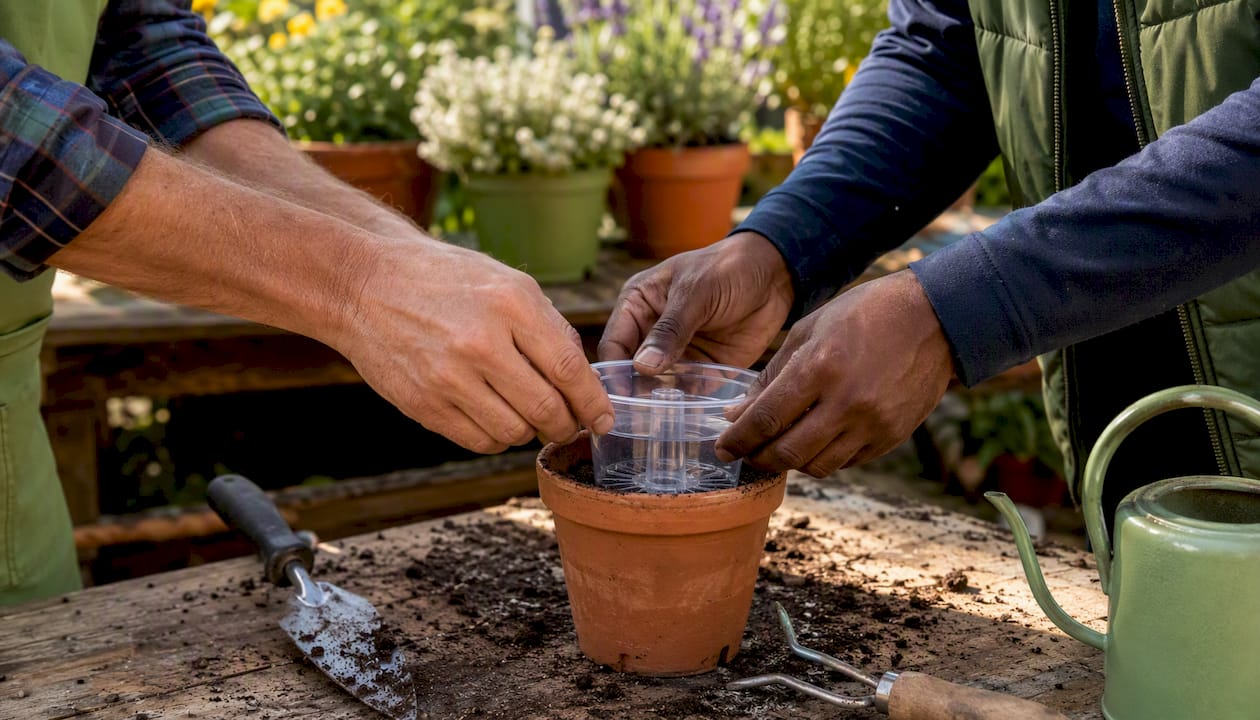
Simple, cheap, and widely available at IKEA stores across the U.S. The Fejö has a basic bottom reservoir that keeps soil moist between waterings. There is no water-level indicator, so you will need to check it manually. For casual indoor plant owners who want to spend under $15, it is hard to argue with.
T4U String Style and T4U Lechuza Style
Both T4U options use a wicking string or insert to draw water from a small reservoir into the soil. They work well for small houseplants like pothos, peace lilies, or small ferns. The T4U Lechuza Style mimics the look of premium planters at a fraction of the cost. Neither has a water indicator, and the reservoirs are small, so you will refill more often than with larger systems.
Melphoe Self-Watering Hanging Planters
Hanging planters are notoriously hard to water without dripping on the floor or climbing a ladder. Melphoe solves this with a visible tray reservoir at the base of each hanging pot, so you can see at a glance when it needs a refill. The set works well for trailing plants like pothos, string of pearls, or small herbs. Lightweight plastic construction keeps the hanging weight manageable.
Sunnychicc African Violet Self-Watering Ceramic Planters
African violets are notoriously sensitive to water on their leaves, making bottom-watering systems ideal for them. The Sunnychicc pots use a ceramic outer pot with an integrated reservoir that delivers moisture from below. The decorative finish makes these genuinely giftable. They are sized specifically for African violets and similarly small flowering plants, so do not expect them to accommodate anything with a larger root system.
Uncommon Goods Self-Watering Planter and Propagation System
This set doubles as a propagation station, with a reservoir that supports both rooted plants and cuttings. The design is noticeably more attractive than most plastic self-watering pots, making it a strong gift option. It suits plant enthusiasts who like to propagate and want something that looks good on a shelf. Setup is slightly more involved than a basic pot, but the instructions are clear.
Eva Solo Self-Watering Orchid Pot
Orchids need airflow around their roots and periodic dry periods, which makes most self-watering systems a poor fit. The Eva Solo Orchid Pot is designed with those requirements in mind, using a reservoir layout that delivers moisture without saturating the growing medium. It is a specialty product at a premium price, but for dedicated orchid growers, the tailored design is worth it.
Room Essentials Self-Watering Indoor/Outdoor Planter
Target’s Room Essentials line covers the basics at the lowest possible price. Multiple sizes are available, the plastic is lightweight, and the reservoir is functional. There is no indicator, and the material is not built for years of outdoor exposure, but for a first self-watering pot or a low-stakes indoor setup, it delivers what it promises.
Gardenix Decor Self-Watering Planters
Gardenix Decor planters appear consistently in editorial roundups for small indoor plants. They include a water-level indicator, which is genuinely useful for beginners who are still learning how quickly their plants drink. The plug-and-play setup requires no special soil or tools. These are a reliable starting point for anyone new to self-watering containers.
Greenery Unlimited Franklin Self-Watering Planter
The Franklin is built for outdoor use with medium to large plantings. It has a larger reservoir than most consumer-grade options and uses outdoor-grade construction. It suits patio vegetables and larger ornamentals that need consistent moisture through warm months. Availability is more limited than mass-market options; check Greenery Unlimited’s website directly.
Quadgrow and Canopy system-style planters
These are the serious tools for vegetable production. The Quadgrow system uses feeder mats and a large shared reservoir that can keep plants watered for up to 14 days under the right conditions. The Canopy vertical cedar planter from Eartheasy uses true sub-irrigation, and the brand claims it can reduce water consumption by up to 80% compared to conventional watering. Both are more expensive and require more setup than a basic pot, but for tomatoes, peppers, or cucumbers through a hot summer, the autonomy is worth it.
OurWarm Windowsill Herb Planters
A straightforward set for growing herbs on a kitchen windowsill. The basic reservoir keeps basil, parsley, and mint consistently moist without daily attention. No indicator, no frills, but the price is low and the setup takes about two minutes.
Yarlung, Ynnico, and TCBWFY Self-Watering Pots
These three brands occupy the same budget-friendly space for small indoor plants. All use a basic reservoir design, all are available on Amazon, and all work adequately for low-demand houseplants. None include a water indicator. If you need several small pots at minimal cost, any of the three will do the job.
Santino Self-Watering Planter
Santino offers a step up from the most basic budget options, with a reservoir indicator and more durable plastic construction. It works indoors and outdoors, suits herbs and flowers, and is available through Amazon. A practical mid-range choice for gardeners who want a little more reliability than the entry-level picks.
Pikkii Self-Care Planter
The Pikkii is a novelty-leaning product with a small reservoir and a charming design. It suits small succulents or herbs and works well as a desk plant or a gift. The reservoir is small, so it is not a fit for thirsty plants or anyone who wants extended autonomy.
Leizisure and The Tall Thin Random One
Leizisure has been discontinued and is no longer available through standard retail channels. The Tall Thin Random One appears in a handful of roundups as a niche or hard-to-source option. Both are included here for readers who encountered them in older articles and want to know their current status.
How do self-watering planters actually work?
A self-watering planter maintains root-zone moisture by drawing water upward from a reservoir through a wicking medium, so the plant drinks what it needs rather than relying on you to judge when to water.
There are four main system types, and the differences matter for plant health:
- Simple reservoir / bottom-watering: A tray or chamber below the soil holds water. The soil wicks moisture upward by capillary action. This is the most common design in budget and mid-range pots. It works well for most houseplants and herbs.
- Insert systems: A removable reservoir insert sits inside an existing pot. The Elho Self-Watering Insert is the clearest example. No repotting required, and you keep the pot you already own.
- True sub-irrigation planters (SIPs): These use a dedicated wicking medium, a float gauge, and an overflow port. The overflow and float gauge are critical: without them, water can stagnate in the reservoir and create anaerobic conditions that cause root rot. Quadgrow and Canopy are examples of this more advanced design.
- Semi-hydro / mineral substrate: Some growers replace standard potting mix with mineral substrates like LECA or “pon” and use a standing water level in the reservoir. This approach suits tropical houseplants and requires a different watering discipline than soil-based systems.
Substrate matters as much as the reservoir. Standard garden soil compacts in a container and blocks capillary action. Use a well-draining potting mix or, for vegetable systems, a mix specifically formulated for container growing. For SIP-style systems, substrate selection is as important as reservoir size because water can only wick upward through consistent pore structure.
A simple way to picture the system: imagine the reservoir as a shallow underground water table. The wicking medium is the soil layer above it. Roots grow down toward moisture rather than waiting for rain from above.
Key features to look for when evaluating any self-watering planter:
- Visible water-level indicator or float gauge
- Overflow port to prevent waterlogging
- Adequate reservoir depth for your plant’s water demand
- Drainage above the reservoir so roots are never sitting in standing water
Refill intervals vary widely depending on plant type, planter size, light exposure, and temperature, with most planters needing refilling every 3 to 14 days. Indoor planters in moderate light can go up to two weeks between refills.
How do you choose the right self-watering planter?
Match reservoir size and delivery type to your plant’s water needs and how long you want between refills. Everything else follows from that.
Work through these questions before you buy:
- What will you grow? Vegetables and herbs need larger reservoirs and more reliable wicking than small houseplants. Succulents and cacti generally do not belong in self-watering systems at all.
- Indoor or outdoor? Outdoor planters need weather-resistant materials and UV-stable construction. Indoor-only plastics degrade quickly in direct sun.
- How long between refills? If you travel or simply want minimal maintenance, prioritize systems with larger reservoirs and feeder-mat technology. A basic budget pot may need refilling every 3 to 14 days depending on conditions.
- How deep are the roots? Tomatoes and peppers need depth. A shallow decorative pot will restrict root growth regardless of how good the reservoir is.
- Do you need freeze resistance? Outdoor planters left through winter need to be frost-tolerant or brought inside. Ceramic and some plastics crack in freezing temperatures.
- What is your budget? Budget options work fine for low-stakes indoor plants. For vegetables you are counting on through a growing season, investing in a more durable system pays off.
Red flags to avoid:
- No overflow port (root rot risk in wet conditions)
- No water-level indicator (you will either overwater or underwater)
- No drainage layer above the reservoir
- Thin, brittle plastic on an outdoor planter
- No warranty or return policy on a premium-priced product
Quick rules of thumb: Vegetables need at least a 2-gallon reservoir and a minimum of 12 inches of soil depth. Ornamentals and herbs are more forgiving. Succulents need a completely different approach: a well-draining pot with no standing reservoir.
Pro Tip: Before buying, check whether the planter’s reservoir is accessible for cleaning. Reservoirs that cannot be flushed will accumulate mineral deposits and algae over time, which shortens the planter’s effective life.
Which plants thrive in self-watering planters (and which ones don’t)?
Moisture-loving plants and most vegetables do very well in self-watering systems. Plants that need dry periods between waterings often struggle.
Plants that thrive:
- Tomatoes, peppers, cucumbers, and most warm-season vegetables
- Herbs like basil, mint, parsley, and chives
- Moisture-loving tropicals: pothos, peace lily, ferns, philodendron
- Lettuce, spinach, and other leafy greens
- African violets and other humidity-loving flowering plants
Plants that usually fail:
- Succulents and most cacti — consistent moisture increases root-rot risk significantly
- Lavender, rosemary, and Mediterranean herbs that prefer dry soil
- Orchids (with the exception of purpose-built systems like the Eva Solo Orchid Pot)
- Plants that require a defined dormancy period with reduced watering
Common mistakes that cause problems:
- Using regular garden soil, which compacts and blocks wicking
- Ignoring the water-level indicator until the reservoir is bone dry
- Over-fertilizing in a closed reservoir, which concentrates salts and burns roots
- Skipping the overflow port, which leads to waterlogged roots in rainy weather
- Choosing a reservoir that is too small for the plant’s actual water demand
Pro Tip: Use the water-level indicator as a diagnostic tool, not just a refill alarm. Gardening expert Rachel Dennis, cited by CNN Underscored, notes that beginners often treat self-watering planters as fully set-and-forget. If the indicator drops faster than expected, your plant may be stressed by heat or root-bound conditions. If it barely moves, the plant may be dormant, overwatered, or the wicking medium may have compacted. Either reading tells you something useful.
For moisture-loving ornamentals like hydrangeas, consistent reservoir moisture during the growing season supports vibrant blooms and reduces the stress that causes leaf scorch.
How these recommendations were chosen
The shortlist was built using a combination of hands-on testing summaries from major editorial sources, availability checks for U.S. buyers, and evaluation against five core criteria: reservoir reliability, ease of refill, overflow safety, material durability, and plant outcomes across a range of plant types.
Sources consulted include BobVila’s tested roundup, CNN Underscored’s expert-reviewed list, Planet Houseplant’s hands-on comparison of eight planters, and product documentation from Quadgrow, Canopy/Eartheasy, and Farmdaddy. Availability was verified for U.S. retail channels including Amazon, Target, IKEA, and direct brand stores.
Scoring weighted reservoir reliability and overflow safety most heavily, because those two factors determine whether a planter actually protects your plants or simply delays the problem. Material durability and warranty terms were weighted next, particularly for outdoor and large-planter use, where weather resistance and clear warranty terms are the difference between a one-season purchase and a multi-year investment.
Farmdaddy’s modular system earned the overall recommendation for edible gardening because independent container operation is genuinely useful: when one plant drinks more than its neighbor, the system adjusts automatically rather than starving the slower drinker. That is a practical advantage for mixed vegetable and herb gardens that most single-reservoir systems cannot match.
What does each type of self-watering planter cost?
Price varies more by system type than by brand, and the range is wide enough that budget is rarely a reason to avoid self-watering containers entirely.
Budget tier (under $20): Ikea PS Fejö, Room Essentials, T4U String Style, T4U Lechuza Style, OurWarm Windowsill Herb Planters, Yarlung, Ynnico, TCBWFY, and Melphoe Hanging Planters all fall here. These are basic reservoir designs with minimal features. They work for low-demand houseplants and casual herb growing. Expect to refill more often and to replace them sooner than premium options.
Mid-range ($20–$60): Gardenix Decor, Santino, Sunnychicc African Violet Ceramic Planters, Uncommon Goods Propagation System, Pikkii Self-Care Planter, and the Farmdaddy 2-Planter System sit in this range. You get better materials, more reliable wicking, and usually a water-level indicator. For most home gardeners, this tier hits the best balance of cost and performance.
Premium ($60 and up): Lechuza Classico, Cube, and Cube Rectangle, Eva Solo Orchid Pot, Greenery Unlimited Franklin, and system-style options like Quadgrow and Canopy occupy this tier. The price reflects genuine engineering: larger reservoirs, feeder-mat technology, durable outdoor-grade construction, and in some cases multi-year warranties. For serious vegetable production or large statement plants, the investment makes sense.
One practical note: the cheapest option is rarely the cheapest over time. A $12 plastic pot that cracks after one outdoor season costs more than a $45 planter that lasts five years.
Are self-watering planters good for the environment?
The answer depends heavily on the material and how the system is used. Self-watering planters can be a genuinely sustainable choice, but not all of them are.
Water efficiency is the clearest environmental benefit. Sub-irrigation systems like Canopy claim water savings of up to 80% compared to conventional overhead watering, because the reservoir delivers moisture directly to the root zone with minimal evaporation. Even basic reservoir planters reduce water waste compared to daily hand-watering, where runoff and evaporation are significant.
Material sustainability varies widely across the category:
- Elho uses recycled plastic in its inserts and planters, and the brand publishes sustainability commitments around its manufacturing process.
- Lechuza uses high-grade resin that is durable and long-lived, which reduces replacement frequency even if the material itself is not recycled.
- Ceramic planters like Sunnychicc’s African Violet pots are made from natural materials and are biodegradable at end of life, though they are heavier to ship.
- Budget plastic options from mass retailers tend to use virgin plastic and have shorter lifespans, which increases waste over time.
- Cedar and wood-based systems like the Canopy planter use natural materials but require treatment to resist moisture damage.
For gardeners who want to minimize their footprint, the water-saving approach built into a well-designed self-watering system is a meaningful step. Choosing a planter built to last several seasons rather than one that needs annual replacement amplifies that benefit.
Fertilizer use is another consideration. Closed reservoir systems concentrate nutrients over time, which means you can often use less fertilizer than with open-container growing. The flip side is that salt buildup requires periodic flushing, which uses water. Flushing once or twice per season is standard maintenance for any reservoir planter.
Indoor vs. outdoor: which self-watering planters work where?
Not every self-watering planter is built for both environments, and choosing the wrong one for your setting is one of the most common buying mistakes.
For indoor use, almost any self-watering planter will work, provided the reservoir does not overflow onto your floors. Look for a planter with a reliable overflow port or a clearly marked maximum fill line. Lightweight plastic options are practical indoors because weight is rarely a concern. The Gardenix Decor, T4U, Elho Insert, and Ikea PS Fejö are all well-suited to indoor shelves and windowsills.
For outdoor use, material durability becomes the deciding factor. UV exposure degrades thin plastics quickly, and temperature swings can crack ceramic and low-grade resin. Look for planters explicitly rated for outdoor use, with UV-stable construction and frost-resistance if you garden in a climate with cold winters. Lechuza’s resin planters, the Farmdaddy system, Greenery Unlimited Franklin, and the Canopy cedar planter are all built for outdoor conditions.
Dual-use options include the Room Essentials planter (labeled indoor/outdoor but better suited to mild climates) and the Santino, which handles both settings reasonably well. For a patio or balcony that gets full sun, prioritize UV resistance and a reservoir large enough to handle the faster evaporation that comes with heat and direct light.
One detail worth noting: outdoor self-watering planters in rainy climates need a reliable overflow port. Without one, heavy rain fills the reservoir beyond capacity and the soil becomes waterlogged. This is the single most common cause of root rot in outdoor self-watering containers.
Key Takeaways
The best self-watering planter for most home gardeners is one that matches reservoir size and delivery type to the plant’s water needs, with a visible indicator and an overflow port to prevent root rot.
| Point | Details |
|---|---|
| Match reservoir to plant demand | Vegetables need at least a 2-gallon reservoir; small houseplants work fine with basic budget options. |
| Overflow and indicator are non-negotiable | Without an overflow port and water-level indicator, root rot risk rises significantly in any self-watering system. |
| Substrate choice affects wicking | Standard garden soil compacts and blocks capillary action; use a well-draining potting mix or container-specific substrate. |
| Refill intervals range from 3 to 14 days | Indoor planters in moderate light can go up to two weeks; outdoor planters in heat need more frequent checks. |
| Farmdaddy for edible gardens | The Farmdaddy 2-Planter System is the recommended pick for vegetables and herbs, with independent container operation and modular sizing. |
What self-watering planters actually taught me
There is a gap between what most gardeners expect from self-watering planters and what these systems actually deliver, and it is worth being direct about it.
The promise is low maintenance. The reality is lower maintenance, which is genuinely valuable but not the same thing. The water-level indicator still needs checking. The reservoir still needs flushing once or twice a season. The substrate still needs to be the right one. What self-watering systems actually do is shift your attention from daily watering to weekly monitoring, and that shift is significant for busy people, frequent travelers, and anyone who has killed a plant by forgetting it for ten days.
Where I think most roundups get it wrong is in treating all self-watering planters as roughly equivalent. A $12 budget pot and a properly engineered sub-irrigation system are solving different problems. The budget pot keeps soil from drying out completely. The SIP system actively manages root-zone moisture, prevents waterlogging, and extends your absence window from days to weeks. For ornamental houseplants, the budget option is often fine. For vegetables you are counting on to produce through a hot summer, it is not.
The other thing worth saying plainly: the plant type matters more than the planter brand. A beautifully engineered Lechuza pot will still kill a succulent if you fill the reservoir and walk away. Matching the system to the plant is the skill that determines success, and no amount of engineering substitutes for that judgment.
Farmdaddy makes growing vegetables and herbs genuinely easy
If you have been reading through this comparison and thinking “I just want something that works for tomatoes and herbs without daily watering,” Farmdaddy built exactly that. The 2-Planter Self Watering Garden System is a ready-made, modular setup designed specifically for edible gardening, with independent container operation that lets each plant regulate its own water intake.
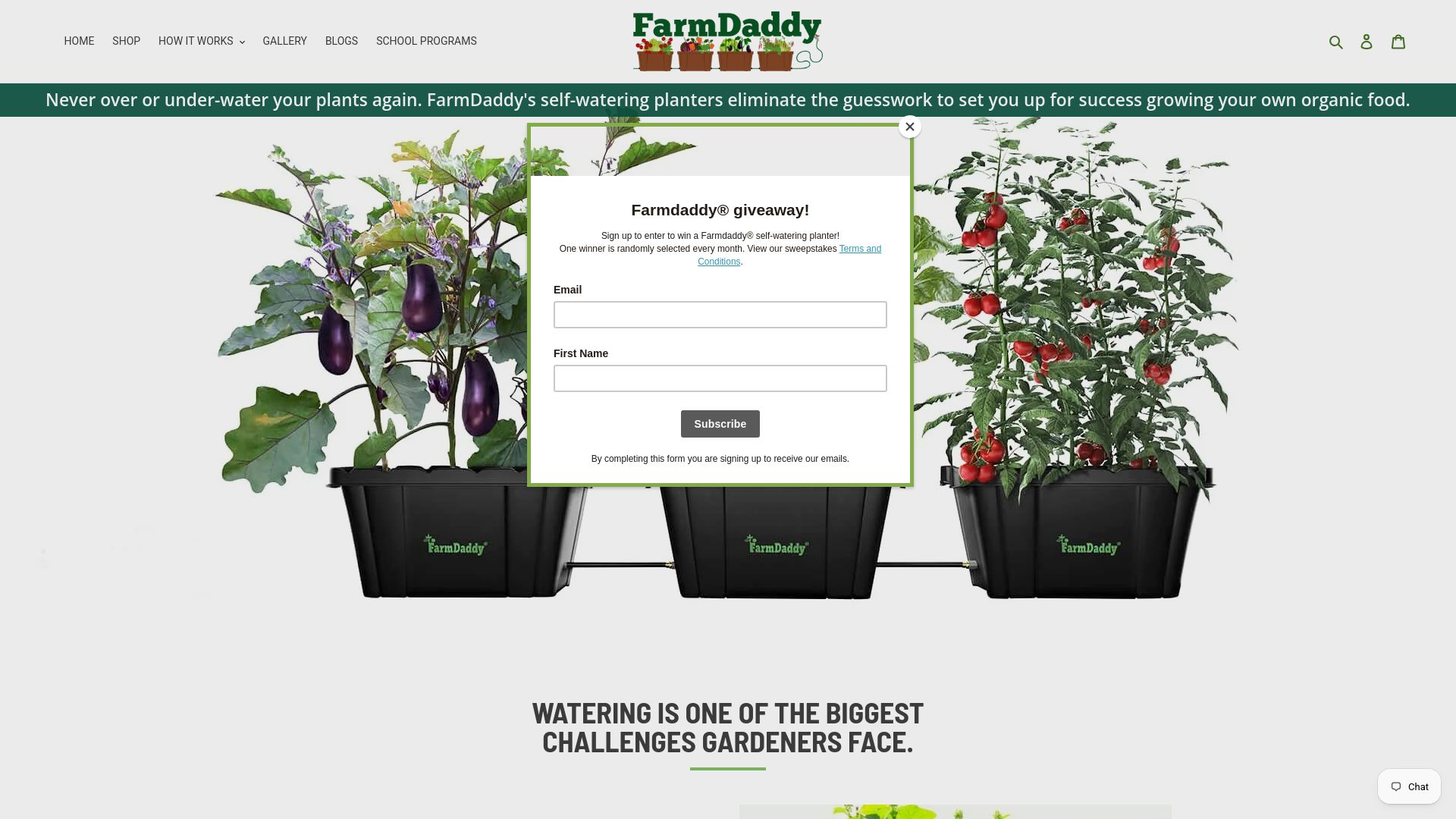
Unlike a single large reservoir shared across multiple plants, Farmdaddy’s patented design means your basil does not compete with your tomatoes for water. You start with two planters and expand as your garden grows. The system ships directly to U.S. customers with support from the Farmdaddy team, and the planting guide walks you through substrate selection, setup, and seasonal maintenance so you are not guessing.
Why Farmdaddy works for home gardeners:
- Independent container operation: each plant drinks at its own pace
- Modular design: start small, expand when you are ready
- Built for vegetables, herbs, fruits, and flowers
- Direct U.S. shipping and customer support
- Compatible with organic growing practices
Browse the full range of self-watering containers and gardening resources at farmdaddy.com, or go straight to the 2-Planter System to get started this season.
Useful sources
The claims and recommendations in this article draw on the following sources. Each link goes directly to the original content for verification.
- 14 best self-watering planters, according to gardening experts — CNN Underscored: Expert quotes, indicator guidance, and editorial testing methodology including Rachel Dennis’s advice on using indicators diagnostically.
- The Best Self-Watering Planters, Tested by Gardening Experts — BobVila: Hands-on testing roundup covering material durability, warranty considerations, and shortlist justification for Lechuza, Elho, and budget wicking pots.
- Best Self-Watering Planters: I Tested 8 So You Don’t Have To — Planet Houseplant: Hands-on comparison of eight planters; source for plant compatibility guidance and the recommendation against succulents in reservoir systems.
- How Do Self-Watering Planters Work — Root & Vessel: Refill interval data (3–14 days) and general explainer on reservoir and wicking mechanics.
- Quadgrow Self-Watering Planter System — Gardening Naturally: Feeder-mat technology, 14-day autonomy claim, and substrate guidance for vegetable production.
- Proven Self Watering Containers & Container Gardening Tips — Farmdaddy: Farmdaddy product overview, modular system details, and independent container operation proof points.
- Water Saving Gardening Ideas — Farmdaddy Blog: Sustainability and water-saving guidance for self-watering garden systems.

