
BLOG
Balcony Tomatoes: 8 Compact Varieties, Pot Sizes & Self Watering

Pick compact determinate types and tumbling cherry varieties. Tiny Tim, Tumbling Tom, Patio, and Celebrity are the reliable starting points for tight spaces. Match the variety to your pot size and support setup, keep the soil, watering, and feeding consistent, and a balcony harvest is well within reach.
TL;DR:
- Dwarf and determinate tomato varieties like Tiny Tim, Patio, and Sweet ‘N’ Neat thrive in small containers, with 1-10 gallon pots suitable for their growth habits.
- Vining or indeterminate varieties such as Black Cherry and Celebrity require larger containers, 10 to 15 gallons, and proper support to produce well.
- Consistent watering and balanced feeding are critical for success, with self-watering planters significantly reducing moisture-related problems like blossom drop.
- Sunlight of at least 6 to 8 hours daily and sturdy support structures improve plant health, especially in windy balcony conditions.
- When choosing varieties, consider your available space, support capabilities, and desired use (snacking, salads, slicing) to maximize fruitful harvests.
Table of Contents
- The Best Compact Tomato Varieties for Balconies and Patios
- How to Choose the Right Tomato for Your Balcony
- Container Care Essentials for Balcony Tomatoes
- Why Self-Watering Planters Make Balcony Tomatoes More Reliable
- A Simple Checklist for Your First Balcony Tomato Season
- Skip the Watering Guesswork With a Self-Watering Tomato Setup
- Further Reading and Quick Links
The Best Compact Tomato Varieties for Balconies and Patios
Not every tomato belongs on a balcony, and that’s fine, because plenty of varieties were practically built for pots. Compact determinate and dwarf types stay small and need far less staking, which makes them a natural fit for container life. Trailing cherry varieties take a different approach entirely, cascading over the edge of a hanging basket or railing planter instead of climbing upward. Here are eight varieties worth growing, along with the specs that actually matter when you’re working with limited square footage.
1. Tiny Tim
This is the classic micro-dwarf, often maturing at under 12 inches tall. It produces small, sweet, marble-sized cherry tomatoes quickly, making it one of the fastest producers on this list. A 1 to 2 gallon pot is plenty, so it’s a smart pick for a windowsill or a tight corner of a balcony rail. Best use: snacking straight off the plant.
2. Tumbling Tom (series)
Available in red and yellow, Tumbling Tom is a trailing variety bred specifically for hanging baskets and railing planters. Its cascading stems save floor space entirely, which matters when your balcony footprint is measured in square feet, not square yards. Fruit is small and sweet, ready relatively quickly, and a 5 gallon hanging basket gives the roots enough room to support a full season of fruiting. Best use: salads and snacking.
3. Patio
Bred for exactly the setting its name suggests, Patio is a determinate bush type that tops out around 2 to 3 feet. Fruits are medium cherry to small salad size, with a balanced, slightly tangy flavor, and they mature relatively quickly. A 5 to 7 gallon container works well, especially with a short stake or small cage for support. Best use: salads.
4. Celebrity
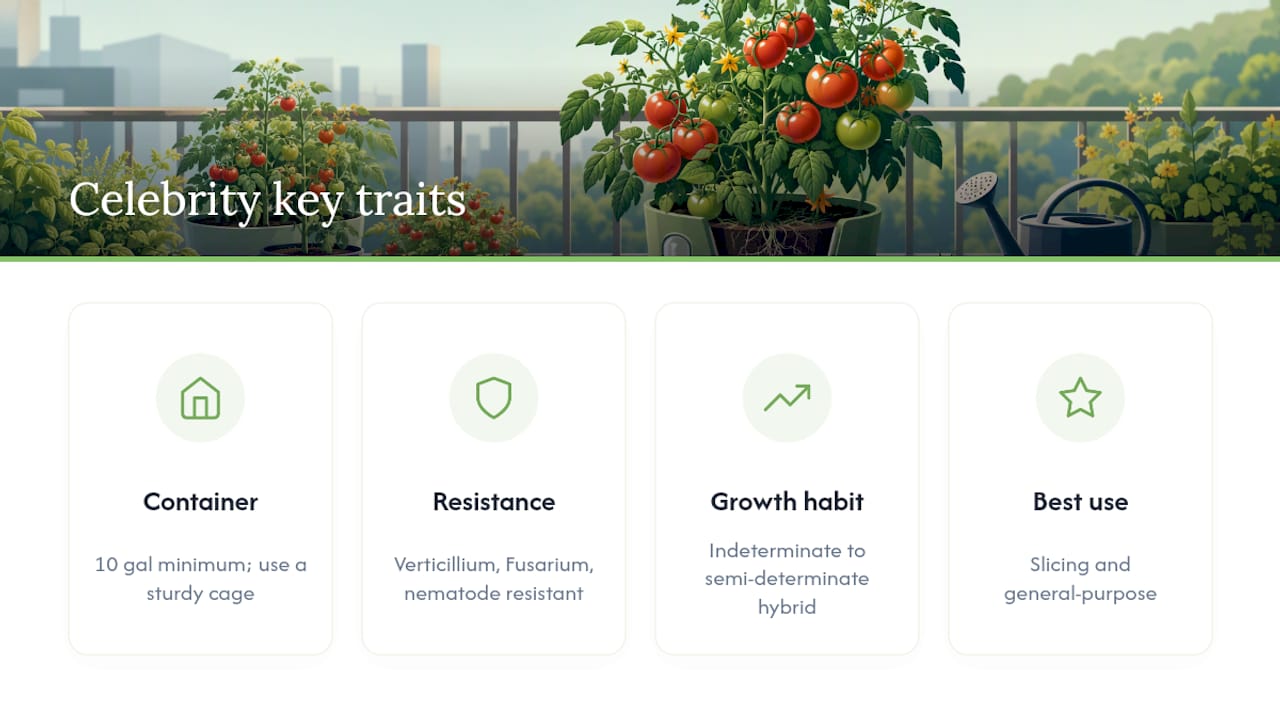
Celebrity is a bit larger than the others here, an indeterminate to semi-determinate hybrid that produces medium-sized, full-flavored fruit in a reasonable time frame. It needs more room than the true dwarfs, so plan on a 10 gallon container minimum and a proper cage. What it offers in return is disease resistance that’s hard to beat in a container tomato, including resistance to verticillium wilt, fusarium wilt, and nematodes. Best use: slicing and general use.
5. Micro Tom
Genuinely one of the smallest tomato plants ever bred, Micro Tom often stays under 8 inches. It’s a novelty in some ways, but a functional one, producing tiny cherry tomatoes fairly rapidly. A 1 gallon pot, or even a large mug-sized container, is enough. Best use: snacking and windowsill growing.
6. Black Cherry
An indeterminate variety with a flavor profile that surprises people the first time they try it, deep, almost smoky, and much richer than a standard red cherry tomato. Because it’s vining, it needs a proper cage or trellis and a container in the 10 to 15 gallon range to really perform. Fruit matures in a typical timeframe for tomatoes. Best use: snacking and salads.
7. Green Zebra
This one is grown as much for the show as the flavor, striped green and yellow skin with a tangy, almost citrus-like bite. It’s semi-determinate, generally needs a 7 to 10 gallon pot and light staking, and matures in a typical timeframe for tomatoes. Best use: salads and slicing.
8. Sweet ‘N’ Neat
A true dwarf variety that stays compact, usually under 12 inches, and produces a steady crop of small, sweet cherry tomatoes fairly quickly. A 1 to 2 gallon pot is sufficient, making it another strong option for a small rail or a cluster of pots near a sunny door. Best use: snacking.
Cherry and cocktail-style varieties like these tend to yield more fruit per plant and forgive the occasional missed watering better than large heirloom slicers do, which is exactly why they dominate this list.
How to Choose the Right Tomato for Your Balcony
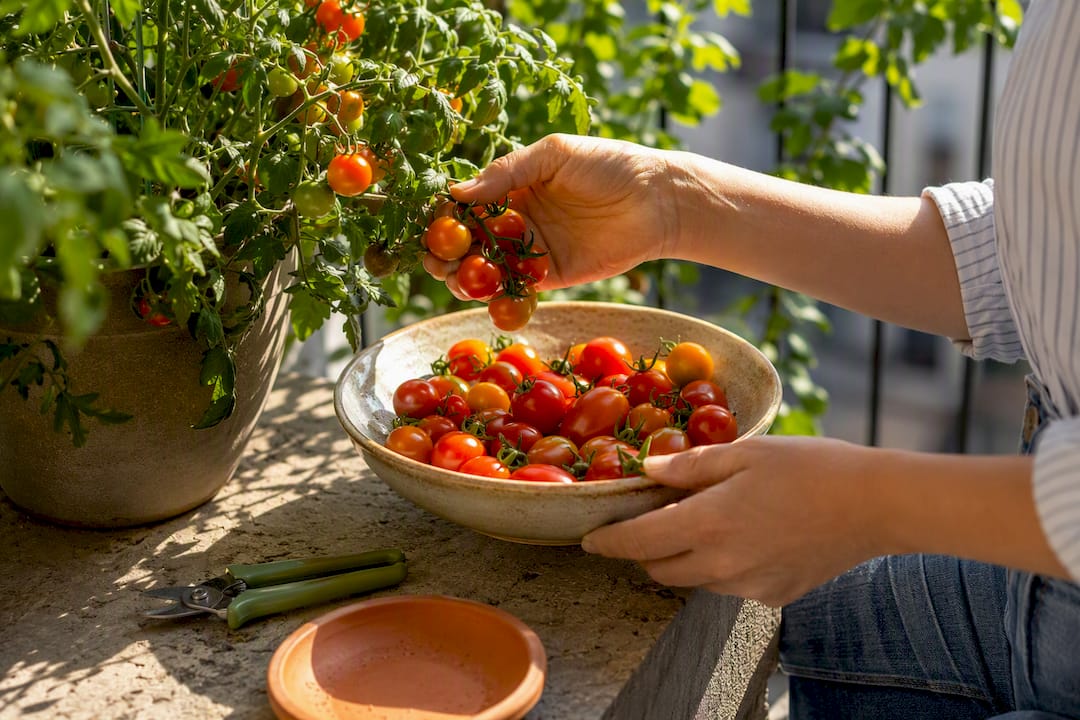
The single biggest decision is determinate versus indeterminate. Determinate and dwarf varieties (Tiny Tim, Patio, Micro Tom, Sweet ‘N’ Neat) stop growing at a set height and need minimal support, which suits a small footprint. Indeterminate varieties (Black Cherry, Celebrity) keep growing and producing all season, but they need a bigger pot and a real cage or trellis to stay upright.
Sunlight and wind matter just as much as the variety itself. Tomatoes want at least 6 to 8 hours of direct sun daily, and a balcony that gets strong afternoon wind will do better with a short, sturdy variety than a tall vining one that catches every gust like a sail.
Run through these six criteria before you buy a seedling:
- Sun hours available on your balcony each day
- Container size you actually have room for
- Support type you’re willing to install (stake, cage, or none)
- Edible goal — snacking, salads, or sauce-making
- Days to maturity relative to your growing season length
- Disease resistance, especially if you’ve had container tomato problems before
Pro Tip: Match container gallons to plant habit, not just root size. A dwarf like Micro Tom is happy in 1 to 2 gallons, but a vining type like Black Cherry will sulk and stop fruiting in anything under 10 gallons, even though its root system alone could survive in less.
Container Care Essentials for Balcony Tomatoes
Getting the basics right matters more for container tomatoes than garden-grown ones, because there’s no surrounding soil to buffer mistakes.
- Use a light, high-quality potting mix blended with compost. Skip garden soil entirely, since it compacts in pots and drains poorly.
- Water consistently rather than heavily. Containers dry out fast in direct sun, and uneven moisture is a leading cause of blossom drop and cracked fruit.
- Feed with a starter fertilizer at planting, then switch to a balanced feed every 1 to 2 weeks, moving to a potassium-rich bloom formula once flowers appear.
- Support compact types with a short stake or clip; give vining types a proper cage sized for a 10 gallon-plus container.
- Watch for aphids and blossom end rot, the two most common balcony tomato problems, and treat early with consistent watering and, if needed, an organic insecticidal soap.
Consistent moisture does more than prevent wilting. It directly reduces blossom drop and improves fruit set, which is exactly why watering consistency tends to separate a productive balcony tomato from a disappointing one.
Why Self-Watering Planters Make Balcony Tomatoes More Reliable
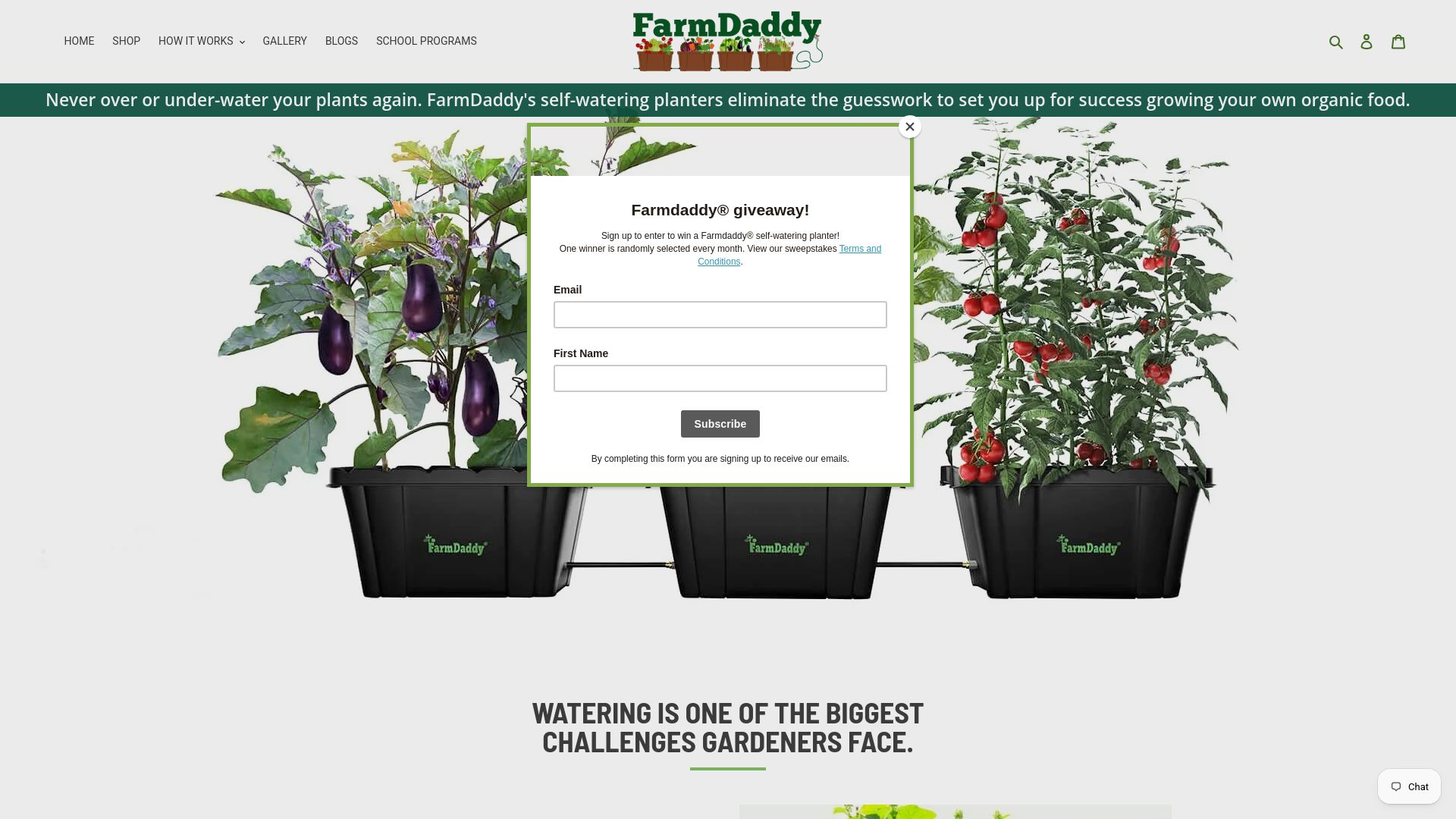
Farmdaddy’s self-watering system solves the exact problem most balcony tomatoes run into: inconsistent moisture. Each connected container operates independently, so one thirsty tomato plant never steals water from its neighbor.
- Steadier soil moisture means fewer blossom drops and better fruit set overall.
- Less daily watering, which matters if you travel or simply forget on a busy week.
- Works well paired with compact varieties like Patio or Tiny Tim in a smaller footprint.
Check the self-watering tomato planter setup guide for pairing tips with specific varieties.
Pro Tip: If you travel often, a self-watering container is the single biggest upgrade you can make to a balcony tomato setup, more impactful than switching varieties.
A Simple Checklist for Your First Balcony Tomato Season
Here’s what I’d tell a first-time balcony grower directly: choose a compact or trailing variety suited to your space, pot it in 5 to 10 gallons of quality mix, water consistently rather than occasionally, and feed weekly once fruit sets. Follow that sequence and a decent harvest is the expected outcome, not a lucky one.
— Steven
Skip the Watering Guesswork With a Self-Watering Tomato Setup
Farmdaddy’s self-watering tomato planter kit takes the least forgiving part of balcony growing off your plate: keeping moisture steady day after day. Because each container waters itself independently, a compact variety like Patio or Sweet ‘N’ Neat can sit right next to a thirstier vining plant like Black Cherry without either one suffering.
Pair a compact variety with the self-watering tomato planter kit and you’ll notice fewer dropped blossoms and steadier fruit set within the first few weeks, since the roots stop cycling between soggy and bone dry. If your balcony fits two plants, the 2-planter self-watering garden system lets you grow a snacking cherry tomato and a herb or pepper side by side, each fed at its own pace. Browse the self-watering container gardening guide to see which kit fits your balcony layout, then order the one sized for your space.
Further Reading and Quick Links
- Balcony vegetable garden layout ideas
- Urban container gardening plans
- Plant combination ideas for containers
- Compact planter design inspiration

