
BLOG
A Balcony Vegetable Garden Is Possible in Almost Any Small Space

A productive balcony vegetable garden is realistic for most urban balconies, as long as you match your crops to the light you actually have and use containers sized for the job. You don’t need a yard, and you don’t need luck. You need three things: an honest read on your sunlight, the right pots, and a short list of plants that actually thrive in containers.
Here’s your weekend plan. First, track your sun exposure for a few days. Second, buy or repurpose two or three containers with drainage and fill them with real potting mix, not garden soil. Third, plant crops that fit what you found in step one.
Before you shop, confirm the basics:
- At least 3 hours of direct sun for leafy greens and herbs; 6+ hours for tomatoes and peppers
- Every container needs drainage holes. No exceptions
- Fruiting crops need a 5-gallon container minimum; leafy greens and herbs can work in 6 to 8 inch pots
Key Takeaways
A productive balcony vegetable garden depends on matching crops to measured sunlight, using properly sized containers with drainage, and keeping moisture consistent through the growing season.
| Point | Details |
|---|---|
| Measure your sun first | Track direct sun hours for three days before choosing any crops. |
| Size containers to the crop | Use 5-gallon+ pots for tomatoes and peppers, 6 to 8 inches for herbs. |
| Never skip drainage | Every container needs drainage holes to prevent root rot. |
| Start small, expect modest yields | Starting with a few crops in the first year helps build skills for larger harvests later. |
| Consider self-watering for consistency | FarmDaddy planters stabilize moisture for travelers and heavy feeders like tomatoes. |
Table of Contents
- How Do You Assess Your Balcony Before Planting?
- What Containers and Pot Sizes Work Best?
- What Soil and Fertilizer Schedule Do Container Vegetables Need?
- Which Vegetables Actually Succeed in Containers?
- Should You Start From Seed or Buy Seedlings?
- How Often Should You Water a Balcony Vegetable Garden?
- How Do Self-Watering Containers Simplify Balcony Gardening?
- What Maintenance Keeps a Balcony Garden Healthy?
- What Are the Best Space-Saving Layouts for a Balcony?
- How Do You Fix Common Balcony Garden Problems Fast?
- Realistic Expectations Make Balcony Gardening Stick
- Make Watering the One Thing You Don’t Have to Think About
- Frequently Asked Questions
- Sources
How Do You Assess Your Balcony Before Planting?
Spend three days watching where the sun actually falls on your balcony, not where you assume it does. Check at 9 AM, noon, and 4 PM, and jot down which spots get direct light versus dappled shade. If you want more precision, a free tool like SunCalc shows you the sun’s path across your exact location and season, which is especially useful if your balcony faces a tricky direction like northeast.
Once you have real numbers, matching crops gets simple:
- 6+ hours of direct sun: tomatoes, peppers, and other fruiting vegetables
- 3 to 5 hours: leafy greens, herbs, and root vegetables
- Mostly shade: stick to herbs like mint and leafy greens like lettuce
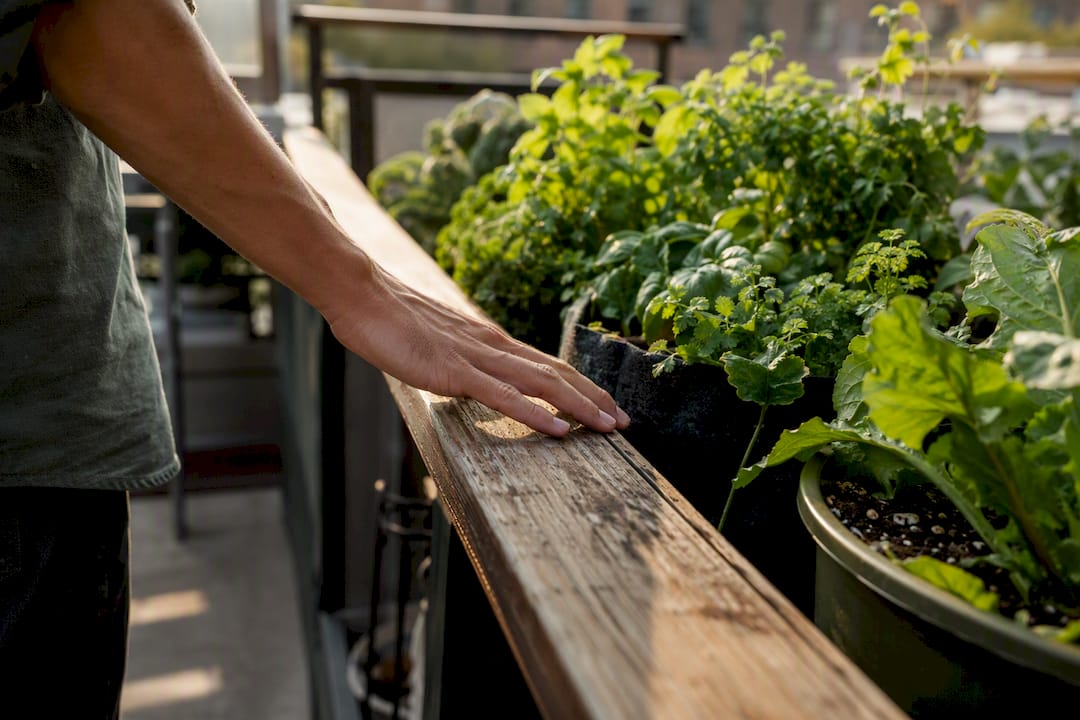
Wind matters more on balconies than in yards, especially above the fourth floor, where gusts can dry out soil and topple pots fast. High-rise balconies often deal with intense wind and reflected heat bouncing off nearby glass and concrete, so tuck taller plants near a wall or add a simple trellis panel as a windbreak. Also check your building’s weight guidelines and any HOA rules before you line up a row of soil-filled ceramic pots.
Pro Tip: Walk your balcony at different times of day and feel for warm spots near brick or glass. Those reflected-heat corners often run 5 to 10 degrees warmer, which is great for peppers but rough on lettuce.
What Containers and Pot Sizes Work Best?
Your container choice affects everything from watering frequency to how many pots fit on your balcony. Fabric grow bags are light and breathe well, which helps prevent overwatering, but they dry out faster in full sun. Plastic pots hold moisture longer and cost less, while ceramic looks great but adds serious weight, an important factor if your building has load limits. Railing boxes and hanging baskets stretch your growing space without taking up floor room at all.
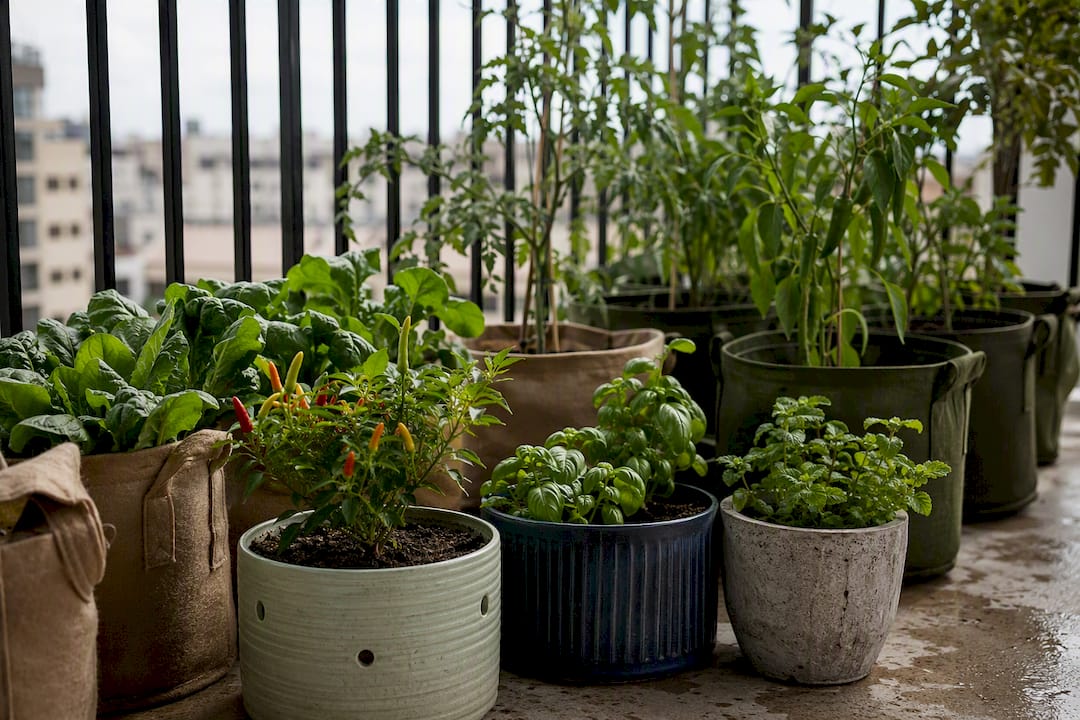
Size is where most beginners go wrong. A tomato crammed into a 2-gallon pot will struggle no matter how much you water it.
| Crop Type | Minimum Container Size |
|---|---|
| Tomatoes, peppers (fruiting) | 5-gallon pot or larger |
| Compact/patio tomatoes | 6 to 8 inches deep |
| Herbs, microgreens | 6 to 8 inches deep |
| Carrots, radishes (short-root) | 8 to 10 inches deep |
Drainage holes are non-negotiable. Without them, water pools at the bottom, roots sit in it, and you get root rot, which is one of the fastest ways to kill an otherwise healthy plant. Before buying, run through this checklist:
- Confirm drainage holes or plan to drill your own
- Choose material based on weight limits and how often you’ll move pots
- Add saucers to protect flooring, and consider caster stands for mobility
- If hanging on a railing, double check the mounting hardware is rated for the pot’s full watered weight
What Soil and Fertilizer Schedule Do Container Vegetables Need?
Skip garden soil entirely. It compacts in containers and drains poorly. A quality container potting mix, ideally blended with compost for nutrition and perlite or coconut coir for drainage, gives roots the loose, airy environment they need. If you want the full breakdown of what goes into a good mix, this potting soil guide walks through it.
Weight is a real concern on balconies, so lean on lightweight amendments:
- Perlite for drainage without added weight
- Coconut coir to hold moisture longer between waterings
- Compost for slow-release nutrition
Because container crops leach nutrients faster than garden soil, feeding matters more here than it does in the ground. Combine a slow-release fertilizer at planting time with a liquid feed every 2 to 3 weeks through the growing season. Once tomatoes or peppers start setting fruit, switch to a feed higher in potassium, which supports fruit development rather than leafy growth.
Pro Tip: Refresh at least the top third of your potting mix between seasons. Nutrients and structure both break down over months of watering, and old, compacted soil is a common reason plants stall out in year two.
Which Vegetables Actually Succeed in Containers?
Not every vegetable belongs on a balcony, and pretending otherwise sets you up for disappointment. Sort your choices by the sunlight you measured earlier, and lean on compact or patio-labeled varieties whenever you shop for seeds or seedlings.
| Sun Exposure | Reliable Crops | Minimum Pot Size |
|---|---|---|
| Full sun (6+ hrs) | Cherry tomatoes, bush peppers | 5-gallon+ |
| Partial sun (3 to 5 hrs) | Lettuce, radishes, bush beans | 6 to 10 inches |
| Low light/shade | Mint, parsley, chives | 6 to 8 inches |
Herbs like basil, mint, and rosemary are some of the most forgiving plants you can start with, and they reward you almost immediately with something to cook.
Think of your crops in three tiers:
- Workhorses: cherry tomatoes, loose-leaf lettuce, basil, radishes. These forgive beginner mistakes and produce fast.
- Workable with care: bush peppers, dwarf cucumbers, and short carrot varieties. They need consistent watering and a bit more attention.
- Avoid on most balconies: full-size tomatoes, winter squash, and corn. These need more root room and space than almost any balcony setup can offer.
Radishes and lettuce deserve a special mention for succession planting. Radishes mature in about a month, and loose-leaf lettuce lets you harvest outer leaves while the plant keeps producing. That means one pot can feed you multiple times over a season instead of once. For pairing crops that don’t compete for water or nutrients, this container plant combination guide is worth a look.
Should You Start From Seed or Buy Seedlings?
The seed-versus-seedling decision comes down to how much time you have and how much control you want over variety. Seeds cost less and open up hundreds of options you won’t find at a nursery, but they take longer and need indoor starting if your season is short. Seedlings skip weeks of waiting and are more forgiving for a first-timer, though you’re limited to whatever your local garden center stocks.
- Check your last frost date. Start seeds indoors about 6 to 8 weeks before that date for tomatoes and peppers.
- Pot up seedlings gradually. Move them into slightly larger containers as roots fill the current pot, rather than jumping straight to their final size.
- Space according to the tag. Crowding container plants invites competition for water and nutrients, which shows up fast in stunted growth.
- Stake or trellis early. Adding support after a tomato plant has flopped over is much harder than installing it at planting time.
For a rolling harvest, stagger plantings. Sow a new round of radishes or lettuce every two weeks through spring, switch to heat-tolerant greens in summer, and restart cool-season crops again in early fall. When one pot finishes its cycle, that’s your cue to refresh the soil and start the next crop rather than leaving it empty.
How Often Should You Water a Balcony Vegetable Garden?
Small containers dry out fast, sometimes daily in peak summer heat, while larger pots and deeper soil volumes buy you more time between waterings. The finger test still beats guessing: push a finger an inch or two into the soil, and if it’s dry, water. A cheap moisture meter works too if you’d rather not get your hands dirty.
Overwatering and underwatering can look surprisingly similar from the outside. Wilting leaves might mean the soil is bone dry, or it might mean roots are drowning in soggy, poorly drained soil. Yellowing lower leaves often point to overwatering, while crispy leaf edges usually mean the plant needs more water, not less.
A few low-effort habits stabilize moisture without adding daily chores:
- Group pots together to create a shared humidity pocket
- Add a layer of mulch to slow evaporation
- Water early in the morning so plants have moisture before the afternoon heat hits
- Move toward larger pots or self-watering containers on hot, exposed balconies where drying out is a daily fight
Pro Tip: Before watering, ask yourself: is the top inch dry, and did the leaves look fine this morning? If both are true, water. If the leaves were already wilting hours ago, check drainage first. It might not be a water problem at all.
How Do Self-Watering Containers Simplify Balcony Gardening?
A self-watering container holds a water reservoir beneath the soil, and a wick pulls moisture up as roots need it, with an overflow hole preventing waterlogging. That structure means you’re not guessing about timing every single day. The plant draws what it needs, when it needs it.
This setup earns its keep in specific situations. If you travel often, a reservoir that lasts several days to a week removes the panic of coming home to crispy basil. On hot, exposed, south-facing balconies where small pots dry out by noon, a steady reservoir prevents the stress cycle of drought followed by overwatering. And heavy feeders like tomatoes and peppers, which hate inconsistent moisture, tend to produce more evenly with steady hydration.
FarmDaddy’s self-watering planters use this same principle, with each connected container managing its own water level independently, so a thirsty tomato doesn’t drain water meant for a neighboring herb pot. That said, a self-watering system won’t fix a balcony that only gets two hours of sun, and it won’t make up for a pot that’s too small for the crop growing in it. It solves moisture consistency, not light or root space.
Good candidates for this approach:
- Busy professionals who don’t want a daily watering routine
- Renters who travel frequently and need a garden that survives a week alone
- First-time gardeners who’ve killed a plant or two from inconsistent watering in the past
What Maintenance Keeps a Balcony Garden Healthy?
A short monthly rhythm keeps small problems from becoming big ones. Water consistently, feed on schedule, prune leggy growth, check stakes and supports, and inspect leaves (top and bottom) for early signs of pests.
Aphids, slugs, and whiteflies are the most common balcony pests, and none of them require harsh chemicals to manage. A strong blast of water knocks aphids off leaves, insecticidal soap handles whiteflies, and hand-picking slugs in the evening keeps their population in check before it explodes.
Two problems show up constantly in container vegetables: blossom end rot, which appears as a dark, sunken patch on the bottom of tomatoes and peppers and traces back to inconsistent watering rather than a soil disease, and yellowing leaves, which usually signal either overwatering or a nitrogen shortage depending on which leaves turn first.
Pro Tip: Crowded balconies trap humidity, which fungal diseases love. Leave a few inches of breathing room between pots and trim overlapping leaves so air moves through the foliage.
What Are the Best Space-Saving Layouts for a Balcony?
Vertical space is your biggest untapped asset. Wall shelving, stacked planters, and pocket-style vertical planters let you layer tall crops in back, medium plants in the middle, and trailing herbs like thyme spilling over the front edge.
Railing planters extend growing space without touching your floor at all, but stick to boxes under 8 inches deep for railings and confirm the mounting brackets are rated for wet, planted weight. Non-drill clamp systems are worth seeking out if you’re renting.
Distribute weight with heavier pots against load-bearing walls rather than the railing edge, and use caster stands under bigger containers so you can rotate them toward the sun without straining your back. For more layout inspiration built for compact outdoor spaces, this small patio decorating guide has practical staging ideas worth borrowing.
How Do You Fix Common Balcony Garden Problems Fast?
- Wilting despite moist soil: likely root rot from poor drainage. Repot into a container with holes and fresh mix.
- Yellowing leaves: often overwatering. Let the top inch dry fully before watering again.
- Blossom end rot on tomatoes: caused by inconsistent watering, not a calcium deficiency in most cases. Water on a steady schedule.
- No fruit despite healthy foliage: usually insufficient sun. Move the pot to your brightest measured spot.
- Sudden pest outbreak: isolate the affected pot and treat with insecticidal soap immediately.
If a pot is beyond saving, don’t fight it for weeks. Flush built-up fertilizer salts with a heavy plain-water rinse, or if the soil structure has collapsed entirely, dump it, refresh with new mix, and restart the crop.
Realistic Expectations Make Balcony Gardening Stick
Most beginners overestimate what they’ll harvest and underestimate how satisfying a modest harvest actually feels. A realistic first season looks like continuous salad greens, herbs all summer, and a pound or two of cherry tomatoes per plant, not baskets of produce. That’s still real food you grew yourself, and it’s enough to build confidence for next year.
Start with two or three crops your first season rather than filling every pot you own. Success with a handful of plants teaches you your balcony’s quirks far faster than an ambitious setup that gets neglected by July.
Pro Tip: Pick one leafy crop, one herb, and one fruiting crop for your first season. That mix teaches you watering, feeding, and sun management across three different plant needs at once.
Make Watering the One Thing You Don’t Have to Think About
Between the sun tracking, the drainage checks, and the feeding schedule, a balcony garden already asks a lot of your attention, and watering shouldn’t be the part that trips you up. That’s exactly the gap FarmDaddy’s self-watering planters close: each container manages its own reservoir independently, so a hot afternoon or a missed evening doesn’t mean a wilted tomato plant.
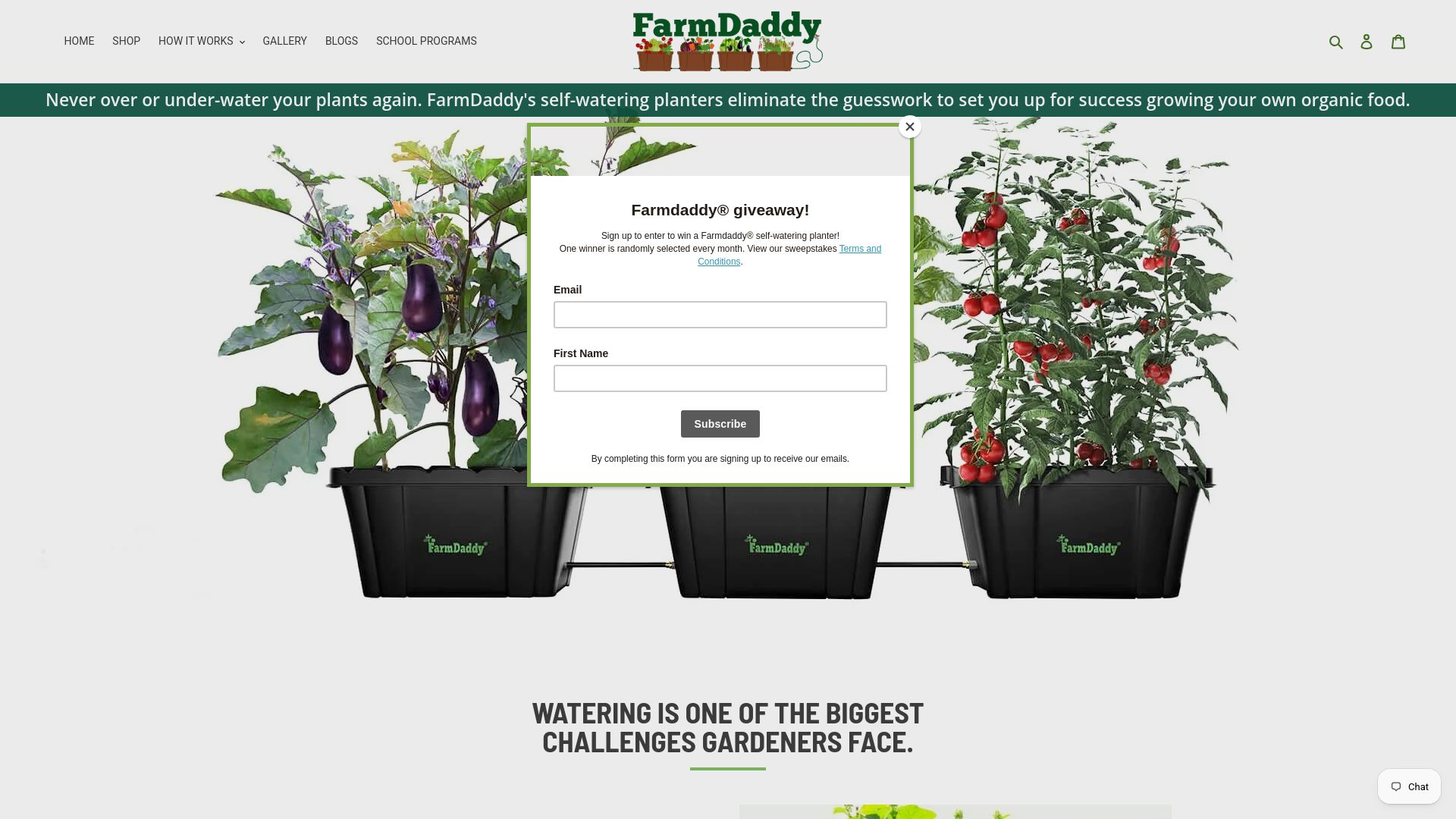
If you’re starting with herbs and salad greens, the compact self-watering garden box fits neatly on most balconies without dominating the space. Growing tomatoes or peppers instead? The self-watering tomato planter kit is built specifically for the deeper root systems and steady moisture those fruiting crops demand. And if you’re setting up multiple crops at once, the 2-Planter Self Watering Garden System lets each plant draw exactly the water it needs, independent of its neighbor.
None of this replaces good sunlight or the right pot size. What it does is remove the daily guesswork around moisture, which is where most first-time balcony gardens quietly fail. Browse the full lineup of self-watering containers and pick the setup that matches your first season’s plan.
Frequently Asked Questions
How much sun does a balcony vegetable garden need? Fruiting crops like tomatoes and peppers need 6 or more hours of direct sun daily. Leafy greens and herbs can produce well with 3 to 5 hours.
What is the minimum pot size for a balcony vegetable garden? Fruiting vegetables need at least a 5-gallon container, while herbs and short-root crops like radishes can succeed in pots as small as 6 to 8 inches deep.
Can you grow vegetables on a balcony with no direct sun? Mostly shaded balconies still support herbs like mint and leafy greens such as lettuce, though yields will be lighter than in full sun.
Do self-watering planters work for a balcony vegetable garden? Yes, especially for hot, exposed balconies or frequent travelers, since the reservoir keeps moisture steady between waterings without daily attention.
How often should you water container vegetables? Small pots often need daily watering in hot months, while larger containers can go two to three days. The finger test, checking an inch into the soil, is the simplest way to know.
Sources
- Container drainage options — University of Illinois Extension
- How to grow vegetables on a balcony: a beginner’s realistic plan — LeafyStart
Local extension pages are especially useful for your exact last frost date and regional pest pressure, since both shift the timing advice above.

