
BLOG
When to Refill a Self-Watering Planter (Not on a Fixed Schedule)

Refill frequency for self-watering planters depends on your plant’s water uptake, not a set number of days on the calendar. Watch three signals instead: the water-level indicator, the weight of the pot when you lift it, and how the plant itself looks. If leaves feel firm and growth looks steady, wait. The University of Illinois Extension makes a similar point about sub-irrigated containers: reservoirs are buffers that stretch out your watering window, not autopilot systems you can ignore completely.
Key Takeaways
Refill frequency for self-watering planters depends on plant type, reservoir size, and environmental conditions, so checking cues beats following a fixed schedule.
Table of Contents
- How Refill Frequency Works for Self-Watering Planters
- What’s Your 60-Second Weekly Check?
- What Determines How Often You Refill?
- How Often Should You Really Expect to Refill?
- How Do You Set Up a Planter to Cut Down on Refills?
- What’s the Right Maintenance Rhythm to Prevent Buildup?
- How Do You Fix Common Self-Watering Planter Problems?
- What Do Busy Gardeners Usually Get Wrong?
- Why FarmDaddy Fits a Low-Maintenance Watering Routine
- Frequently Asked Questions
- Sources
How Refill Frequency Works for Self-Watering Planters
Think of the reservoir as a savings account, not a subscription. You’re drawing down a balance, and the withdrawal rate changes with the weather, the plant, and the pot size. A fixed “every Sunday” refill habit either wastes your time (topping off a reservoir that’s still half full) or leaves a thirsty tomato plant gasping three days early.
KnowYourPlant’s guide to self-watering pots puts it plainly: there’s no single schedule that works across plants and conditions. A reservoir that lasts one to two weeks is normal for many indoor plants, but during a heat wave, you’ll want to check twice a week instead of once. That variability isn’t a flaw in the system. It’s exactly why the indicator and the weight check matter more than the calendar taped to your fridge.
What’s Your 60-Second Weekly Check?
Busy schedules don’t leave room for elaborate plant care rituals, so keep the routine short enough to do while your coffee brews.
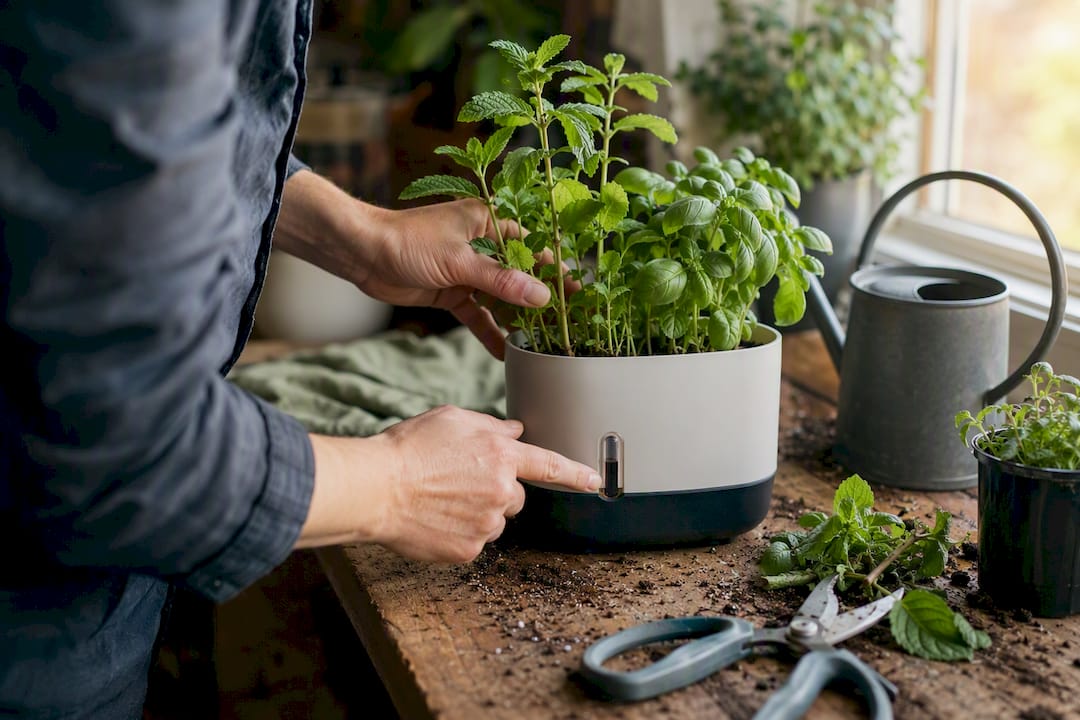
- Glance at the water-level indicator if your planter has one.
- Lift the pot with both hands and compare the weight to how it felt the last time you checked.
- Do a quick topsoil sniff and visual scan for algae film or mosquito larvae in any exposed reservoir opening.
- Check leaf firmness and new growth for signs of stress.
Pro Tip: Establish your baseline in the first week by lifting the pot right after a full refill, then again three days later. That weight difference becomes your reference point for every future check, so you’ll know within a second or two whether it’s time to refill or fine to wait.
CN Brice Gardening recommends checking daily for the first week specifically to build this baseline. After that, twice-weekly checks are usually enough unless temperatures spike.
What Determines How Often You Refill?
Several variables push refill frequency in opposite directions, and understanding them lets you predict your own rhythm instead of guessing.
- Plant type: Leafy greens and herbs like basil drink fast. Succulents and snake plants sip slowly and can go far longer between refills.
- Reservoir size: A 1-quart reservoir empties in days. A larger built-in reservoir can stretch past a week even with a moderately thirsty plant.
- Ambient temperature: Heat accelerates evaporation and plant uptake alike, sometimes doubling consumption during a summer stretch.
- Humidity and airflow: Dry indoor heating in winter or a breezy balcony in summer both pull moisture out faster than a still, humid room.
- Sun exposure: A south-facing windowsill or full-sun patio spot will drain a reservoir noticeably faster than a shaded corner.
The University of Illinois Extension notes that small planters holding high-demand plants in direct sun deplete far faster than larger units hosting slower growers. That’s the entire equation in one sentence: uptake rate, not date on the calendar, decides when you refill.
How Often Should You Really Expect to Refill?
These ranges are estimates, not promises. Your actual rhythm depends on the specific plant, your climate, and how much sun the planter gets. Use them as a starting point, then adjust based on what your indicator and weight checks tell you.
| Planter/Plant Type | Typical Refill Interval | Notes |
|---|---|---|
| Small reservoir, thirsty plant (basil, lettuce) | Every 3–5 days | Faster in summer heat or full sun |
| Medium reservoir, houseplant | About once a week | LeafyStart cites 5–10 days as typical |
| Large reservoir, tomatoes or peppers | Weekly | Check more often during fruiting stage |
| Large reservoir, succulents or slow growers | Every 10–14 days | Indoor Green Hub confirms this range for low-demand plants |
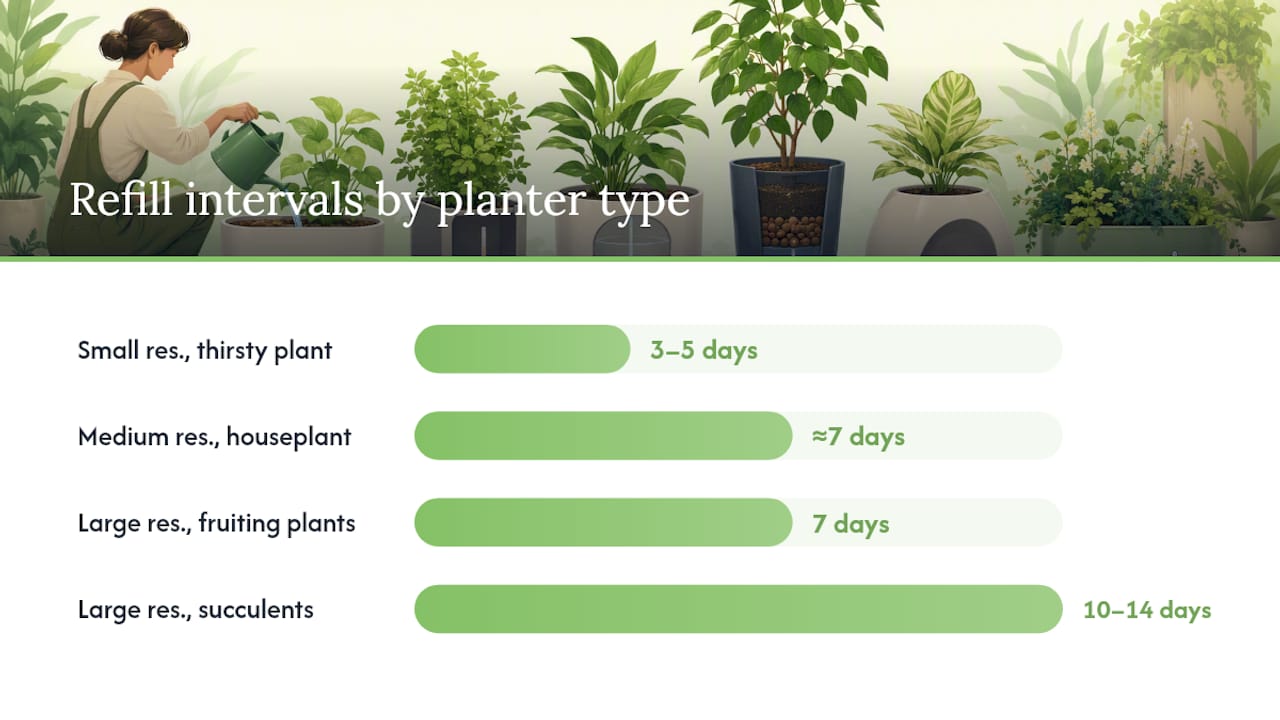
Winter months usually stretch every interval longer, since growth slows and evaporation drops. Summer, grow lights, and indoor heating all compress the timeline.
How Do You Set Up a Planter to Cut Down on Refills?
The setup you choose at planting time determines how much work you’ll do for the next several months, so it’s worth doing right the first time.
- Pick a reservoir size that matches the plant. Tomatoes and other heavy feeders do better in larger reservoirs; herbs can thrive in smaller ones.
- Use a light, airy potting mix. A coir or peat blend amended with perlite wicks water more reliably than dense garden soil, which can suffocate roots and choke off capillary flow.
- Install and activate the wick correctly. Make sure the wick sits firmly in contact with the soil, not just resting against the reservoir wall.
- Top-water for the first one to two waterings. This activates the wick and confirms the soil-to-wick connection before you rely on the reservoir alone, a step LeafyStart recommends for every new setup.
- Add a mulch layer. A thin layer on top of the soil cuts evaporation and reduces how often you need to top-water during the establishment phase.
Pro Tip: Press two fingers into the soil near the wick right after planting. If it feels dry while the reservoir is full, the contact isn’t solid yet. Fix it now, because a poor wick connection is the single most common reason people think their self-watering planter “isn’t working.”
What’s the Right Maintenance Rhythm to Prevent Buildup?
A short, consistent rhythm beats sporadic deep cleans, and it takes less time than you’d think.
- Weekly: Run your indicator/weight check. Refill if the indicator reads empty or the pot feels noticeably lighter than your baseline.
- Every 4 to 6 weeks: Flush the topsoil with plain water poured from above. KnowYourPlant recommends this specifically to prevent mineral salt buildup from fertilizer residue, which accumulates faster in sub-irrigated systems than in traditional pots.
- Seasonally: If a reservoir stays topped off for weeks during a slow-growth winter stretch, drain and refresh it monthly instead of letting the water sit stagnant.
Here’s a detail that surprises a lot of new self-watering gardeners: keeping the reservoir constantly full isn’t actually the goal. Letting it dip toward empty every so often mimics natural wet-dry cycles and cuts down on the algae and mosquito risks that come with standing water, a concern Smart Garden Guru raises specifically for larger reservoirs left full too long.
How Do You Fix Common Self-Watering Planter Problems?
Most issues trace back to one of a handful of causes, and the fix is usually simple once you know what to look for.
- Wilting despite a full reservoir → Usually poor soil-to-wick contact or, less often, root rot. Check the wick connection first before assuming the plant needs water.
- Algae film or mosquito larvae → Stagnant water sitting too long. Drain, scrub the reservoir, and refill fresh.
- Yellowing leaves → Often overwatering or salt buildup from skipped flushes. Try a topsoil flush before cutting back water.
- Musty smell from the reservoir → Sign it’s been sitting untouched too long. Drain and refresh even if the plant looks fine.
If roots look brown and mushy rather than white and firm when you check them, that’s beyond a quick fix. Consider repotting into fresh mix rather than trying to save the existing soil.
What Do Busy Gardeners Usually Get Wrong?
The biggest mistake I see is treating the reservoir like a subscription service: fill it every Sunday, no matter what. That habit ignores what the plant is actually telling you, and it’s how people end up either drowning a dormant succulent in winter or under-watering a tomato plant during a July heat wave.
Try this for 30 days: a two-minute check-in twice a week, no calendar, just the indicator and a weight lift. By week four, you’ll know your planter’s rhythm well enough to predict refill day without checking at all. That’s the real advantage of a system like FarmDaddy’s self-watering containers, which are built so each container manages its own moisture independently. You stop babysitting and start reading a much shorter list of cues.
Why FarmDaddy Fits a Low-Maintenance Watering Routine
If you’re a traveler, a professional with a packed week, or an urban gardener working with balcony space, the routines in this guide only work if your equipment cooperates. That’s the gap FarmDaddy fills: a patented design where every connected container manages its own reservoir independently, so one thirsty tomato plant doesn’t drain water meant for its herb neighbor.
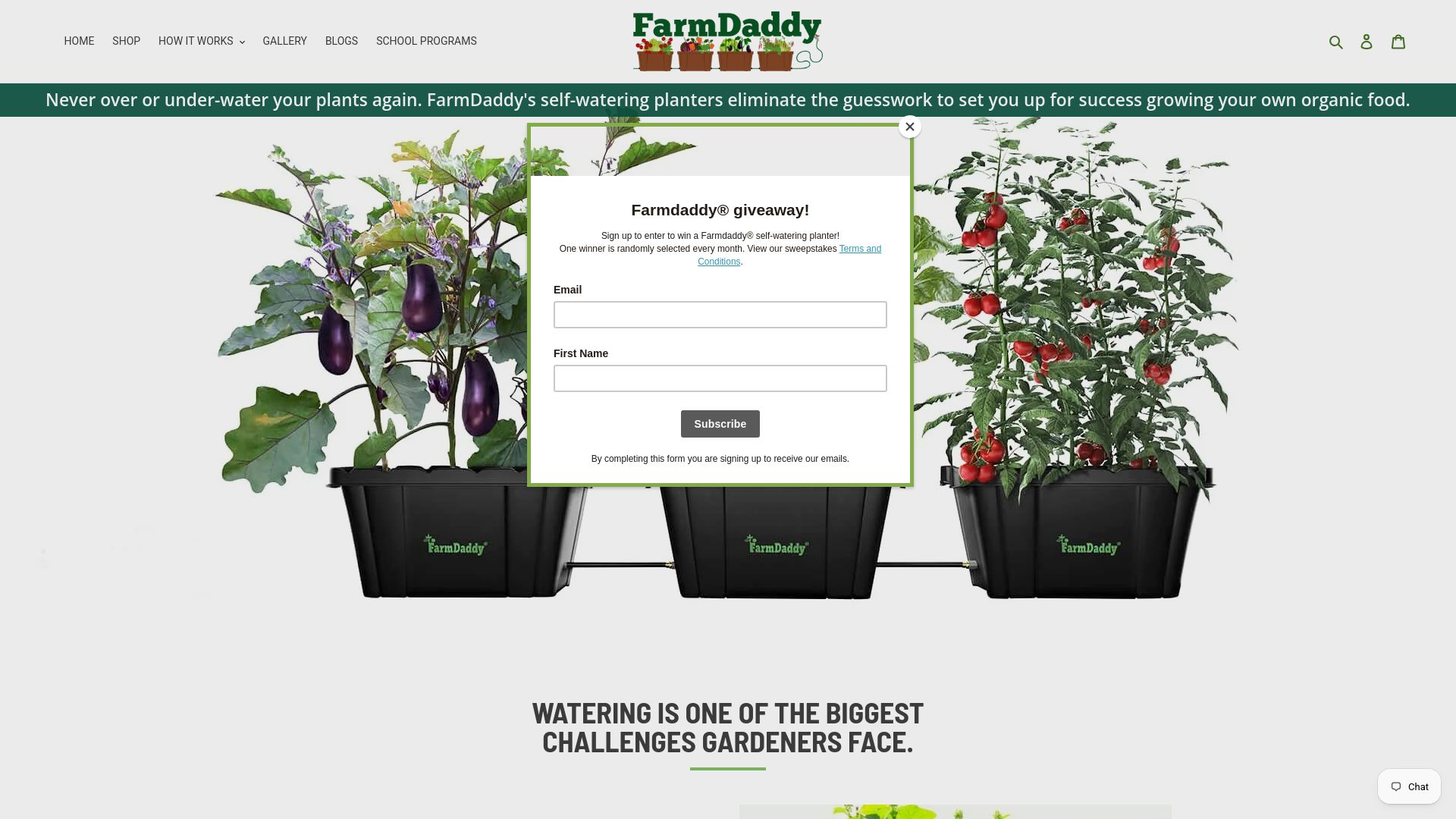
The setup steps above, reservoir sizing, wick contact, mulch to slow evaporation, are exactly what FarmDaddy’s self-watering garden box and 2-planter system are built around. Larger reservoir options mean fewer refills for heavy feeders, and independent containers mean you’re never guessing which plant needs attention. If you’re ready to put a lower-maintenance rhythm into practice, browse FarmDaddy’s self-watering planter lineup and pick the size that matches what you’re growing.
Frequently Asked Questions
How do I know when to refill my self-watering planter? Check the water-level indicator if your planter has one, or lift the pot and compare its weight to your baseline. A lighter pot or an empty indicator means it’s time. A firm, unchanged weight means you can wait.
How often should I refill a self-watering planter in winter? Winter refills stretch out because plant growth slows and evaporation drops. Many planters that need weekly refills in summer can go 10 to 14 days between refills once temperatures cool, according to Indoor Green Hub.
Can I overfill the reservoir? Keeping it constantly topped off isn’t ideal. Some fluctuation between full and low mimics natural wet-dry cycles and cuts down on stagnant water, which reduces the risk of algae and mosquitoes.
Why is my plant wilting even though the reservoir is full? This usually points to poor soil-to-wick contact rather than a lack of water. Check that the wick is firmly embedded in the soil, not just touching the reservoir wall.
How do I prevent white mineral crust on the soil surface? Flush the topsoil with plain water poured from above every 4 to 6 weeks. This washes out the fertilizer salts that build up faster in self-watering systems than in traditionally watered pots.
Sources
- KnowYourPlant — Self-Watering Pots Guide
- Smart Garden Guru — Self-watering planters complete guide
- CN Brice Gardening — Self-watering planter complete guide

