
BLOG
What to Do When Shared Line Watering Problems Hit Your Garden

If your sprinklers sputter, one zone floods while another stays bone dry, or your indoor faucets lose pressure the second irrigation kicks on, you’re dealing with one of four usual suspects: a clog somewhere in the line, a shared supply that simply can’t keep up with demand, a leak, or a faulty valve. Before you call anyone, try this: pause all zones for ten minutes, run a quick pressure check at an outdoor spigot, and pop open your inline filter to see what’s built up inside.
Most of these fixes take under an hour and cost nothing but your time. A few, though, point straight to a plumber or irrigation specialist.
- Pause and observe: Shut off all zones, then run just one to see if pressure or flow improves.
- Check the filter: A clogged inline filter is often the fastest fix you’ll find all week.
- Test the pressure: A drop greater than 10 to 15 PSI when the system runs points to a shared-supply or PRV bottleneck, not a simple clog.
Key Takeaways
Most shared line watering problems trace back to a clog, a supply or PRV capacity limit, or an uncoordinated schedule, and fixing the right one saves both water and money.
| Point | Details |
|---|---|
| Diagnose before repairing | Record baseline PSI, run a bucket flow test, and isolate zones before spending money on fixes. |
| Watch the PSI drop | A drop over 15 to 20 PSI when irrigation runs signals a supply or PRV limit, not a simple clog. |
| Coordinate with neighbors | A written schedule and a designated key homeowner reduce disputes on shared systems. |
| Fix clogs first, structure second | Flushing and filter cleaning solve many issues, but a PRV or pipe upgrade is the permanent fix for capacity problems. |
| Consider container alternatives | Self-watering planters remove peak demand from a shared line for herbs, vegetables, and flowers. |
Table of Contents
- Common Causes of Shared Line Watering Problems
- How to Test and Diagnose Shared Watering Line Faults
- Practical Fixes Organized by the Cause You Diagnose
- Coordinating Shared Watering Line Repairs With Neighbors
- Maintenance That Keeps Shared Watering Problems From Coming Back
- When to Call a Plumber or Irrigation Specialist
- How FarmDaddy Self-Watering Planters Sidestep the Whole Problem
- Why Multiple Users Draining the Same Line Causes Chaos
- Rules and Community Guidelines That Affect Shared Line Repairs
- Balancing Water Pressure Across Different Zones on One Line
- The Real Priority Order Nobody Tells You
- Frequently Asked Questions
- Sources
Common Causes of Shared Line Watering Problems
Shared irrigation issues almost always trace back to one of five mechanical or operational failures, and knowing which one you’re facing saves you a lot of guesswork.
- Clogging in emitters, tubing, or inline filters from debris, mineral deposits, or algae is the most common cause of uneven drip irrigation, and it’s usually the cheapest to fix.
- Supply constraints show up when the main line is undersized, the pressure-reducing valve (PRV) has a flow limit lower than what your system demands, or someone’s running the dishwasher and irrigation at the same time.
- Tap location matters more than people realize. A tap installed downstream of the PRV inherits its flow cap; one installed upstream doesn’t.
- Controller and timer errors cause overlapping zones to run simultaneously, doubling demand on a line that was only ever sized for one zone at a time.
- Physical damage, kinks, and poor grading create dry patches that look like a watering problem but are really a coverage problem.
How to Test and Diagnose Shared Watering Line Faults
Before you touch a wrench, gather data. Run your irrigation system and note which indoor fixtures lose pressure. If the kitchen faucet sputters the moment sprinklers start, your shared line is under strain.
- Measure baseline PSI at an outdoor spigot before irrigation starts, then again while it runs.
- Compare the drop. A dip under 10 PSI is normal. A drop of 15 to 20 PSI or more usually means the supply or PRV can’t keep pace.
- Run a flow test. Time how long it takes to fill a five-gallon bucket from a hose bib; under a minute is healthy, over two minutes signals a real restriction.
- Isolate each zone. Run them one at a time and watch emitter output. Uneven flow between zones often means a clog or a damaged line, not a supply issue.
- Inspect the filter and backflow preventer for buildup while the isolated zone runs.
| Reading | What it means |
|---|---|
| Pressure drop under 10 PSI | Normal fluctuation, no action needed |
| Pressure drop 10 to 15 PSI | Early warning sign, monitor and check filters |
| Pressure drop over 15 to 20 PSI | Likely supply or PRV constraint, plan for professional review |
| Bucket fill under one minute | Flow rate is healthy |
| Bucket fill over two minutes | Restriction somewhere in the line |
Before calling a pro, write down your PSI readings, the time of day you tested, which zones were running, and snap photos of any visible leaks or bare patches.
Practical Fixes Organized by the Cause You Diagnose
Once you know what’s wrong, the fix usually falls into one of four categories.
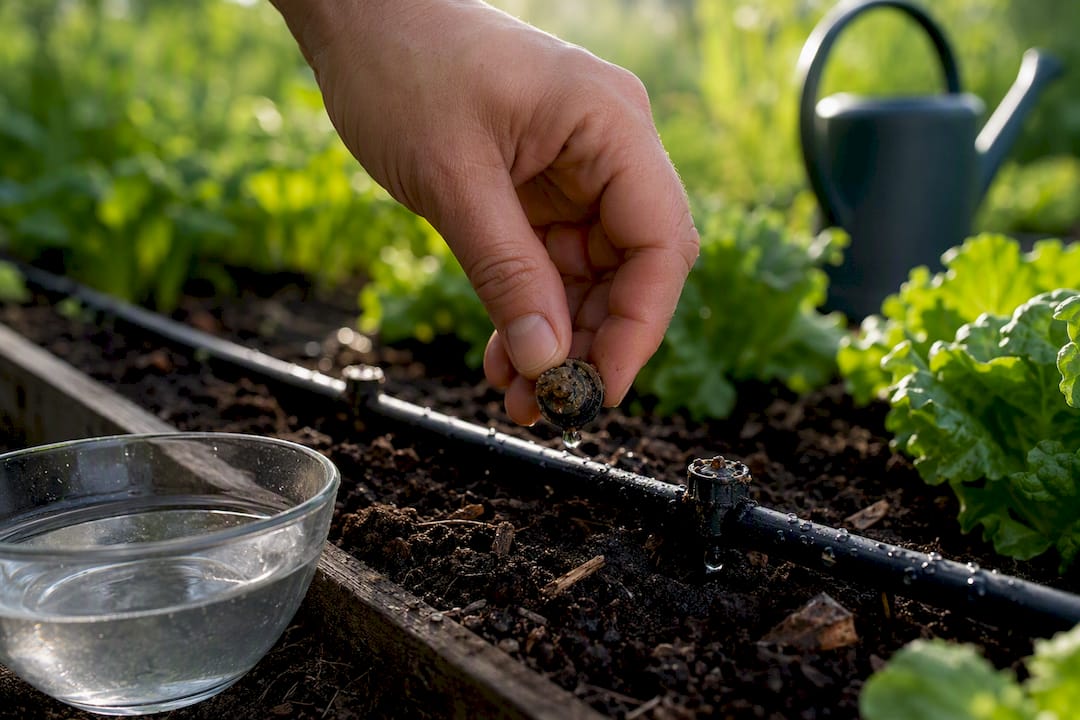
If it’s a clog: Flush the line by removing the end cap and running water through until it clears. Pull individual emitters and soak them in a vinegar solution to dissolve mineral scale, a technique widely recommended for drip systems. Replace any dripper that won’t clear, and clean or swap the inline filter cartridge.
If it’s a supply or PRV limitation: Try scheduling fixes first. Water early morning when household demand is lowest, and run one zone at a time instead of stacking them. Check your PRV’s rated capacity. Because PRVs have a maximum flow rating, pulling more water than that rating collapses downstream pressure even when street pressure stays constant. The permanent fix is moving the irrigation tap upstream of the PRV or upsizing the feed pipe.
If it’s a controller or valve problem: Check wiring connections at the valve box, confirm the solenoid clicks when activated, and run zones individually to isolate the fault. A valve that won’t fully close is often the culprit behind mysterious pressure loss.
If it’s a leak: Walk the line looking for soggy patches or unusually green grass. A dye test at suspected joints can confirm a slow leak. Patch small hose damage, replace compromised tubing sections, and re-secure loose fittings.
- Never adjust a PRV above its rated safe pressure.
- Skip DIY entirely on main-line work that requires trenching or a permit.
Pro Tip: Keep a small notebook or phone note with your baseline PSI reading from a normal day. When something feels off months later, you’ll have a real number to compare against instead of a guess.
Coordinating Shared Watering Line Repairs With Neighbors
Shared systems fail socially as often as they fail mechanically. Start with a calm conversation and a written schedule that lists watering times, zones, and a contact number for each household.
-
Draft a simple shared schedule so no two properties draw water at the same hour.
-
Appoint one key homeowner as liaison. This person mediates disputes, keeps the schedule current, and speaks for the group. Neighborhood irrigation systems that use this model report fewer recurring conflicts.
-
Escalate to your utility or municipal field services when noncompliance persists, you suspect damage to the shared main, or a repair requires a controlled dry-up. Many municipal water departments offer this service for private systems.
-
Keep every pressure test, photo, and repair invoice on file. Documentation is what turns a neighbor dispute into a resolved case.
Maintenance That Keeps Shared Watering Problems From Coming Back
A little routine upkeep prevents most of the emergencies covered above.
- Monthly: Flush supply lines, clean or swap filters, and walk the tubing checking for cracks or kinks.
- Spring start-up: Inspect every emitter, test pressure at the first run, and confirm no winter damage cracked a line.
- Fall winterizing: Drain lines fully in freeze-prone climates to prevent split pipes come spring.
- After storms or construction: Walk the system again. Heavy rain and nearby digging are two of the most common causes of sudden new leaks.
Upgrading to pressure-compensating emitters evens out flow across zones at different elevations, and a properly rated PRV or larger feed pipe solves capacity problems that scheduling tricks only mask.
Pro Tip: Regular flushing and filter cleaning is the single habit that prevents more shared-line headaches than any other maintenance task on this list.
When to Call a Plumber or Irrigation Specialist
Some fixes are beyond a Saturday afternoon project. Bring in a professional when you see:
- A pressure drop over 20 PSI that scheduling changes don’t fix.
- A suspected hidden leak you can’t locate visually.
- The need to relocate your tap upstream of the PRV or upsize the main supply line.
- Complex shared-system rewiring involving multiple properties.
Small repairs like valve replacement or filter installation typically run far less than trenching work, which involves permits, labor, and distance-based pipe costs. Bring your PSI readings, flow test results, and photos to the first appointment. It saves the pro a diagnostic visit and gets you a faster quote.
How FarmDaddy Self-Watering Planters Sidestep the Whole Problem
Container gardening sidesteps shared-line stress entirely. FarmDaddy’s self-watering system stores water inside each container, so your plants draw from a reservoir instead of pulling peak flow from a strained supply line.
- Each connected container operates independently, so one thirsty tomato plant doesn’t rob water from its neighbor.
- The reservoir design makes vacation watering simple, no need to run irrigation while you’re away.
- Customers consistently report less daily upkeep and steadier plant health.
Container systems won’t fix a buried leak under your lawn or restore coverage across a wide landscape bed, but for herbs, vegetables, and flowers, they remove your household from the shared-line equation altogether.
Why Multiple Users Draining the Same Line Causes Chaos
Every household drawing from a shared main is competing for the same finite flow, and the math doesn’t work in anyone’s favor once two or three systems run at once. If your line was sized decades ago for fewer connected properties or lower average demand, modern irrigation timers with multiple zones can easily overwhelm it.
The most common trigger is overlapping schedules. If your neighbor’s controller fires at 6:00 AM and yours starts at 6:15, you’re both drawing from the same limited supply during the overlap, and pressure collapses for both of you. This is exactly why scheduling adjustments matter as much as any mechanical fix. Watering deeply and less frequently, rather than short daily cycles, reduces the number of times your system draws peak flow from the shared supply.
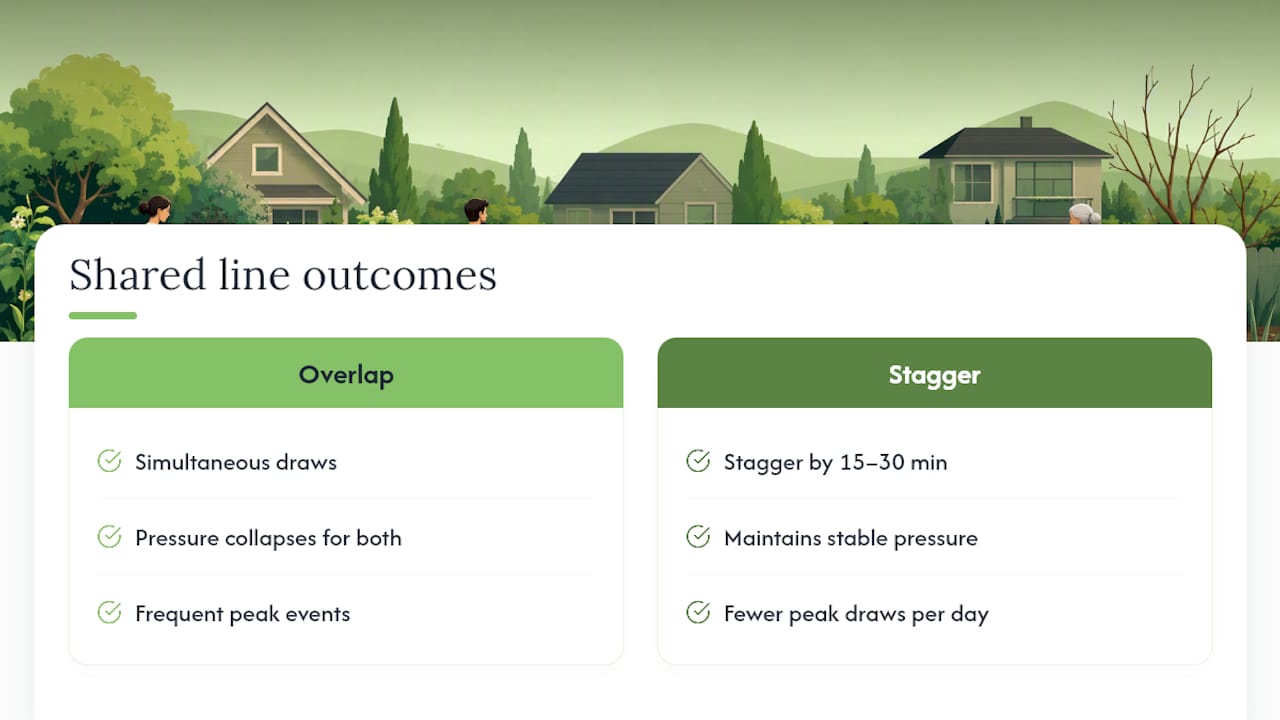
Coordinating usage doesn’t require sophisticated technology. A shared spreadsheet or group text with agreed watering windows, staggered by fifteen to thirty minutes per household, prevents the overlap that causes most pressure complaints. If your neighborhood has more than three or four connected properties, stagger by zone rather than by household. Someone running a single drip zone draws far less than someone running four rotor heads simultaneously, so balance the schedule by actual demand, not just by address.
Rules and Community Guidelines That Affect Shared Line Repairs
Before you touch anything beyond your own property line, find out who actually owns the shared infrastructure. In many neighborhoods, the main line up to each individual meter belongs to the municipal utility, while everything past the meter is the homeowner’s responsibility. Modifying or repairing the shared portion without authorization can violate local code, even if your intentions are good.
Homeowners associations often have their own layer of rules on top of municipal code, covering everything from what irrigation equipment is visible from the street to which contractors are approved for shared-system work. Check your HOA covenants before installing a new PRV, rerouting a tap, or trenching anywhere near a property line.
Permits typically apply to any work involving the main supply line, trenching, or connections that affect water pressure for other connected properties. Skipping a required permit doesn’t just risk a fine. It can also void insurance coverage if that unpermitted work later causes damage. When in doubt, your municipal water department can tell you exactly where jurisdiction starts and stops, and many offer the same dry-up and verification services used for larger neighborhood disputes.
Balancing Water Pressure Across Different Zones on One Line
Pressure imbalance across zones usually comes down to elevation changes, distance from the supply point, or emitters rated for different flow rates sitting on the same line. The fix starts with matching hardware to the actual demand of each zone rather than treating the whole system as uniform.
Pressure-compensating emitters are the simplest correction. These devices regulate their own output regardless of small pressure swings, so a zone at the far end of a sloped yard delivers close to the same flow as one near the source. Swapping standard drippers for pressure-compensating versions on zones with known elevation changes solves a surprising share of “one section always looks dry” complaints.

Grouping zones by similar flow requirements also helps. Running high-flow rotor heads on the same zone as low-flow drip line almost guarantees one or the other performs poorly, since the system pressure gets pulled toward whichever fixture demands more. Separate them onto different valves whenever your controller has the capacity.
For genuinely stubborn imbalances across a shared multi-property line, a pressure-regulating valve installed at each individual property’s connection point lets every household set pressure independently rather than fighting over one shared setting. It costs more upfront than an emitter swap, but it ends the argument for good.
The Real Priority Order Nobody Tells You
Most guides treat every shared-line symptom as equally urgent, and that’s where they go wrong. Clogs get fixed in twenty minutes and cost nothing, so people obsess over them, while the actual bottleneck, an undersized PRV or a competing household demand, sits untouched for years because it feels harder to solve.
The conventional advice to “just water at different times” is a real fix, but it’s a patch, not a cure. If your line’s capacity genuinely can’t support the connected households, staggered scheduling only delays the next pressure complaint. Moving the tap upstream of the PRV or upsizing the feed pipe solves it permanently, and it’s worth the upfront cost if you’re troubleshooting the same drop every summer.
My honest read: diagnose before you spend a dollar, document everything with real PSI numbers, and don’t let a cheap scheduling fix become a permanent excuse to avoid the structural repair your line actually needs. For anyone tired of fighting a shared main for container plants specifically, switching those to a self-contained system removes that argument from your life entirely.
Frequently Asked Questions
What causes shared line watering problems most often? Clogged emitters and filters cause the majority of uneven watering complaints, while indoor pressure loss during irrigation usually points to a shared supply or PRV that can’t handle combined household demand.
How do I know if it’s a clog or a supply issue? Isolate one zone and check emitter output. If flow is weak everywhere and indoor fixtures lose pressure the moment irrigation starts, suspect the supply or PRV rather than a clog.
Can I fix shared irrigation problems myself? Cleaning filters, flushing lines, and replacing individual emitters are safe DIY tasks. Relocating a tap, upsizing a main line, or any work requiring trenching should go to a licensed professional.
When should I involve my neighbors or the utility company? Bring in neighbors as soon as you suspect a shared main is involved, and escalate to municipal field services if there’s persistent noncompliance or you need a controlled dry-up for a safe repair.
Do self-watering containers solve shared line pressure problems? They remove container gardening from the shared-line equation by storing water on-site, but they don’t fix buried leaks or coverage gaps in lawns and landscape beds that still rely on the shared system.
Sources
- Water pressure drops when sprinkler turns on — why and how to fix it
- May 2025: Drip Irrigation Troubleshooting
- Neighborhood irrigation tips
- 7 watering mistakes that kill plants, according to a pro

