
BLOG
How to Match Self-Watering Planter Size to Every Plant

That single ratio, backed by practical sizing research, solves most of the guesswork you’re facing right now.
Here’s the quick map before we get into the “why”:
- Herbs and seedlings: small containers, 1 to 3 gallons of soil
- Houseplants and peppers: medium, 3 to 7 gallons
- Determinate tomatoes and mixed displays: 5 to 10 gallons
- Indeterminate tomatoes and large displays: 10 to 15+ gallons
One more number to remember: capillary wicking tops out around 12 inches, and your wick should sit 2 to 4 inches into the soil. Go deeper than that without help, and the top of your container dries out no matter how full the reservoir is.
Key Takeaways
| Point | Details |
|---|---|
| Depth beats height | Usable soil depth matters more than exterior container height because capillary action tops out around 12 inches. |
| Follow the 25% rule | Set reservoir capacity to about 25% of total soil volume to balance refill convenience with root health. |
| Size by plant, not habit | Indeterminate tomatoes need 10–15 gallons and 18–24 inches of depth, while herbs need as little as 1–3 gallons. |
| Avoid reservoir oversizing | A reservoir far larger than a plant’s actual draw can turn stagnant and stress roots with excess moisture. |
| FarmDaddy applies the math | FarmDaddy’s Garden Box, 2-Planter system, and tomato planter kit are built around the same reservoir-to-soil ratios this guide covers. |
Table of Contents
- What Parts Of A Self-Watering Planter Affect Sizing?
- How Do You Measure And Calculate Planter Volume?
- What Size Self-Watering Planter Do Different Plants Need?
- How Often Do You Need To Refill A Self-Watering Reservoir?
- How Do You Size A DIY Self-Watering Container?
- How Does FarmDaddy Apply These Sizing Rules?
- What The Research Gets Right (And Where Gardeners Overcomplicate It)
- Ready To Put The Right Size To Work?
- Sources
What Parts Of A Self-Watering Planter Affect Sizing?
Every self-watering planter, no matter the brand or shape, has four working parts, and each one influences the size decision you’re about to make. The planting area holds your usable soil depth, which is the number that actually matters for root development. Below it sits the reservoir, a sealed water chamber. Between them is a separator or air gap that keeps soil from waterlogging while still allowing wicking contact. Finally, the fill point or indicator tells you when to top off.
Water moves from reservoir to root zone through capillary action, the same physical process that pulls moisture up a paper towel. That process has a practical ceiling. Peat-based potting mixes generally struggle to wick water more than about 12 inches upward, which is why usable planting depth, not the container’s total height, is the measurement that should drive your buying decision.
When shopping, check three things before you check price:
- A clear fill tube or moisture indicator, so you’re not guessing at reservoir level
- An overflow hole positioned correctly to prevent drowning the wick
- A removable or accessible reservoir for cleaning between seasons
Pro Tip: If a listing only gives you the planter’s exterior height, ask for interior soil depth before you buy. A 20-inch-tall pot might only offer 14 inches of usable planting space once you account for the reservoir and separator layer.
How Do You Measure And Calculate Planter Volume?
Getting your planter size right starts with two measurements: interior diameter (or length and width, for rectangular boxes) and usable soil depth, measured from the top of the separator to the rim. Skip the exterior dimensions entirely. They tell you how much shelf space the pot needs, not how much room your plant’s roots actually get.
Once you have those numbers, converting to gallons is straightforward:
- Calculate cubic inches. For round pots: radius squared × 3.14 × depth. For rectangular boxes: length × width × depth.
- Convert to gallons. Divide cubic inches by 231 (one gallon equals 231 cubic inches).
- Set your reservoir target. Multiply that soil volume figure by 0.25 to 0.33 to land in the recommended reservoir range.
- Confirm wick placement. The wick should extend 2 to 4 inches into the soil and be fully primed with water before you plant, so roots never sit in dry medium during establishment.
A reservoir-sizing calculator built for houseplant care backs up an important nuance here: bigger isn’t automatically better. Oversizing a reservoir well past what a plant actually drinks can keep the root zone wetter than the species tolerates, particularly for plants that prefer to dry out between waterings.
A tomato in July drinks far more than a basil plant in April, so the “right” reservoir size shifts with both plant and season, not just container dimensions.
What Size Self-Watering Planter Do Different Plants Need?
This is the part most gardeners actually came for, so here’s the breakdown by plant category.
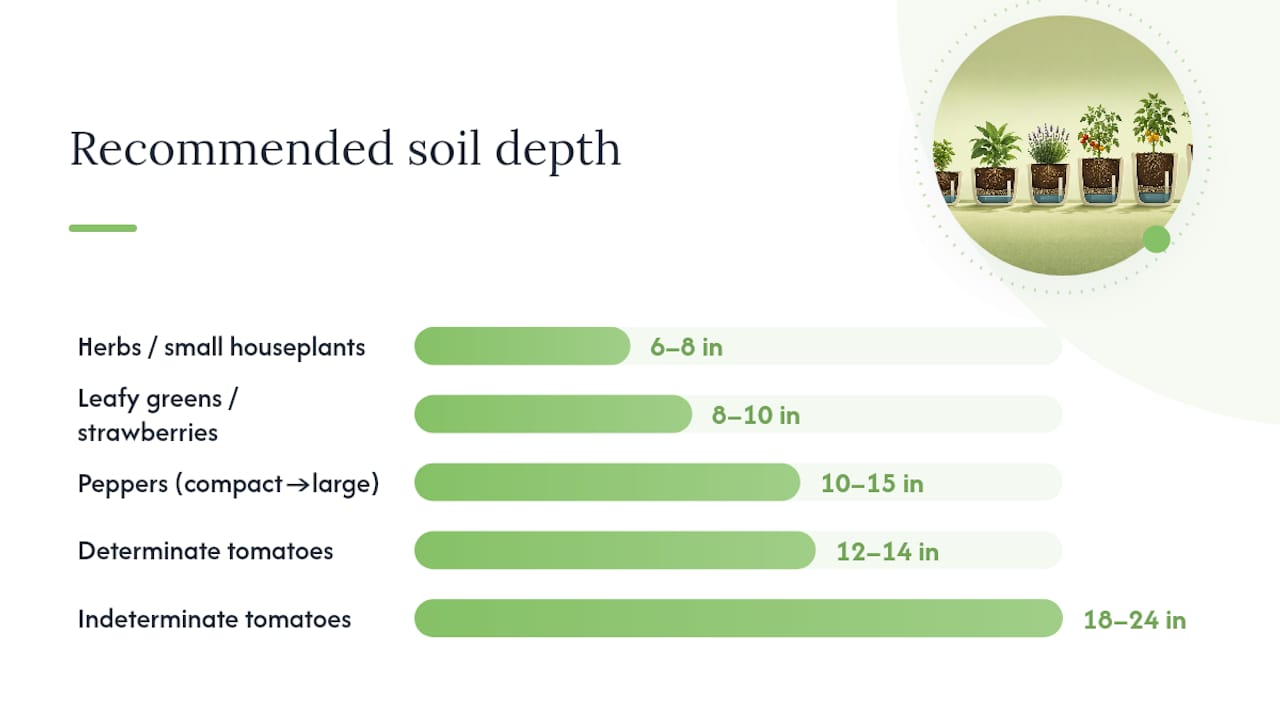
Herbs and small houseplants need the least room. A window box with 6 to 8 inches of soil depth and a reservoir holding 1 to 2 quarts covers basil, thyme, and most trailing houseplants comfortably.
Leafy greens and strawberries do well in 5 to 12 gallons of soil with a reservoir sized to 1 to 2 gallons, scaling with the container. Their shallow, fibrous root systems don’t need much depth, but they do drink steadily.
Peppers need more room than most gardeners expect. Plan on 5 gallons of soil per plant as a baseline.
Tomatoes show the widest range of any common vegetable, and getting this one wrong is the single most common self-watering mistake. Dwarf tomato varieties are content in 1 to 2 gallon containers. Determinate varieties need roughly 5 gallons of soil with 12 to 14 inches of depth, while indeterminate varieties, the ones that keep growing and producing all season, need 10 to 15 gallons and 18 to 24 inches of depth to support their extensive root systems. Clemson Cooperative Extension recommends at least 14 to 20 inches of depth for many compact cultivars along with sturdy staking, since a fully loaded indeterminate plant gets top-heavy fast.
| Plant type | Soil volume | Soil depth | Reservoir target |
|---|---|---|---|
| Herbs / small houseplants | 1–3 gal | 6–8 in | 1–2 qt |
| Leafy greens / strawberries | 5–12 gal | 8–10 in | 1–2 gal |
| Peppers (compact to large) | 3–15 gal | 10–15 in | 1–4 gal |
| Determinate tomatoes | 5 gal | 12–14 in | 1.25–1.65 gal |
| Indeterminate tomatoes | 10–15 gal | 18–24 in | 2.5–5 gal |
Hanging baskets and vertical towers deserve their own note. Their reservoirs are inherently constrained by weight and shape, and the capillary limit matters more here than anywhere else, since a tall tower pocket that exceeds 12 inches of unsupported wicking distance will leave upper plants thirsty regardless of how full the base reservoir is.
Some plants fight the whole system. Succulents, Mediterranean herbs like rosemary and lavender, and anything that needs a hard dry-back between waterings don’t pair well with constant-moisture reservoirs. Size those cautiously or skip the self-watering format for them entirely.
How Often Do You Need To Refill A Self-Watering Reservoir?
Refill frequency depends on plant size, reservoir volume, and weather, but a few real-world patterns hold up across most setups. A 1 to 2 quart herb box reservoir typically needs a refill every 3 to 5 days in summer heat, stretching to a week or more in mild spring conditions. A 5-gallon tomato setup with a properly sized 1.25 to 1.65 gallon reservoir usually needs topping off every 4 to 7 days during peak summer growth, while a 15-gallon indeterminate tomato system with a 3 to 5 gallon reservoir can often run 7 to 10 days between fills.
Bigger isn’t always the answer, even when convenience tempts you toward it. An oversized reservoir sitting mostly full for weeks can turn stagnant, encouraging anaerobic conditions at the base that stress roots and invite algae growth in the fill tube. If you’ve built or bought a reservoir larger than your plant’s actual draw, a few habits fix the downside:
- Empty and refill fully every couple of weeks, rather than always topping off a stale reservoir
- Add a small aeration point or leave the fill cap loose periodically to let gases escape
- Consider a timed external drip hookup for genuinely long absences instead of a giant static reservoir
How Do You Size A DIY Self-Watering Container?
The classic 5-gallon bucket system is the easiest entry point. Drill your overflow hole 2 inches up from the bottom of the outer bucket. That measurement sets your reservoir depth automatically, yielding roughly 2 to 2.5 quarts of water capacity, enough for a pepper plant or a determinate tomato with attentive refilling.
- Cut and fit an inner basket with drainage slots that rests above the overflow line.
- Build or insert a wick column reaching 2 to 4 inches into the soil, and soak it thoroughly before filling with potting mix.
- Add a fill tube running from the surface down to the reservoir for easy topping off.
- Prime the whole system with a full reservoir fill and check for even moisture within 24 hours before planting.
A few other conversions worth knowing:
- Window boxes with 6 to 8 inches of depth pair well with a 1.5 to 2 quart built-in reservoir.
- Half-barrels (typically 15 to 20 gallons of soil) call for a 4 to 6 gallon reservoir, ideal for a single indeterminate tomato or a small mixed planting.
- Vertical towers rely on a center-column reservoir; pocket depth rarely exceeds 6 to 8 inches, so plan on more frequent refills to compensate for the capillary limit.
How Does FarmDaddy Apply These Sizing Rules?
Farmdaddy builds its planter lineup around the same math outlined above, not around guesswork. The Garden Box targets the herb-to-medium-vegetable range, with a reservoir engineered to the 25% ratio so refills stay predictable rather than random. The 2-Planter system lets each container manage its own water level independently, which matters when you’re growing a thirsty tomato next to a lower-demand pepper in the same setup. The tomato planter kit is sized for the 10 to 15 gallon indeterminate range this guide walks through above.
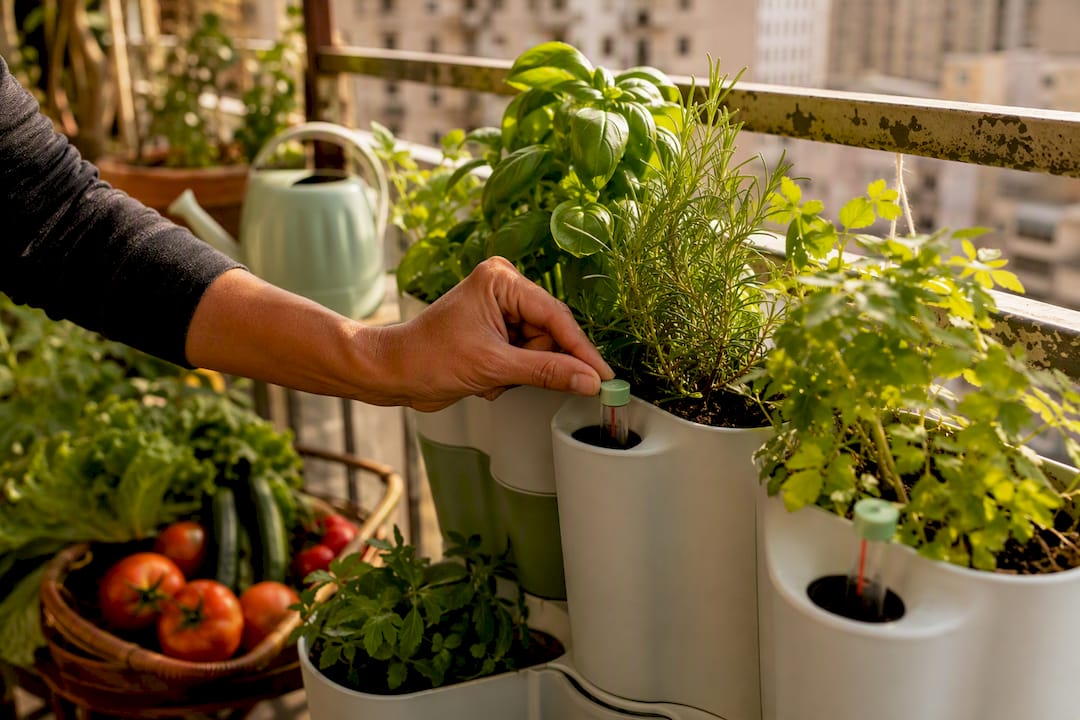
Farmdaddy customers consistently point to two things: how little daily attention the system needs, and how well each connected container holds its own moisture level regardless of what’s growing next to it. If you’ve measured your current pot using the steps above, compare that figure directly against Farmdaddy’s self-watering garden solutions to see where you land.
What The Research Gets Right (And Where Gardeners Overcomplicate It)
Most sizing advice online treats “self-watering planter” as one product category with one ideal size. It isn’t. That ratio, not brand reputation or price point, should drive your decision.
Where conventional advice falls short is the capillary limit. Plenty of buying guides tout deep, dramatic-looking planters without mentioning that wicking effectively stops working past 12 inches. A gorgeous 24-inch tower with a shallow reservoir at the base is often solving the wrong problem for a plant with shallow roots.
If you take one thing from this guide, measure usable soil depth before you measure anything else. Depth determines whether capillary action can even reach your root zone. Everything else, reservoir volume, refill schedule, wick placement, follows from that one number. Farmdaddy’s lineup works because it respects that hierarchy instead of chasing container size for its own sake.
— Steven
Ready To Put The Right Size To Work?
Once you know your target soil depth and reservoir ratio, the next step is finding a container built to those exact specs instead of retrofitting a bucket every season. Farmdaddy designs each planter around the reservoir-to-soil math this guide covers, so a tomato gets a genuinely different setup than a pepper or a window herb box, without you having to drill overflow holes or guess at wick placement.
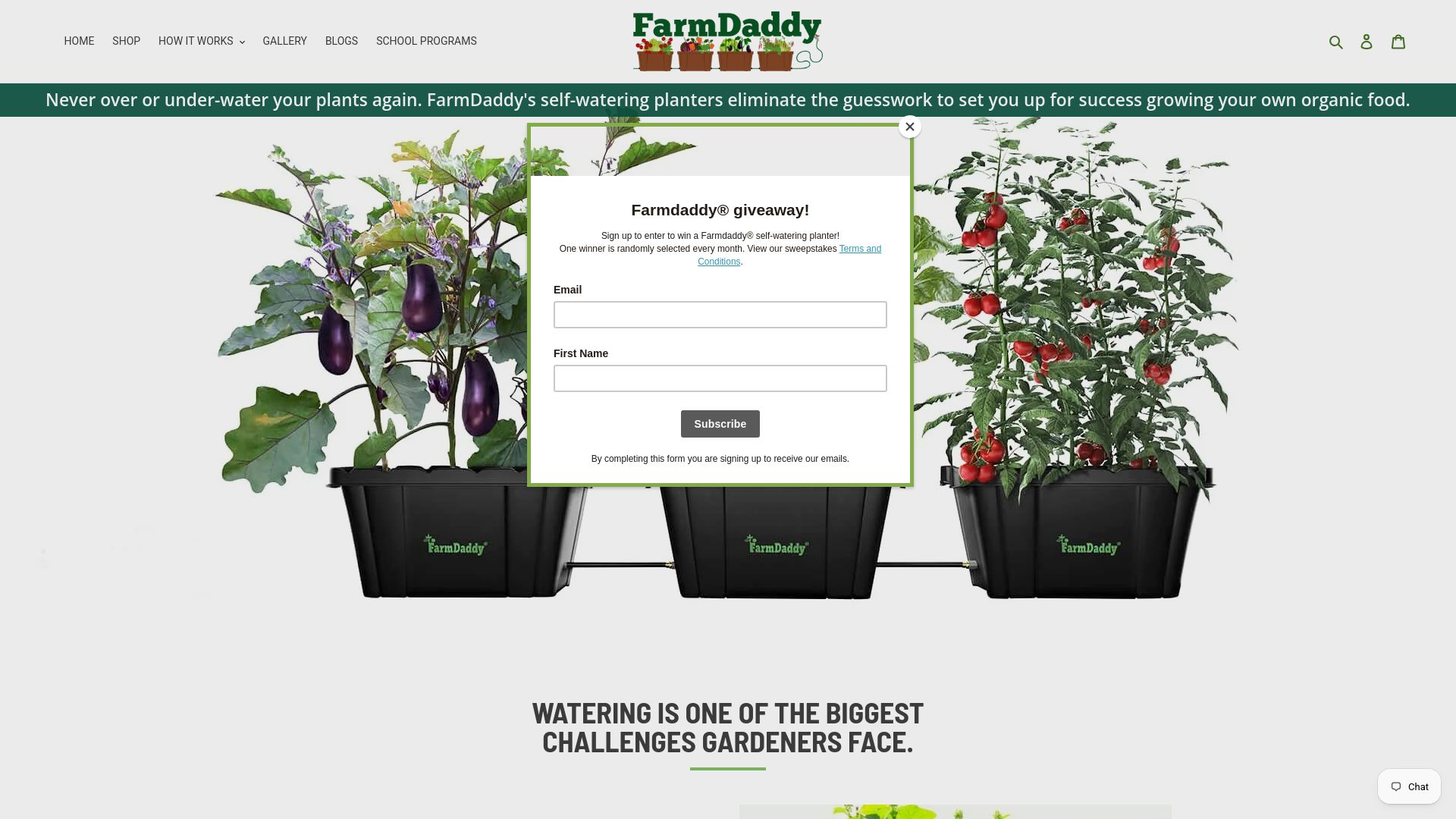
If your measurements point toward the 10 to 15 gallon range, the tomato planter kit is sized for that exact demand. For herbs or smaller vegetables, the Garden Box fits the 1 to 7 gallon range this guide walks through. Browse the full lineup on the self-watering container gardening page and match your measured planter size to a system built specifically for it.
Sources
- How Big of a Planter Do I Need for Tomatoes: Ideal Sizes for Healthy Growth - Evergreen Seeds
- Tomatoes in containers — Clemson Cooperative Extension (HGIC 1323)
- Self-Watering Pot Reservoir Size Calculator - Complete Calculators
- 12 Self-Watering Planter Ideas — and the Exact Reservoir Size Each One Needs - Blooming Expert

