
BLOG
How to Water a Mixed Container Garden the Right Way

Water deeply until you see runoff, then let that be your guide, not the calendar on your wall. For mixed container gardens, deep watering flushes the whole root zone and washes out salt buildup from fertilizer and tap water. Before you water again, check moisture 1 to 2 inches down with a finger, or lift the pot to feel its weight against how heavy it was right after watering.
Frequency depends on pot size, potting mix, sun exposure, and heat, so there’s no single schedule that fits every container on your patio.
- Deep water until it runs from the drainage holes, every time
- Probe 1 to 2 inches down, or compare pot weight wet versus dry
- Watch small pots closely in extreme heat since they can dry out fast
During stretches over 85°F, containers often need daily watering, and small pots may need checks twice a day.
Key Takeaways
Deep watering guided by soil moisture checks, not a fixed calendar, is the single habit that determines whether a mixed container garden thrives or struggles.
| Point | Details |
|---|---|
| Water until runoff | Deep watering flushes salts and confirms the full root zone got wet. |
| Check before you water | Probe 1 to 2 inches down or compare pot weight instead of following a set schedule. |
| Group plants by thirst | Combine species with similar water needs to avoid chronic over or underwatering. |
| Size and material matter | Small pots and terracotta dry fastest; large plastic pots hold moisture longest. |
| Consider a self-watering system | Farmdaddy’s independent-reservoir containers reduce daily checks for mixed plantings. |
Table of Contents
- Why Mixed Container Gardens Need Flexible Watering
- What’s the Best Way to Check Soil Moisture?
- Which Irrigation Method Fits Mixed Containers Best?
- How Often Should You Water Different Container Sizes?
- How Potting Mix and Container Material Affect Watering
- Fixing the Watering Mistakes That Hurt Mixed Containers
- Can Self-Watering Containers Solve These Problems?
- What the Research Actually Tells Container Gardeners
- A Simpler Way to Water Your Mixed Containers
- Sources
Why Mixed Container Gardens Need Flexible Watering
Container soil behaves nothing like garden soil. A raised bed holds deep reserves of moisture and buffers against heat swings. A 12-inch pot has a fraction of that volume, so it loses water to evaporation and root uptake far faster, especially with sun hitting all sides of the container instead of just the surface.
Mixed plantings raise the stakes further. Pack a tomato, a fern, and a succulent into the same container and you’ve created a built-in conflict. One plant wants soil that stays evenly moist, another wants to dry out between drinks. The fix isn’t watering to a compromise that satisfies nobody. It’s grouping plants by similar light and moisture needs before you ever fill the pot.
There’s a third reason deep watering matters beyond keeping roots hydrated: the leaching. Every time you fertilize or use tap water, mineral salts accumulate in the mix. Shallow watering never moves them out.
- Small soil volumes dry out faster than garden beds or raised rows
- Species with mismatched water needs compete when planted together
- Occasional deep watering flushes salts that build up from feeding and tap water
What’s the Best Way to Check Soil Moisture?
Guessing wastes water and stresses roots, so build one of these checks into your routine instead of watering on autopilot.
- Finger test. Push a finger 1 to 2 inches into the mix near the plant’s base. Dry at that depth means it’s time to water; cool and damp means wait.
- Pot weight. Lift the container right after a thorough watering and remember how it feels. A pot that feels noticeably lighter days later needs water, and experienced gardeners often trust this more than a surface glance, especially in hot weather when the surface dries but the root zone stays moist.
- Moisture meter. Insert the probe to root depth, not just the surface, and take readings in two or three spots since mixed containers dry unevenly around different root systems.
- Bottom-soak recovery. If the mix has dried out completely and pulled away from the pot’s walls, set the container in a tub of water for 20 to 30 minutes to fully rewet the media.
Pro Tip: Keep one “reference pot” of the same size and mix as your others, water it fully, and lift it once to memorize the weight. That baseline makes every future pot-weight check faster and more accurate.
Which Irrigation Method Fits Mixed Containers Best?
The right method depends on how many containers you’re managing and how often you can be there to check on them.
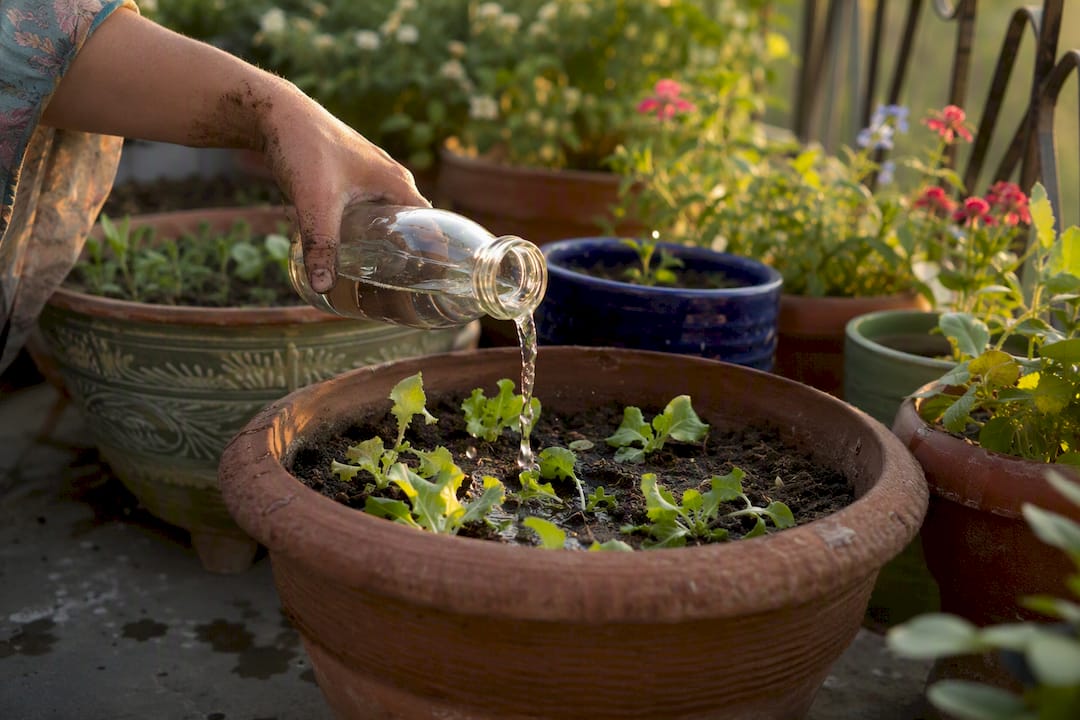
Hand-watering works fine for a handful of pots. Water slowly at the soil line, pause once it starts pooling, then finish once runoff appears at the bottom. That pause matters. Pouring fast just sheets water across the surface and out the sides without wetting the deeper roots.
Drip systems make sense once you’re managing more than five or six containers. A basic setup uses 1/4-inch tubing with individual emitters sized to each pot, connected back to a faucet timer. Plan by counting your containers first, then matching emitter flow rates to pot size before you buy parts.
Self-watering reservoirs solve the problem differently. Instead of you deciding when to water, a reservoir beneath the mix supplies moisture as roots draw it down. This suits mixed containers particularly well when each connected planter manages its own intake independent of its neighbors, since one thirsty tomato won’t drain water away from a companion herb.
Wicking and bottom-watering have their place for smaller, shallow-rooted plants, but skip them for heavy feeders like tomatoes, which need the deep flush that only top watering delivers. Bottom-watering alone also lets salts accumulate at the surface instead of flushing out.
- Hand-watering: best for under six pots and full control
- Drip tubing: best once you’re managing a real cluster of containers
- Self-watering reservoirs: best for consistency and travel
- Wicking: fine for light feeders, risky for salt buildup on heavy feeders
Pro Tip: Before any trip, do a full deep watering, group thirsty pots in partial shade, and set drip timers or reservoir levels to run one cycle longer than your usual routine.
How Often Should You Water Different Container Sizes?
Pot size drives frequency more than almost any other factor, because smaller soil volumes simply run out of reserve faster.
| Container Type | Typical Check Frequency | Notes |
|---|---|---|
| Small pots (6 inches) | Twice daily in 85 to 100°F heat | Water until runoff each time; these dry out fastest |
| Medium pots (12 inches) | Daily in heat; every 2 to 3 days in mild weather | Check 1 to 2 inches down before watering |
| Large pots (18 inches+) | Once daily or every other day | Mix composition affects this more than size alone |
| Hanging baskets and shallow bowls | Daily, prioritize morning checks | Dry fastest of any container type |
In extreme heat near 100°F, small containers and hanging baskets can dry out within hours. As a rule, don’t let containers go two full days without water in that kind of heat unless you’ve confirmed the mix stays moist 2 inches down.
Material changes the math too. Terracotta is porous and wicks moisture through its walls, so it dries noticeably faster than plastic or glazed ceramic, which hold water longer but risk staying soggy in shade. Windy sites accelerate evaporation regardless of container material, so a pot on an exposed deck needs more frequent checks than the same pot tucked against a wall. Watering new plantings during heat waves follows the same logic gardeners use for containers: check more, water deeper, and never trust a fixed interval.
How Potting Mix and Container Material Affect Watering
Your mix determines how much water it holds and how fast it releases it, which means the right blend can cut your watering workload before you ever pick up a hose.
Peat moss or coconut coir gives a mix its water-holding backbone. Vermiculite adds even more retention. Adding vermiculite to a mix can cut watering frequency by roughly 30%, a meaningful difference if you’re managing a dozen containers through a hot summer. Perlite balances that retention with drainage so roots don’t sit in waterlogged mix.
Container material and mix need to work together. A dense, moisture-retentive mix in a dark plastic pot in full sun can overheat roots even while staying wet. That same mix in terracotta dries faster but breathes better.
- Coir or peat for baseline water retention
- Vermiculite when you want fewer watering days
- Perlite to prevent soggy, oxygen-starved roots
- Match retentive mixes with breathable containers in hot, sunny spots
If your mix has already dried and pulled away from the pot’s edges, a bottom-soak followed by a light top watering settles everything back into contact with roots. Choosing the right potting soil components up front saves you that repair work later. And if a container needs watering more than once a day no matter what you do, it may simply be too small for what’s growing in it. Sizing up solves problems no amount of watering finesse can fix.
Fixing the Watering Mistakes That Hurt Mixed Containers
Most struggling container gardens share the same handful of root causes, and every one of them is fixable once you know what to look for.
Watering on a fixed schedule is the most common mistake. “Every Tuesday and Friday” ignores what’s actually happening in the soil, and 90°F this week versus 70°F last week changes everything. Replace the calendar with a moisture check every time.
Salt burn, showing up as browning leaf tips or a white crust on the soil surface, means it’s time to flush the container with plenty of water until runoff comes out clear.
A container needing water multiple times a day usually signals overcrowding or a rootbound plant, and the fix is thinning the planting or moving up to a larger pot rather than watering harder.
Softened water damages container plants over time because of its sodium content. Skip the water softener for container gardens and use rainwater or untreated mains water instead.
- Watch the soil, not the calendar
- Flush salt buildup with a thorough runoff watering
- Repot or thin plants that demand water more than once daily
- Never use softened water on containers
| Point | Details |
|---|---|
| Ditch fixed schedules | Check moisture 1 to 2 inches down or by pot weight instead of watering by date. |
| Flush salt buildup | Water until clear runoff appears when you see leaf tip browning or surface crust. |
| Watch for overcrowding | Multiple daily waterings signal a rootbound plant or a pot that’s too small. |
Can Self-Watering Containers Solve These Problems?
A self-watering container addresses the core tension in mixed plantings directly: different plants want water on different timelines, and no single manual schedule satisfies all of them at once.
Farmdaddy’s self-watering garden system uses a reservoir beneath the mix that supplies moisture as roots draw it down, which cuts the need for daily moisture checks compared with hand-watering a mixed grouping. The patented design lets each connected container operate independently, so a thirsty tomato in one section doesn’t pull water away from a drought-tolerant herb in another.
That independence matters most when your containers hold genuinely mismatched plants. Hand-watering or a single drip zone forces compromise. A reservoir system built for independent containers doesn’t.
Mixed plantings fail more often from mismatched watering than from mismatched light or soil. Solving the water problem at the container level, rather than the schedule level, removes the guesswork entirely.
- Best for gardeners who travel or can’t check pots daily
- Best when a container mixes heavy feeders with drought-tolerant plants
- Still pair with drip tubing for larger in-ground beds outside the containers
What the Research Actually Tells Container Gardeners
The extension guidance behind this article converges on one point gardeners tend to overlook: watering by feel beats watering by habit, every single time. A finger test or a pot lifted twice a week tells you more than any printed schedule ever will, because heat, wind, and pot material change the math daily.
Where conventional advice falls short is in treating mixed containers like single-species pots with extra steps. That’s backward. The entire discipline of mixed container care starts with grouping by thirst, then building watering routine around that grouping rather than averaging everyone’s needs into a lukewarm middle ground that shortchanges half your plants.
If there’s one place to focus energy first, it’s the moisture check habit, not the irrigation hardware. A gardener with a finger test and fifteen minutes a day beats a gardener with an expensive drip timer and no sense of what the soil is actually doing. Automation helps once you understand what you’re automating. It’s a poor substitute for that understanding in the beginning.
— Steven
A Simpler Way to Water Your Mixed Containers
If you’ve read this far, you already know the real work in mixed container gardening isn’t the planting. It’s the daily judgment call about who needs water and who doesn’t. Farmdaddy built its self-watering garden system to take that judgment call off your plate, using independent reservoirs so a thirsty tomato and a drought-tolerant herb can share a setup without either one suffering.
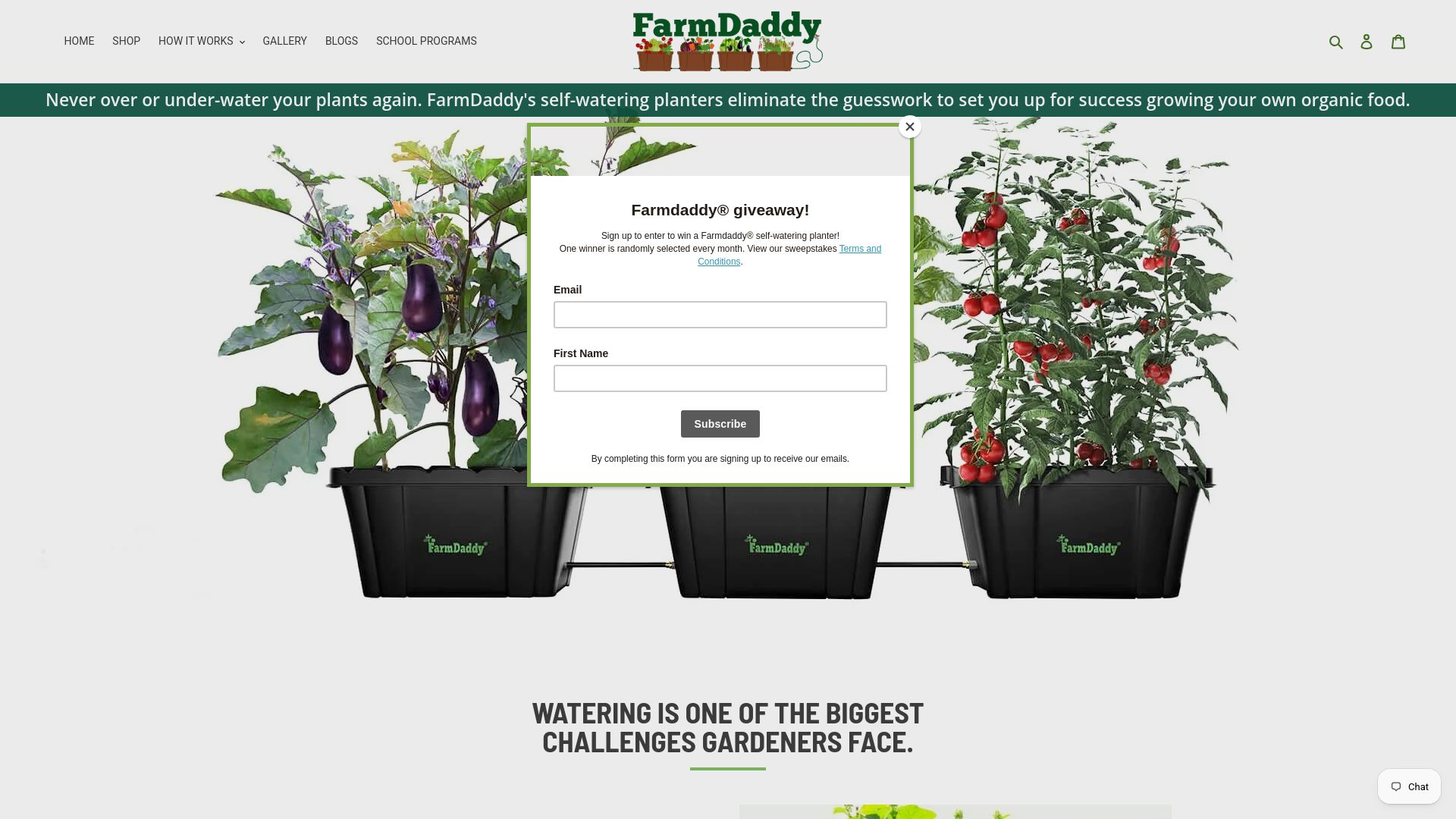
That independent-container design is the real advantage here. Traditional connected planters treat every pot the same, but Farmdaddy’s patented system lets each container draw exactly what its plants need. If you’re managing a mixed grouping of vegetables, herbs, and flowers and want to stop guessing at pot weight every afternoon, browse the self-watering container systems built for exactly this problem and pick the setup that matches how many plants you’re growing this season.
Sources
- Care of plants growing in containers (Extension, Iowa State)
- How to plan an automatic drip watering system for container plants (Rain Bird)
- Success with mixed containers (CAES Field Report, UGA)

