
BLOG
Can Self-Watering Planters Really Cause Root Rot?

Yes, self-watering planters can cause root rot, but only under specific conditions. They are not the plant killers some gardeners fear, and they are not the foolproof solution the packaging sometimes promises either. If you’re staring at a wilted plant in a reservoir system right now, here’s what to do in the next ten minutes:
- Isolate the plant. Move it away from other containers so any fungus or bacteria can’t spread through shared trays or watering habits.
- Drain the reservoir completely. Standing water is the single biggest driver of rot, so cut off the supply immediately.
- Do a quick symptom check. Look at the leaves (wilted but the soil feels wet?), smell the drainage hole (sour or musty?), and lift the pot (heavier than it should be?).
We’ll walk through what’s actually happening below the soil line, how to fix it, and how to set up your system so this doesn’t happen again.
Key Takeaways
Self-watering planters cause root rot only when saturated mixes, oversized pots, or drought-adapted plants override the system’s built-in moisture control.
| Point | Details |
|---|---|
| Verdict on root rot | Self-watering planters can cause root rot, but only under specific, fixable conditions, not by default. |
| Diagnose fast | Check for wilting in wet soil, a sour smell, and pot weight before assuming your plant is thirsty. |
| Rescue promptly | Isolate, drain the reservoir, trim mushy roots with sterile tools, and repot into a chunky, airy mix. |
| Match plant to system | Moisture-loving herbs and leafy greens thrive; succulents and Mediterranean herbs need dry cycles instead. |
| Choose the right design | Farmdaddy’s independently connected containers separate the reservoir from the root zone to support airflow. |
Table of Contents
- What Causes Self-Watering Planter Root Rot?
- Why Does Prolonged Saturation Lead to Rot?
- What Are the Signs of Root Rot in a Self-Watering Pot?
- How Do You Fix Root Rot in a Self-Watering Planter?
- How Do You Prevent Root Rot in Self-Watering Planters?
- Which Plants Thrive (or Struggle) in Self-Watering Systems?
- How Fast Does Root Rot Progress, and When Should You Give Up?
- What Do Plant Experts Say About Preventing Overwatering?
- Quick Root Rot Emergency Checklist
- What I’ve Learned From Years of Running Self-Watering Systems
- A Self-Watering System Built to Keep Roots Breathing
- Frequently Asked Questions
- Sources
What Causes Self-Watering Planter Root Rot?
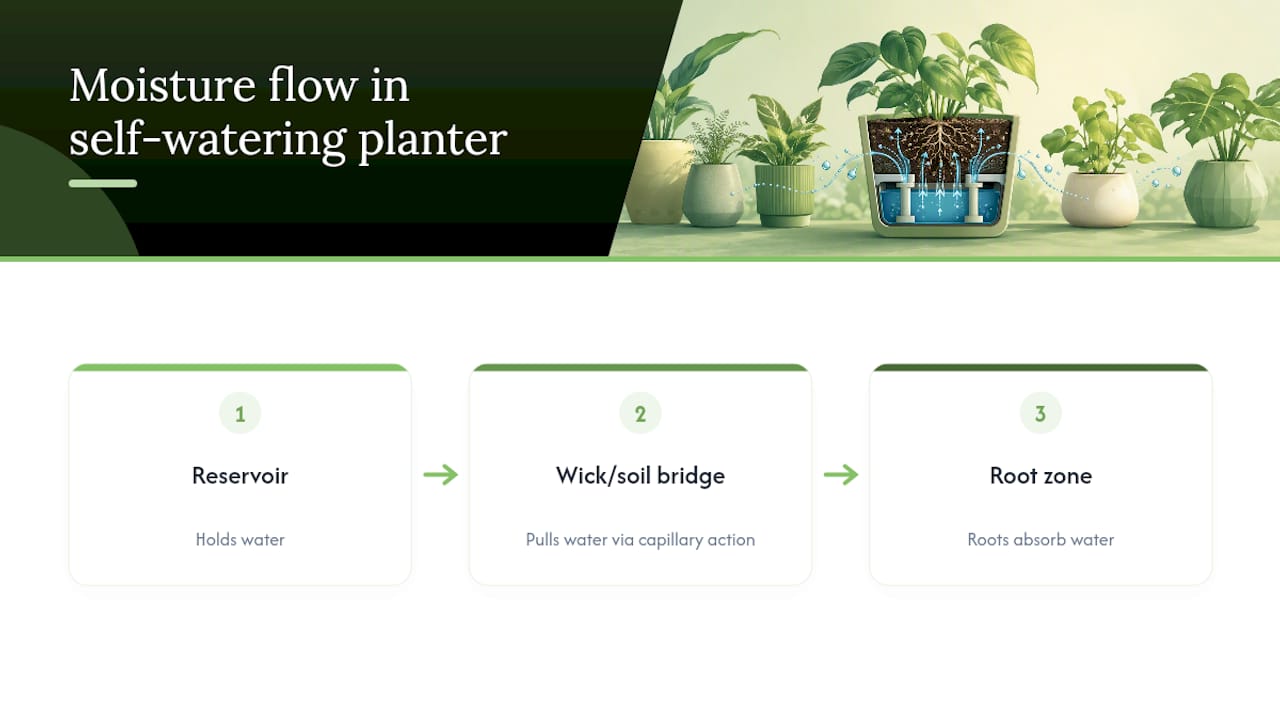
A self-watering planter, sometimes called a sub-irrigation system, works by pulling moisture upward from a bottom reservoir into the root zone through capillary action, the same physical force that draws water up a paper towel dipped in a glass.
The path looks like this: reservoir → wick or soil bridge → root zone. A wick (often a rope, fabric strip, or column of potting mix) stays in contact with the water below and pulls it up as the surrounding soil dries out. Common designs include simple wick pots, two-chamber pots with an inner grow container and outer reservoir, and hybrid systems using LECA (expanded clay pebbles) as a moisture buffer.
This steady supply is genuinely useful. Consistent bottom watering encourages deeper root development and better drought resilience than the feast-or-famine cycle of top-watering, according to houseplant researcher Darryl Cheng. The system only becomes a problem when the water has nowhere to stop.
Pro Tip: Check your overflow hole or drain line once a month. If it’s clogged with roots or debris, water backs up higher than the design intends, and that’s when trouble starts.
Why Does Prolonged Saturation Lead to Rot?
Roots don’t just need water. They need oxygen, and they get it from air pockets in the soil. When a self-watering system keeps the root zone constantly saturated, those pockets fill with water instead of air, and roots essentially begin to suffocate. That stressed, oxygen-starved tissue becomes an open door for water-mold pathogens like Pythium and Phytophthora, which thrive in exactly these anaerobic conditions. Overwatering creates the anaerobic root zones these pathogens favor, and once they take hold, the rot can spread faster than the plant can compartmentalize the damage.
Several usage habits push a well-designed system into this failure zone:
- Dense or peaty potting mixes that hold water instead of draining it.
- A reservoir kept perpetually full with no chance to draw down.
- An oversized pot where a small root mass can’t use the water fast enough.
- A clogged wick or broken capillary connection that floods one zone while starving another.
- Low transpiration conditions, like winter or a dim corner, where the plant simply isn’t pulling much water up.
Pro Tip: Judge moisture by pot weight, not soil surface, and back off reservoir refills in low-light months when the plant’s demand drops.
What Are the Signs of Root Rot in a Self-Watering Pot?
The confusing thing about root rot symptoms in a self-watering setup is that they mimic thirst. A wilted, droopy plant in wet soil is one of the clearest signals something is wrong below the surface, not above it. Watch for:
- Wilting or drooping leaves even though the soil feels damp.
- Yellowing that starts with older, lower leaves first.
- A musty or sour smell coming from the soil or drainage hole.
- A soggy, dark crown where the stem meets the soil.
- Growth that has visibly stalled for weeks.
To confirm, run three quick checks: push a chopstick into the mix to feel moisture at depth, lift the pot to gauge if it’s heavier than expected, and sniff at the drainage hole. A sour smell combined with limp, yellowing leaves points to root damage from overwatering, not a lack of water. If you find brown, mushy roots or blackening at the soil line, stop guessing and inspect the roots directly.
How Do You Fix Root Rot in a Self-Watering Planter?
Once you suspect rot, speed matters more than perfection. Work through these steps in order:
- Isolate and drain. Pull the plant away from others and empty the reservoir completely.
- Remove and rinse. Slide the plant out of its pot and gently rinse soil off the roots under lukewarm water so you can actually see what you’re dealing with.
- Trim the damage. Using sterile scissors or pruning shears, cut away any brown, mushy, or foul-smelling roots back to firm, white or tan tissue.
- Sterilize your tools and pot. Wipe blades with 70% isopropyl alcohol between cuts, and clean plastic reservoir components with a dilute bleach solution if rot was severe.
- Repot into a chunky mix. Aim for 20 to 30% perlite or pumice blended into a quality potting soil, with chunky bark added for larger plants, and skip any leftover compacted media entirely.
- Hold off on the reservoir. Keep the plant on top-watering only for about two weeks so the trimmed roots can heal before facing constant moisture again.
If more than half the root mass is gone, consider taking healthy stem cuttings and propagating a fresh start instead of gambling on a full recovery.
Pro Tip: Label the repot date. A recovering plant’s slow, steady new growth over the following month tells you far more than staring at the leaves every day.
How Do You Prevent Root Rot in Self-Watering Planters?
Prevention comes down to giving water somewhere to go besides the roots. Use chunky, well-aerated mixes; avoid heavy garden soil or straight peat, which compact into a dense, waterlogged brick over time. Extension-style guidance backs this up directly: container mixes with 20 to 30% added perlite or pumice prevent the sustained saturation that leads to rot. A layer of chunky bark or LECA at the base also creates a physical capillary break that keeps the very bottom of the pot from staying saturated.
Reservoir habits matter just as much as the mix:
- Let the reservoir run dry occasionally rather than topping it off the moment it’s low.
- Flush the whole system monthly with plain water to clear out debris and buildup.
- Watch for a white, crusty mineral buildup on the soil surface. Soluble salts accumulate in self-watering systems over time, and occasional flushing prevents osmotic stress on the roots.
- Reduce or pause reservoir watering in winter when growth slows and demand drops.
Build a simple habit: lift the pot before refilling, and probe with a chopstick if the weight seems off. That two-second check catches most problems weeks before symptoms show up in the leaves.
Which Plants Thrive (or Struggle) in Self-Watering Systems?
Not every plant wants constant moisture at its roots, so matching the plant to the system matters as much as the system itself.
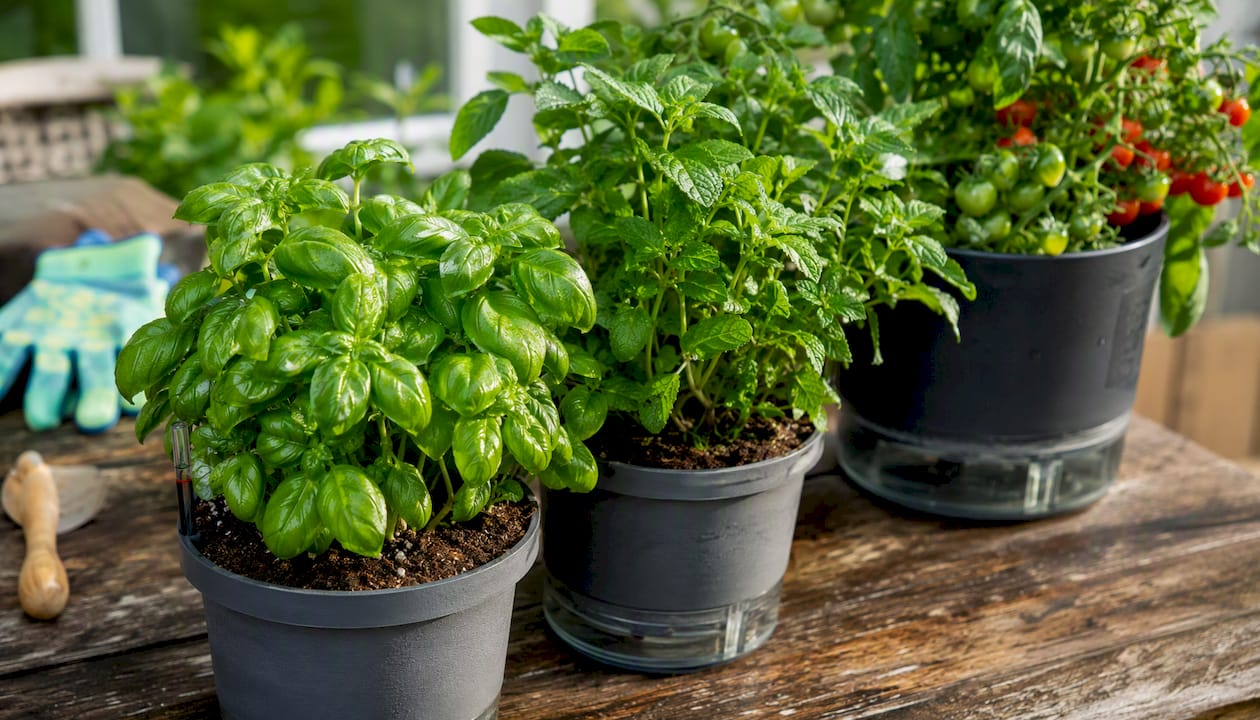
Good candidates: moisture-loving herbs like basil and mint, leafy greens, tropical foliage plants such as peace lily, calathea, and ferns, and most annual vegetables including tomatoes and peppers. These plants transpire heavily and use water quickly, so they rarely sit in excess moisture.
Poor candidates: succulents, cacti, Mediterranean herbs like lavender and rosemary, snake plant, and ZZ plant. These species evolved for drought cycles and need their roots to dry out between waterings. Continuous moisture systems will rot drought-adapted plants even when everything else about the setup is done right.
How Fast Does Root Rot Progress, and When Should You Give Up?
Root rot moves faster than most gardeners expect. Early signs, wilting and a faint musty smell, can show up within days to two weeks of a saturated root zone. Moderate rot with visibly browning roots typically becomes obvious in two to four weeks. Beyond four to six weeks of unchecked saturation, expect severe damage: blackened stems at the soil line and roots that are mostly brown and mushy.
If the majority of the root mass is gone, the crown has blackened, or the plant collapses even after you’ve trimmed and repotted it, stop trying to save the original specimen. Take cuttings and propagate instead.
What Do Plant Experts Say About Preventing Overwatering?
Cooperative extension guidance and houseplant authorities converge on the same core advice: test the soil, don’t guess on a schedule, and never assume wilting means thirst.
Roots need oxygen to function. A mix with genuine porosity, achieved by adding 20 to 30% perlite or pumice, lets excess water drain instead of pooling around the root hairs where it can suffocate them.
This lines up with what growers see anecdotally: comparisons of self-watering versus standard pots over a full growing season show self-watering systems reduce erratic wilting in moisture-loving crops while rapidly harming plants that need dry cycles. Two rules worth memorizing: inspect the roots before assuming a wilted plant just needs water, and pull back on reservoir use the moment daylight hours shrink.
Quick Root Rot Emergency Checklist
If you’re not sure where to start, run through this in order:
- Isolate the plant from others nearby.
- Drain the reservoir fully.
- Lift the pot to check if it’s heavier than normal.
- Probe and smell at the drainage hole for moisture depth and odor.
- Decide: inspect roots now if you smell rot, or schedule a full repot check within 24 hours if symptoms are mild.
If a local garden center or extension office is nearby, a quick photo consult can save a borderline plant. If it’s already collapsed, propagate a cutting and move on.
What I’ve Learned From Years of Running Self-Watering Systems
The habits that actually prevent rot are boring, and that’s the point. A weekly glance at the reservoir level, a monthly flush to clear out mineral crust, and dialing back watering frequency once fall hits have done more for our plants than any fancy gadget. Match your pot size to the actual root mass, add a coarse top-dress to keep fungus gnats away, and trust how the plant looks over what the calendar says.
A Self-Watering System Built to Keep Roots Breathing
Most root rot in sub-irrigation setups traces back to one design flaw: the reservoir and the root zone aren’t properly separated, so water backs up instead of wicking up on demand. Farmdaddy’s containers use a patented design where each connected planter draws water independently, so a saturated reservoir in one pot never floods its neighbor, and airflow around the root zone stays intact even when the water level is high.
If you’re setting up a new system or replacing one that’s given you rot problems before, the self-watering container gardening guide walks through recommended mixes and maintenance for Farmdaddy planters specifically. Growing tomatoes or other moisture-loving vegetables that thrive with steady bottom watering? The self-watering tomato planter kit is built with the airflow and reservoir separation this article just covered. Visit the Farmdaddy planter lineup to find the setup that matches your plants and growing space.
Frequently Asked Questions
Do self-watering planters cause root rot more than regular pots? Not inherently. They actually reduce erratic overwatering compared to top-watering, but they raise the stakes if the mix, pot size, or plant choice is wrong.
Can I save a plant with root rot in a self-watering pot? Often, yes, if you act within the first couple of weeks. Trim the rotted roots, repot into a chunky mix, and hold off on reservoir watering while it recovers.
How do I know if my self-watering planter’s reservoir is too full for too long? Check that it draws down between refills instead of staying topped off. If the water level barely moves for weeks, your plant isn’t using it, and that’s a warning sign.
What potting mix prevents root rot in self-watering containers? A blend with 20 to 30% perlite or pumice mixed into quality potting soil, plus chunky bark for larger plants, keeps oxygen available even with constant bottom moisture.
Are self-watering planters bad for succulents? Generally, yes. Succulents and cacti need dry periods between waterings, which conflicts with how sub-irrigation systems are designed to work.
Sources
- Extension
- House Plant Journal
- Cultivating Flora: Signs of overwatered container plants
- PlantSolve - Overwatering
- Self-Watering Pots Guide for Plants | KnowYourPlant Blog

