
BLOG
Cucumbers in Self-Watering Planters: Patio Grower's Guide

Yes, you can reliably grow cucumbers in self-watering planters, and the results can genuinely surprise you. The key conditions are a container of at least 10 gallons for vining types (5 gallons for bush varieties), a quality potting mix with organic matter, a trellis for support, and steady reservoir management. RHS chief horticulturist Guy Barter confirms that keeping potting compost consistently moist is the single most important technique for avoiding bitter fruit and crop failure in containers, and a self-watering system does exactly that with far less daily effort.
Quick setup checklist:
- Container: minimum size recommendations apply differently for vining and bush varieties
- Potting mix: high-quality mix amended with compost and perlite
- Trellis: at least four feet tall with grid openings wide enough to prevent fruit deformation
- Reservoir: check and refill every few days; top-water during hot weather
- Fertilizer: controlled-release granular mixed in at planting, plus liquid feeding every couple of weeks
Pro Tip: The most common reason container cucumbers taste bitter is irregular watering. A self-watering planter removes most of that risk by delivering moisture from below, steadily and automatically.
Table of Contents
- How do self-watering systems help cucumbers, and where do they fall short?
- What container size and depth do cucumbers actually need?
- What soil mix and fertilizer strategy works best in self-watering planters?
- How should you plant and trellis cucumbers in containers?
- How do you manage the reservoir and know when to top-water?
- Step-by-step: how to set up a self-watering planter for cucumbers
- Troubleshooting bitter fruit, root problems, and pests
- What timeline and costs should you expect?
- Farmdaddy makes the setup straightforward
- Key Takeaways
- What actually works in small-space cucumber growing
- Useful sources
How do self-watering systems help cucumbers, and where do they fall short?
The core advantage is moisture consistency. Cucumbers produce cucurbitacin, a bitter compound, when they experience water stress. Inconsistent watering is the leading cause of bitter fruit in container-grown cucumbers, and a reservoir-fed system reduces that risk dramatically by wicking moisture upward on demand rather than relying on you to remember.
Self-watering setups also cut down on human error. Forgetting to water for two days in July can ruin a crop. With a reservoir, your plants draw what they need, when they need it.
That said, self-watering planters are not a set-it-and-forget-it solution in every condition. Two real limits to plan around:
- Extreme heat (above 95°F): Evaporation can outpace reservoir delivery. Experienced container growers report that even reservoir systems need supplemental hand watering during heat waves to prevent wilting.
- Nutrient leaching: Frequent watering flushes nutrients from the mix over time. Without amendments or regular feeding, plants can show signs of deficiency even with perfect moisture.
What container size and depth do cucumbers actually need?
Getting the container right matters more than most gardeners expect. Root volume directly affects how well plants handle heat and dry spells.
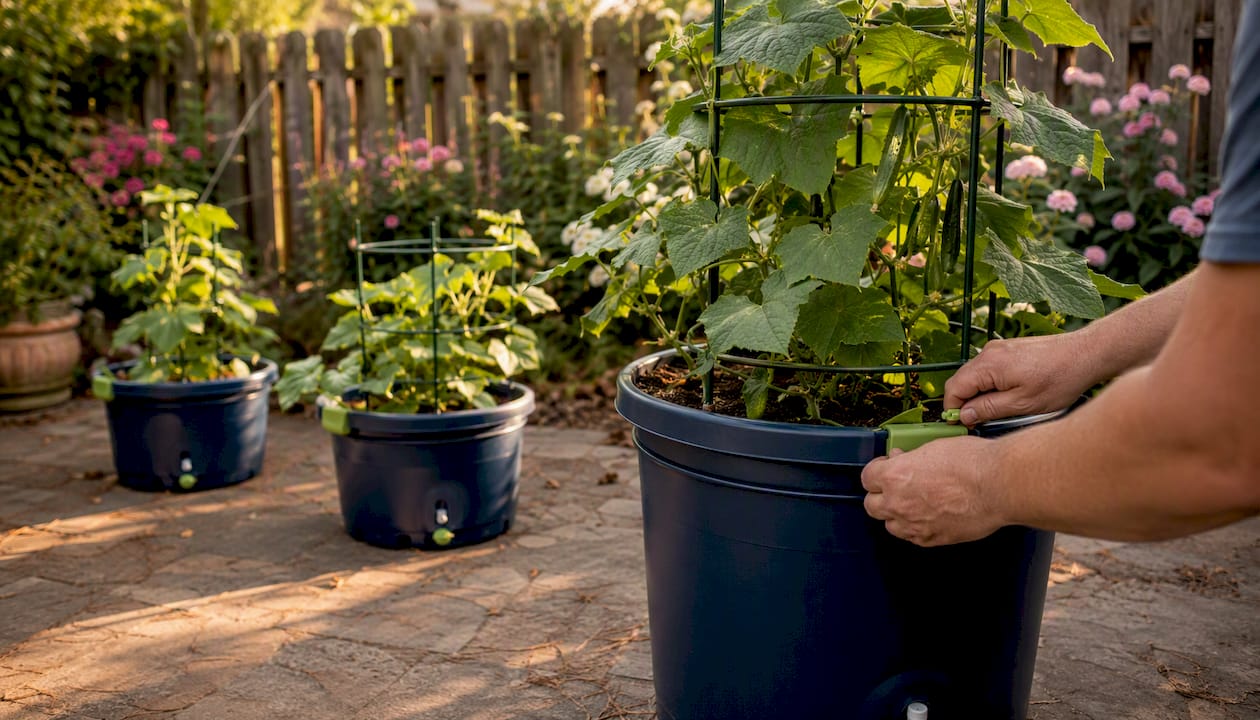
| Cucumber type | Minimum container | Better option | Plants per container |
|---|---|---|---|
| Vining | 10 gallons | 15 gallons | 1–2 |
| Bush | 5 gallons | 7–10 gallons | 1–2 |
A 15-gallon container noticeably improves drought tolerance for vining varieties compared with the 10-gallon minimum, which matters more than fertilizer adjustments during heat events. If you are growing on a balcony with full afternoon sun, go bigger.
Material choices affect moisture retention too:
- Plastic: Retains moisture well, lightweight, affordable. Best for balconies.
- Fabric grow bags: Excellent drainage and air pruning of roots, but dry out faster. Requires more frequent reservoir checks.
- Terracotta: Breathable but wicks moisture away from the mix. Pairs poorly with self-watering systems in hot climates.
- Composite/resin: Good balance of insulation and weight. Holds moisture well in warm weather.
Bush cucumber varieties perform well in 5-gallon containers, while vining types need more root volume and a trellis to produce comparable yields.
What soil mix and fertilizer strategy works best in self-watering planters?
Standard garden soil is too dense for containers. You need a mix that holds moisture without becoming waterlogged, and that stays loose enough for roots to spread freely.
A reliable blend: high-quality potting mix as the base, amended with 15–25% compost or aged organic matter, plus 10–15% perlite or coarse grit for drainage. Horticultural experts advise adding organic matter and controlled-release fertilizer because frequent watering leaches nutrients over time, and this combination slows that loss considerably. For choosing the best potting soil, look for mixes labeled for vegetables or containers.
For feeding, use a two-layer approach:
- Mix a slow-release granular fertilizer (look for balanced N-P-K around 10-10-10 or a vegetable-specific blend) into the bottom two-thirds of the mix at planting
- Supplement with a liquid vegetable fertilizer every 10–14 days once plants begin flowering, since cucumbers are heavy feeders
Pro Tip: Pre-mix your amendments and controlled-release fertilizer into the potting mix before filling the container. Layering it in dry and then watering down can create uneven pockets that concentrate nutrients near the roots and cause tip burn.
How should you plant and trellis cucumbers in containers?
Plant seedlings at the same depth they sat in their nursery pot, or sow seeds 1 inch deep with two seeds per spot and thin to the strongest plant. Space two plants at least 12 inches apart within a single large container.
For trellising, vining cucumbers need support from the start. Here is a simple setup sequence:
- Install the trellis before planting to avoid disturbing roots later.
- Choose a trellis at least 4–5 feet tall. A simple A-frame, cage, or vertical netting panel all work well on balconies.
- Use trellis grid openings of at least 4 inches. Smaller openings can trap developing fruit and cause deformation.
- As vines grow, loosely tie or weave stems through the trellis every few days using soft garden ties or strips of fabric.
- Pinch off the growing tip once the vine reaches the top of the trellis to redirect energy into fruit production.
Vertical trellising prevents fruit from resting on soil, which reduces rot, pest damage, and misshapen cucumbers. Bush varieties can skip the trellis, though a short cage still helps keep the plant tidy and off the container edge.
How do you manage the reservoir and know when to top-water?
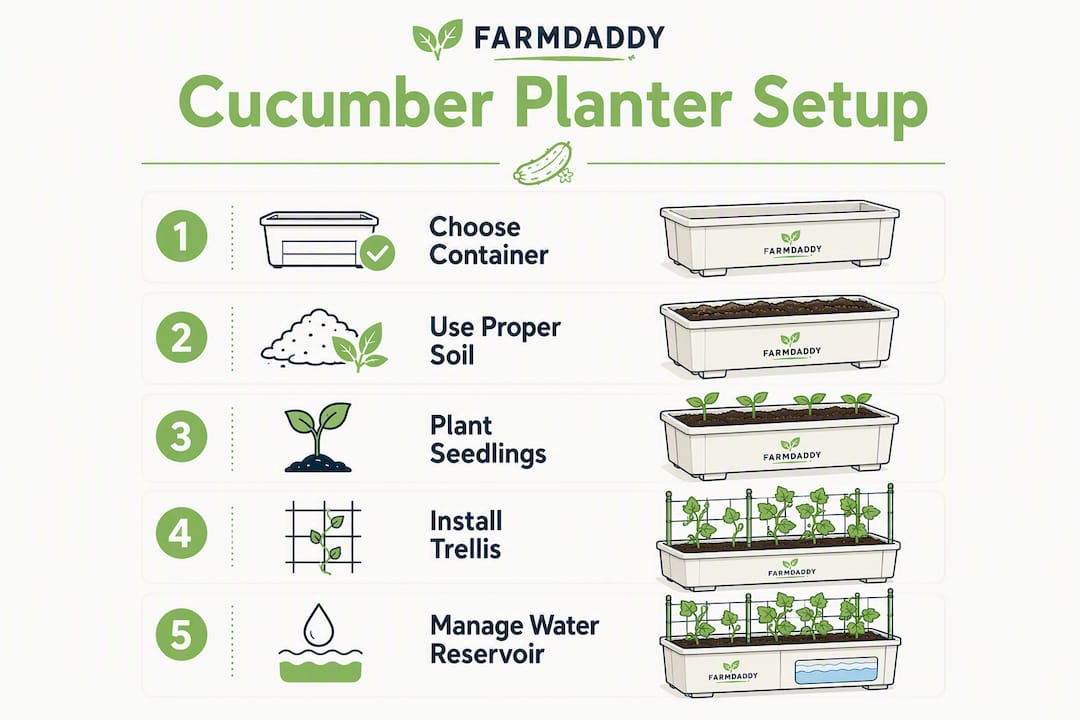
Self-watering planters work through a wicking layer or perforated basket that draws water upward from a reservoir below the soil. The plant roots follow moisture downward, creating a stable, consistent supply.
Practical monitoring cues:
- Check the reservoir sight gauge or lift the fill tube cap every 2–3 days during warm weather
- Do a finger test 2 inches into the soil. If it feels dry at that depth, the wick may need priming or the reservoir is empty
- Watch for slight midday wilting that recovers by evening. That is normal heat stress. Wilting that persists into the evening signals the reservoir is empty or the plant is stressed
When temperatures exceed 95°F or strong wind is present, top-water directly onto the soil surface in the morning. This supplements what the reservoir delivers and cools the root zone slightly.
Pro Tip: Set a phone reminder to check your reservoir every other day during summer. Visual checks take 30 seconds and prevent the one gap that causes bitter fruit or wilting.
Step-by-step: how to set up a self-watering planter for cucumbers
- Assemble the planter and install the wicking basket or layer per the manufacturer’s instructions.
- Set up the trellis before adding soil. Anchor it securely so it can support the weight of a full vine.
- Pre-wet your potting mix in a bucket or wheelbarrow until it clumps slightly when squeezed. Dry mix is hard to wet evenly once it is in the container.
- Fill the wicking basket with potting mix, then fill the main chamber to within 2 inches of the rim, mixing in controlled-release fertilizer as you go.
- Plant or sow at the correct depth and spacing. Water the surface lightly to settle the mix.
- Fill the reservoir through the fill tube until water appears at the overflow hole.
- Connect additional planters with a connector hose if you are running a multi-container setup. The Farmdaddy 2-Planter Self Watering Garden System is designed for exactly this, with each container operating independently so one plant’s needs do not affect its neighbor.
- Place in full sun (6–8 hours minimum). Wait until soil temperatures are at least 60°F and nights stay consistently above 50°F before planting outdoors.
Pro Tip: Plant in the evening or on a cloudy day to reduce transplant shock. Give seedlings a light misting on the leaves for the first two days while roots establish.
Troubleshooting bitter fruit, root problems, and pests
Most problems in self-watering containers trace back to moisture, nutrients, or airflow. Here is how to read the symptoms:
| Symptom | Likely cause | Fix |
|---|---|---|
| Bitter fruit | Moisture stress or heat spike | Stabilize reservoir; top-water during heat above 95°F |
| Yellowing leaves | Nutrient leaching | Apply liquid fertilizer; flush and top-dress with compost |
| Wilting despite full reservoir | Root rot or blocked wick | Check wick for debris; reduce watering frequency temporarily |
| Hollow or pale fruit | Pollination failure or heat | Hand-pollinate flowers; harvest at recommended size |
| White powdery coating on leaves | Powdery mildew from poor airflow | Improve trellis spacing; remove affected leaves |
Root rot in self-watering planters usually looks different from drought stress. Drought stress causes firm, dry soil and crispy leaf edges. Root rot shows up as soft, dark roots, a sour smell from the reservoir, and leaves that yellow and drop even when the reservoir is full. If you suspect root rot, drain the reservoir, let the mix dry slightly for a few days, and check that the overflow hole is not blocked.
For pests, aphids and cucumber beetles are the most common visitors. A strong spray of water knocks aphids off stems. Yellow sticky traps placed near the container catch cucumber beetles before populations build.
What timeline and costs should you expect?
Most cucumber varieties reach first harvest in 50–70 days from transplant. Once fruiting begins, pick every 1–3 days at 6–8 inches for slicing types and 3–4 inches for pickling types. Leaving fruit on the vine too long signals the plant to slow production.
| Item | Estimated cost range |
|---|---|
| Self-watering planter (10–15 gal) | $30–$70 |
| Quality potting mix (2 cu ft bag) | $15–$25 |
| Compost amendment | $8–$15 |
| Trellis (4–5 ft panel or cage) | $10–$30 |
| Controlled-release fertilizer | $10–$20 |
| Connector hose (optional) | $10–$20 |
A single healthy vining cucumber plant in a 15-gallon container with consistent moisture and trellising can yield 10–20 fruits over a season. Bush varieties in smaller containers typically produce 6–12 fruits. Trellising and steady moisture are the two factors that most reliably push yields toward the higher end of those ranges.
- Almanac container cucumber guide recommends waiting until soil temps hit 60°F and nights stay above 50°F before transplanting outdoors.
Farmdaddy makes the setup straightforward
Growing cucumbers without the daily watering guesswork is exactly what Farmdaddy’s self-watering planters are built for. The patented design wicks moisture from a built-in reservoir, so your cucumbers get steady hydration whether you are home or away for a few days.
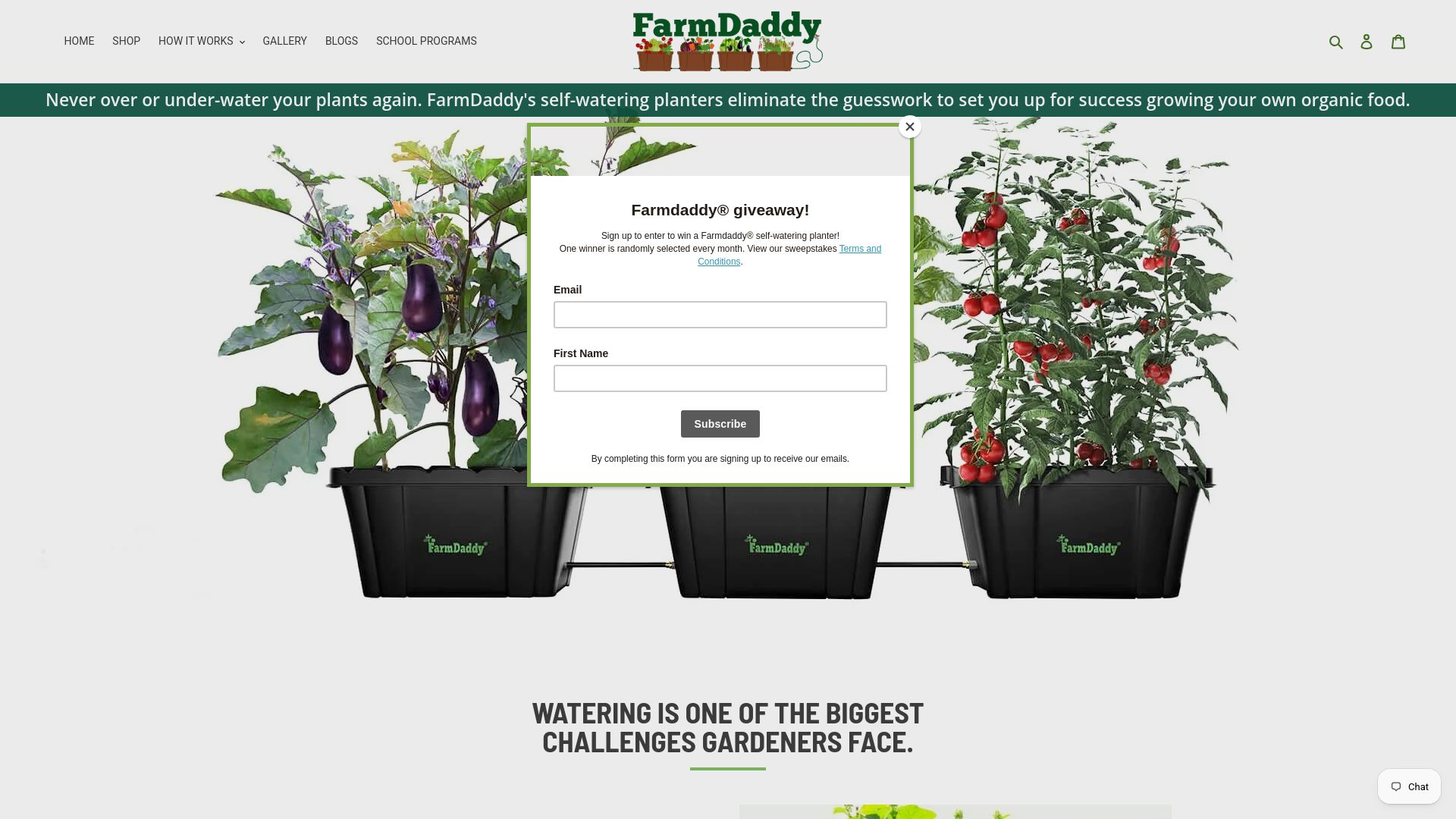
The Farmdaddy 2-Planter Self Watering Garden System is a natural fit for the setup described in this guide. Each container operates independently through the connector hose, so one thirsty plant does not drain the system for its neighbor. Customers consistently highlight how much easier it is to maintain healthy plants without the daily check-in. Browse the full range of self-watering container options and find the right fit for your patio or balcony.
Key Takeaways
Self-watering planters give cucumbers the consistent moisture they need to produce sweet, abundant fruit, but success depends on the right container size, soil mix, trellis, and managing heat stress carefully.
| Point | Details |
|---|---|
| Container size matters | Use 10 gallons minimum for vining cucumbers; 15 gallons improves drought tolerance noticeably. |
| Soil and feeding | Amend potting mix with 15–25% compost and mix in controlled-release fertilizer at planting. |
| Trellis from day one | Install before planting; use grid openings of at least 4 inches to prevent fruit deformation. |
| Heat-wave top-watering | When temperatures exceed 95°F, supplement the reservoir with direct surface watering. |
| Farmdaddy system | The Farmdaddy 2-Planter Self Watering Garden System connects containers independently for easy balcony setups. |
What actually works in small-space cucumber growing
Most new container gardeners make the same two mistakes: they choose a pot that is too small, and they skip the trellis because it seems like extra work. Both decisions cost yield and fruit quality. A cramped root zone stresses the plant during heat, and fruit resting on the container rim or soil surface almost always develops rot or pest damage before it is ready to pick.
The other thing worth saying plainly: self-watering planters are genuinely forgiving, but they are not magic. You still need to check the reservoir, feed the plant, and train the vines. What changes is the margin for error. Missing a day of watering in a traditional pot can mean bitter cucumbers. Missing a day with a reservoir system usually means nothing at all.
For busy households, that margin is everything. Pre-wet your mix before planting, install the trellis the same day, fill the reservoir, and then let the system do most of the work. That is a realistic path to a real harvest, even on a small balcony.
Useful sources
- How to Grow Cucumbers in Pots and Containers, According to Horticulturists (AOL) — Covers RHS expert guidance on moisture consistency and container setup.
- Growing Cucumbers in Containers and Pots (Almanac) — Beginner-friendly planting timing and variety selection.
- Learn How to Grow Cucumbers in Pots and Containers (Gardeners’ Path) — Variety comparison and container volume guidance.
- Farmdaddy Self-Watering Container Gardening — Product features and system overview for Farmdaddy planters.

