
BLOG
The Best Gardyn Alternatives for Home Growers in 2026

For most shoppers, Farmdaddy’s self-watering planters are the recommended practical alternative to Gardyn: no subscription required, open-seed flexibility, and low recurring costs. If you want a hydroponic tower with AI monitoring, Lettuce Grow Farmstand is the strongest runner-up. For a compact countertop kit, Click & Grow Smart Garden 9 is the easiest entry point. And for serious fruiting crops with high-volume harvests, AeroGarden Farm XL earns its place on the shortlist.
Here’s the quick breakdown before we go deeper:
- Farmdaddy self-watering planters — Best for: low maintenance, open-seed freedom, and low recurring costs. No pods, no subscription, ships within the U.S.
- Lettuce Grow Farmstand — Best for: vertical growing with a large plant count and no proprietary seed lock-in.
- Click & Grow Smart Garden 9 — Best for: beginners who want a plug-and-play countertop setup with minimal fuss.
- AeroGarden Farm XL — Best for: fruiting plants (tomatoes, peppers) that need height and active nutrient circulation.
- Rise Gardens — Best for: modular expansion and families who want to scale up over time.
Table of Contents
- How do these Gardyn alternatives compare at a glance?
- A closer look at each alternative
- How do Gardyn-style towers differ from these alternatives?
- What does indoor gardening actually cost over 1 and 3 years?
- How do you pick the right system for your space and goals?
- What does day-to-day setup and maintenance look like?
- Which alternative should you actually buy?
- Key Takeaways
- Why Farmdaddy works for so many Gardyn shoppers
- Farmdaddy: fresh food at home without the monthly bill
- Useful sources and further reading
How do these Gardyn alternatives compare at a glance?
Wired’s hands-on testing confirms the core tradeoff: vertical floor towers maximize plant count per square foot, while countertop units prioritize accessibility and lower setup costs. Use this table to scan the decision dimensions that matter most before reading the full profiles.
| System | Approx. Upfront Price | Plant Capacity | Automation Level | Seed Model | Best For | Typical Ongoing Costs | U.S. Availability / Warranty |
|---|---|---|---|---|---|---|---|
| Farmdaddy planters | $395–$695 | Flexible (container-based) | Low (self-watering, manual nutrients) | Open seed | Low cost, low maintenance, fruiting + herbs | Minimal (seeds, occasional nutrients) | Ships U.S.; warranty via farmdaddy.com |
| Lettuce Grow Farmstand | $395–$695 | 12–36 pods | Medium (timer pump, no AI) | Open seed compatible | Vertical growing, leafy greens | Seedlings or open seed; nutrients | U.S.-based; 1-year warranty |
| Click & Grow Smart Garden 9 | $229–$299 | 9 pods | Low-medium (auto watering, grow light) | Proprietary pods (open-seed adapters exist) | Beginners, countertop herbs | Pod refills ~$5–$8 each | U.S. retail; 2-year warranty |
| AeroGarden Farm XL | $629–$749 | 24 pods | Medium-high (pump, light timer, app) | Open seed compatible | Fruiting crops, tall plants | Nutrients, occasional pod media | U.S. retail; 1-year warranty |
| Rise Gardens | $479–$695 | 12–36 pods (modular) | Medium (app-guided, pump) | Open seed compatible | Families, modular expansion | Nutrients, seedling trays | U.S.-based; 1-year warranty |
| Gardyn (reference) | ~$695 | Up to 30 pods | High (AI monitoring, app) | Proprietary seed cubes + subscription | Apartment density, AI automation | Pods + optional membership | U.S.; 1-year warranty |
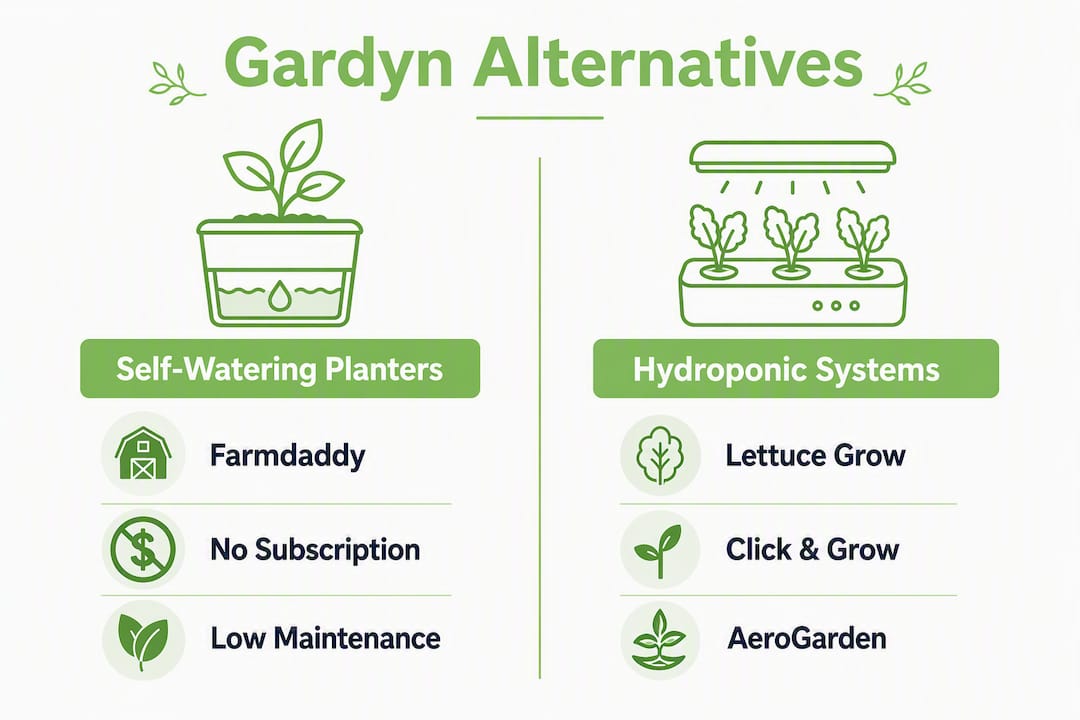
Price wins: Farmdaddy. Largest plant count per dollar: Lettuce Grow. Lowest maintenance commitment: Click & Grow. Best long-term cost: Farmdaddy (open seed, no subscription).
A closer look at each alternative
Farmdaddy self-watering planters
Farmdaddy takes a different approach than any hydroponic tower on this list. Instead of grow lights and nutrient pumps, it uses a patented self-watering container design that delivers moisture directly to each plant’s root zone. You plant with real soil and real seeds, which means no pod lock-in and no recurring membership.
Pros:
- No subscription, no proprietary pods, no app required
- Grows tomatoes, herbs, peppers, flowers, and more with open seeds
- Each container operates independently, so one thirsty plant doesn’t drain its neighbors
Cons:
- Requires natural light or a separate grow light (not included)
- Not a hydroponic system, so it won’t suit buyers specifically seeking water-culture growing
- Lower plant density than a vertical tower
Who should buy this: Anyone who wants to grow food at home without a recurring cost, a complicated setup, or a subscription. Especially good for busy households, travelers, and first-time gardeners. Check out container gardening tips to see how the system works in practice.
Lettuce Grow Farmstand
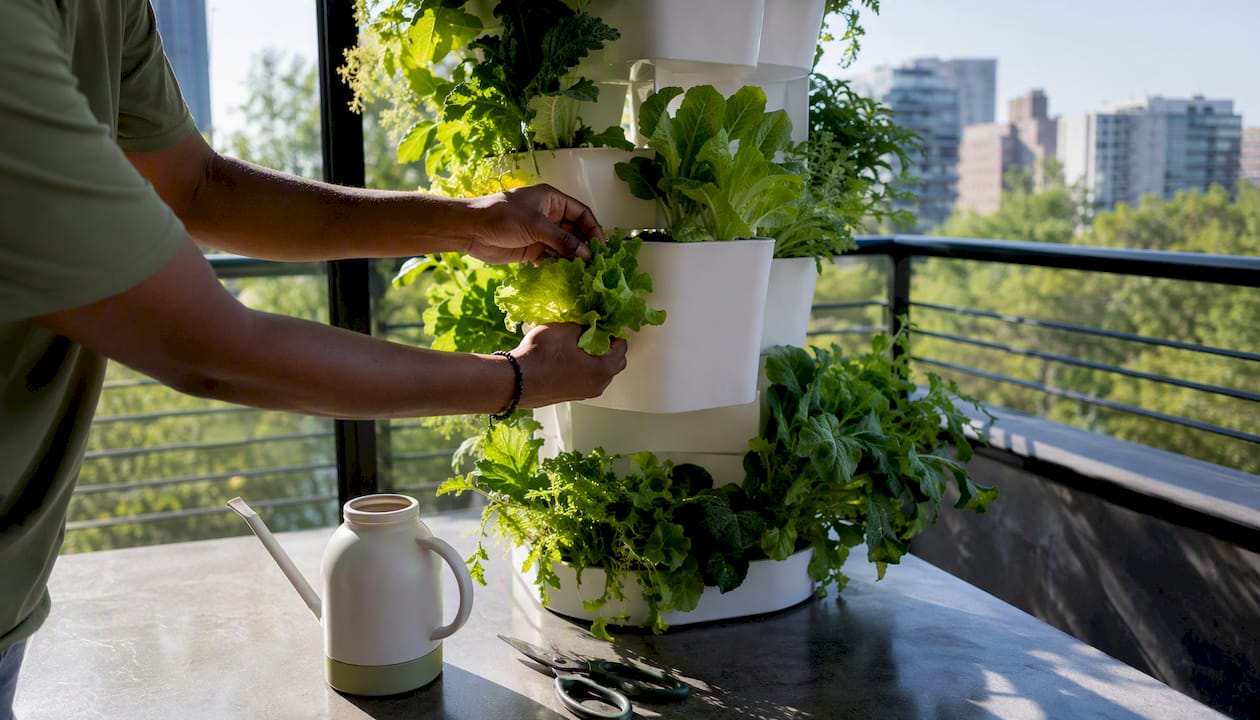
The Farmstand is a freestanding vertical tower that holds 12 to 36 pods and uses a recirculating pump to keep roots hydrated. It supports open-seed growing with the right net cups, which is a meaningful advantage over Gardyn’s proprietary cube system. The aesthetic is clean and modern, and it works well in a kitchen corner or on a patio.
Pros:
- Open-seed compatible, reducing long-term consumable costs
- Scales from 12 to 36 pods as your confidence grows
- No AI subscription required
Cons:
- Upfront cost is significant ($395–$695 depending on size)
- Requires some nutrient management knowledge
- Taller configurations need ceiling clearance
Who should buy this: Gardeners who want vertical density without Gardyn’s subscription model. A strong pick for leafy greens and herbs in a dedicated corner of the home.
Click & Grow Smart Garden 9
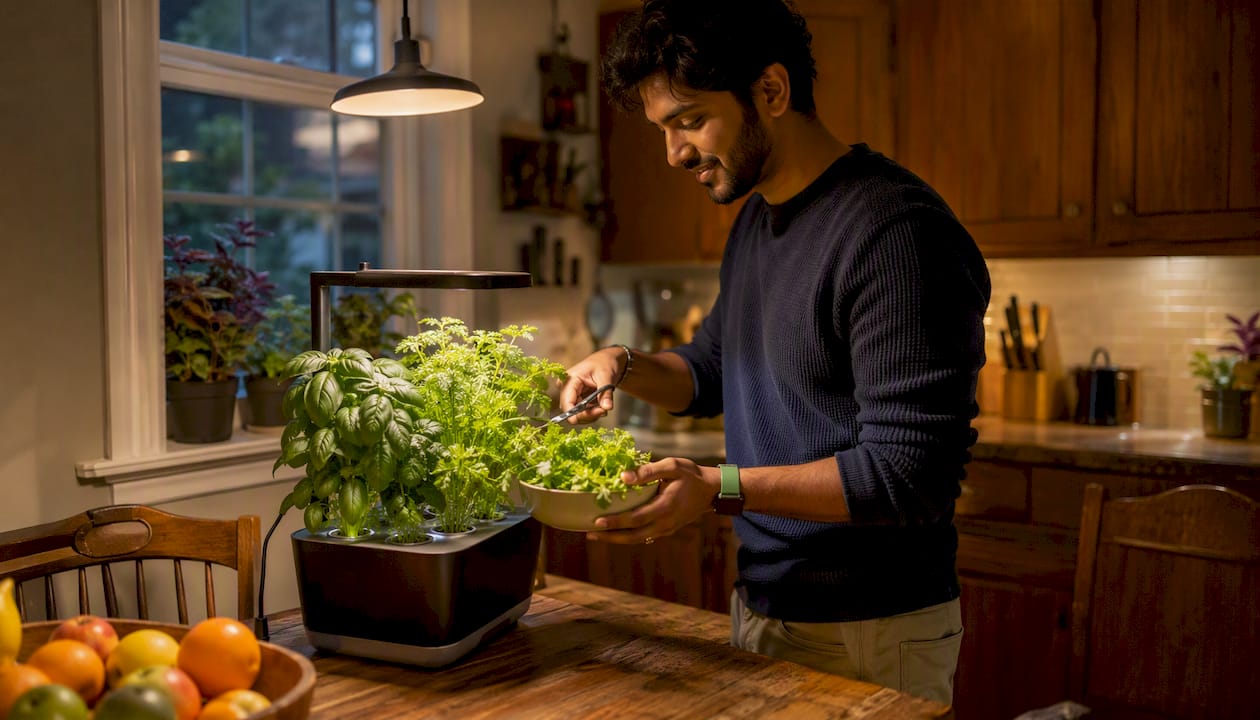
Click & Grow is the easiest entry point on this list. The Smart Garden 9 holds nine pods, waters itself via a wicking system, and includes a grow light. Setup takes about ten minutes. The tradeoff is that it uses proprietary Smart Soil pods, though third-party open-seed adapters are available if you want more variety.
Pros:
- Extremely beginner-friendly, minimal learning curve
- Compact countertop footprint
- 2-year warranty, widely available at U.S. retailers
Cons:
- Nine pods is a modest harvest
- Proprietary pods add up over time ($5–$8 each)
- Limited to smaller plants; not suitable for fruiting crops
Who should buy this: Someone buying their very first indoor garden who wants to succeed on the first try. Also a solid gift option.
AeroGarden Farm XL
Large-capacity hydroponic units like the AeroGarden Farm XL support taller fruiting plants by offering 30+ inches of grow height and circulating pump systems. That makes it the go-to for tomatoes, cucumbers, and peppers indoors. It holds 24 pods, connects to an app for light scheduling, and is compatible with open-seed media.
Pros:
- Best fruiting-crop performance on this list
- 24-pod capacity with serious grow height
- App-guided nutrient reminders without a mandatory subscription
Cons:
- Bulky footprint, not ideal for small apartments
- Higher electricity draw from powerful grow lights
- Upfront cost can reach $600
Who should buy this: Home cooks who want to grow cherry tomatoes or peppers year-round and have counter or floor space to spare.
Rise Gardens
Rise Gardens offers a modular system: start with a single-tier unit (12 pods) and add tiers as your garden grows. The app guides you through planting schedules and nutrient dosing, and the system is open-seed compatible. It’s a thoughtful middle ground between a beginner kit and a full vertical tower.
Pros:
- Modular design grows with your ambition
- App guidance without a locked subscription
- Good for families or school programs
Cons:
- Mid-range price with additional cost per tier
- Requires consistent nutrient management
- Larger configurations take up meaningful floor space
Who should buy this: Families or educators who want a system they can expand over time, with room to teach kids about growing food.
How do Gardyn-style towers differ from these alternatives?
Gardyn towers support up to 30 plants in a compact vertical footprint and pair AI monitoring with proprietary seed cubes and optional recurring memberships. That’s a genuinely impressive package for a micro-apartment where every square foot matters. But the tradeoffs are real, and they show up in your wallet over time.
Core tradeoffs to understand:
- Plant density vs. footprint: Vertical towers like Gardyn pack 20–30 plants into roughly 2 square feet of floor space. Countertop units typically hold 9–24 pods but sit on existing counter space without requiring floor clearance.
- AI automation vs. open-seed flexibility: Highly automated systems often limit nutrient customization and seed selection compared with open systems. You get less daily work but fewer choices about what you grow and how you grow it.
- Proprietary pods vs. DIY seeds: Gardyn’s seed cubes are convenient but expensive over time. Open-seed systems like Lettuce Grow, AeroGarden, and Farmdaddy let you buy seeds in bulk and choose any variety you like.
When a vertical tower makes sense: A Gardyn-style system is genuinely the right call for someone in a micro-apartment who wants maximum plant count per square foot and is comfortable paying a membership fee for hands-off AI monitoring.
When a countertop or self-watering planter wins: If you have a kitchen windowsill, a patio, or even a spare corner with decent light, a countertop kit or Farmdaddy self-watering planter gives you more growing variety, lower recurring costs, and no vendor lock-in. Units with hidden tanks and softer LED diffusion also tend to integrate more naturally into living spaces than exposed vertical towers, which is worth considering if aesthetics matter to you.
What does indoor gardening actually cost over 1 and 3 years?
Sticker price is only part of the story. Subscription fees and pod replacement can add significant additional costs per year compared with open-seed approaches, and that gap compounds quickly.
Estimated ownership costs by archetype
| Archetype | Upfront Cost | Year 1 Ongoing | 3-Year Total (Est.) |
|---|---|---|---|
| Budget countertop (Click & Grow 9) | $229–$299 | $5–$8 each (pods) | $600 |
| Vertical tower (Gardyn-style) | ~$695 | — | — |
| Farmdaddy self-watering planters | ~$395–$695 | — | — |
Yearly pod and membership costs materially change total cost of ownership calculations, and many shoppers don’t factor them in at the point of purchase. Over three years, a Gardyn-style tower can cost three to six times more than a self-watering planter setup.
Less obvious recurring costs to watch for:
- App subscription fees for AI features (some systems charge separately for premium monitoring)
- Proprietary pod shortages that force you to buy from a single vendor at full price
- Import duties and shipping surcharges if you order units not stocked in U.S. warehouses
- Replacement pumps, grow light bulbs, and reservoir cleaning supplies
Pro Tip: Switching from proprietary pods to open-seed sponges and bulk nutrients can cut consumable costs dramatically and expand the variety of plants you can grow. It requires a little DIY confidence, but the long-term savings are substantial.
How do you pick the right system for your space and goals?
The best alternative to Gardyn depends first on what you actually want to grow and how much time you’ll realistically spend on upkeep. Here’s a practical checklist to work through before you buy.
Selection criteria checklist:
- Space and footprint: Do you have floor space for a tower, or are you working with a countertop or windowsill?
- Plant types: Leafy greens and herbs thrive in almost any system. Fruiting crops (tomatoes, peppers) need grow height and stronger light.
- Maintenance time: Are you comfortable topping up nutrients weekly, or do you need something closer to set-and-forget?
- Subscription tolerance: Will you pay $15–$30/month for AI features, or do you prefer a one-time purchase?
- Seed flexibility: Do you want to grow unusual varieties, heirlooms, or specific cultivars? Open-seed systems are the only way to do that.
- Noise and light: Pump-based systems run continuously. Grow lights can be bright. Both matter in a bedroom or open-plan living space.
Red flags to avoid:
- Locked seed catalogs with no open-seed workaround and high per-pod prices
- No U.S.-based customer support or warranty service
- Thin or recent-only customer reviews with no long-term reliability data
- Vague replacement parts availability (what happens when the pump fails in year two?)
Three questions to ask before you buy:
- Are replacement parts (pumps, grow lights, reservoir seals) available separately, and what do they cost?
- What is the warranty period, and does the brand offer U.S.-based repair or replacement?
- If the company discontinues the seed pod line, can I still use the hardware with third-party seeds or media?
What does day-to-day setup and maintenance look like?
Knowing what you’re signing up for weekly makes a real difference in whether you’ll stick with a system. Here’s an honest breakdown by maintenance tier.
Low-maintenance (self-watering planters like Farmdaddy):
- Refill the water reservoir every 1–2 weeks depending on plant size and season
- Add liquid nutrients once every 2–4 weeks
- Check soil moisture and plant health during your regular watering check
- Estimated time: roughly 5–10 minutes per week
Medium-maintenance (countertop hydroponic kits, Lettuce Grow):
- Top up the water reservoir every 3–7 days
- Dose nutrients weekly or bi-weekly
- Clean the reservoir every 4–6 weeks to prevent algae buildup
- Replace grow media or seed pods as plants complete their cycle
- Estimated time: roughly 15–20 minutes per week
Higher-maintenance (large vertical towers, AeroGarden Farm XL):
- Monitor nutrient levels and pH 2–3 times per week for fruiting crops
- Full reservoir drain and clean every 4–6 weeks
- Prune and train plants regularly to manage grow height
- Replace grow light bulbs annually
- Estimated time: 20–30 minutes per week, more during fruiting cycles
Weekly and monthly maintenance at a glance:
- Weekly: Check water levels, inspect plants for pests or yellowing, confirm lights are on schedule
- Monthly: Full nutrient refresh, reservoir wipe-down, check pump function (hydroponic systems)
- Every 4–6 weeks: Deep reservoir clean for hydroponic systems; check root health
Pro Tip: For Farmdaddy self-watering planters, pairing your system with a water-saving watering routine and bulk-purchased organic nutrients keeps ongoing costs minimal and reduces plastic waste from single-use pods.
Which alternative should you actually buy?
Here’s the honest answer by buyer profile.
- Budget beginner: Start with Farmdaddy’s self-watering planter. Low upfront cost, no subscription, and you can grow herbs, tomatoes, and flowers with seeds from any garden center.
- Apartment cook with limited counter space: Click & Grow Smart Garden 9 fits neatly on a kitchen counter and grows fresh herbs reliably with almost no learning curve.
- Serious fruiting grower: AeroGarden Farm XL is the right call. The grow height and active nutrient circulation are purpose-built for tomatoes and peppers.
- Design-conscious shopper: Lettuce Grow Farmstand has the cleanest aesthetic of the vertical options and avoids Gardyn’s subscription model.
- School or family program: Rise Gardens’ modular design makes it easy to expand and involves kids in the growing process naturally.
For most readers, Farmdaddy is the practical first choice. It costs less upfront, costs almost nothing to run month-to-month, and gives you the freedom to grow whatever you want with seeds from any source. If you specifically need AI monitoring and maximum plant density in a tiny apartment, a vertical tower earns its premium. But for the majority of home gardeners, the subscription and pod costs of a tower system add up faster than the harvest justifies.
Warranty note: Click & Grow offers the longest standard warranty at two years. Most hydroponic systems carry one-year coverage. Farmdaddy’s warranty is handled directly through farmdaddy.com, with U.S.-based support.
Key Takeaways
For most home gardeners, the best Gardyn alternative is a low-cost, open-seed system that avoids subscription lock-in and delivers reliable harvests without a steep learning curve.
| Point | Details |
|---|---|
| Open seed saves money | Proprietary pod systems can add significant annual expenses, whereas open-seed alternatives have much lower recurring costs. |
| Vertical towers suit micro-apartments | Systems supporting 20–30 plants in 2 square feet of floor space make sense only when density is the priority. |
| Compare 3-year costs, not sticker price | A tower with pods and a membership can cost substantially more over three years compared to a self-watering planter. |
| Match automation to your lifestyle | Highly automated systems restrict seed choice and nutrient control; choose the level of hands-on care you’ll actually maintain. |
| Farmdaddy for most shoppers | Farmdaddy’s self-watering planters offer the lowest recurring costs, open-seed flexibility, and straightforward U.S. availability. |
As of July 2026, the Click & Grow Smart Garden 9 is widely available for $229–$299 at major retailers, noticeably lower than the $395–$695 range listed for other systems.
Why Farmdaddy works for so many Gardyn shoppers
The appeal of Gardyn is real: a sleek tower, AI monitoring, and fresh greens without much thought. But after looking closely at the numbers and the day-to-day reality, the subscription and pod model is where many shoppers feel the pinch. Most people don’t need AI to grow basil or cherry tomatoes. What they need is a system that works reliably, doesn’t demand a monthly fee, and lets them grow what they actually want to eat.
Farmdaddy’s patented self-watering design addresses exactly that. Each container manages its own moisture independently, so a thirsty tomato plant doesn’t compete with a delicate herb. Customers consistently highlight how little daily attention the system needs, which is the real promise of any “smart” garden. And because it works with open seeds and standard soil, you’re never dependent on one company’s pod catalog. For busy households, travelers, and anyone who wants fresh food at home without the complexity, that combination is hard to beat.
Farmdaddy: fresh food at home without the monthly bill
If you’ve been comparing hydroponic towers and feeling like the subscription costs don’t quite add up, you’re not alone. Farmdaddy’s self-watering garden system gives you the same goal, fresh herbs, vegetables, and fruits at home, without the pod lock-in or recurring membership fees that come with most tower systems.
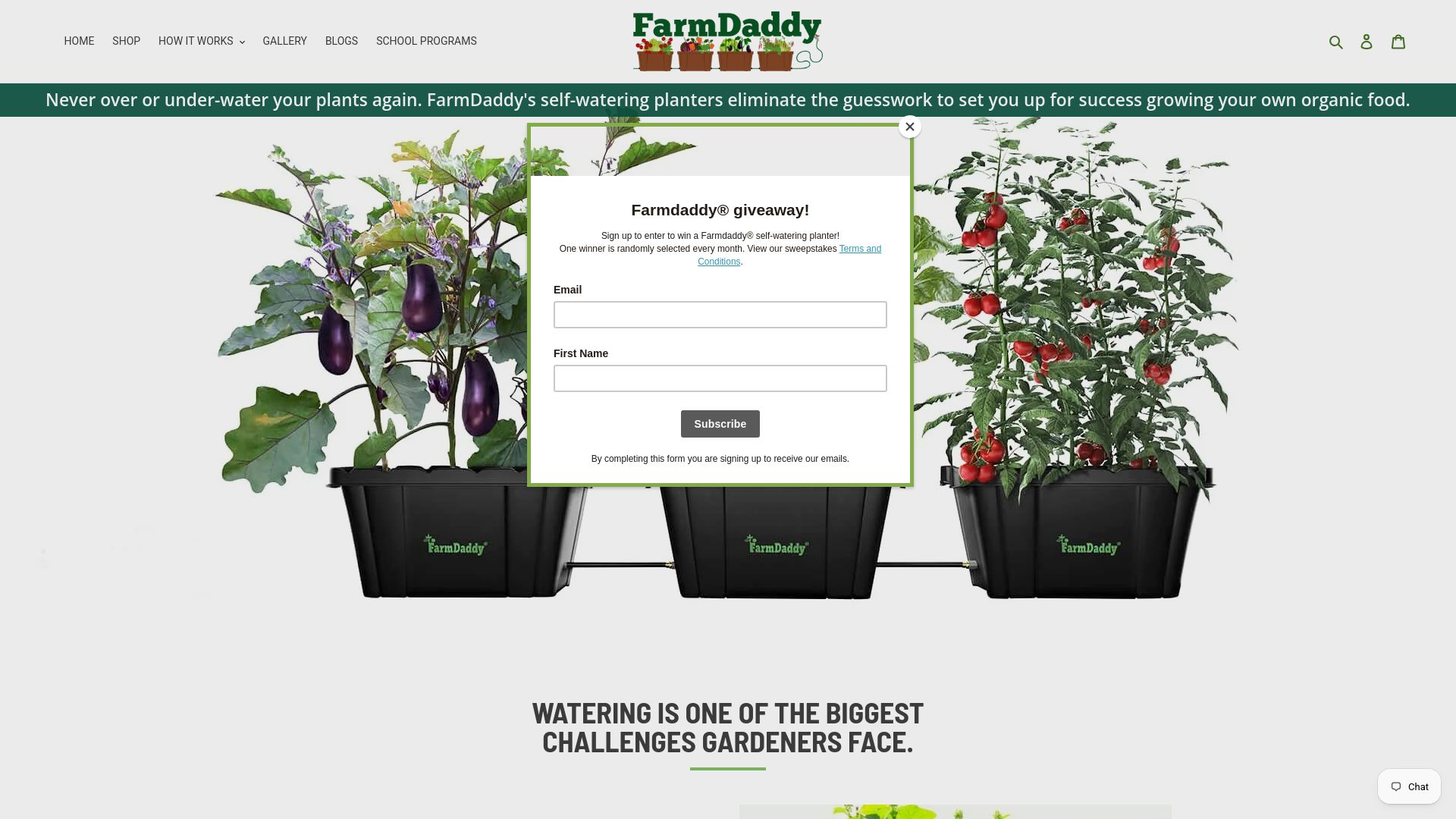
The Farmdaddy 2-Planter Self-Watering Garden System is a practical starting point: compact enough for a patio or balcony, open to any seeds you choose, and designed so each planter manages its own water independently. If you want more growing capacity, the self-watering garden box scales up without scaling up your monthly costs. Browse the full range at farmdaddy.com and find the setup that fits your space and your goals.
Useful sources and further reading
- Best Indoor Garden Systems: I’ve Been Testing All Year (2026) | WIRED — Hands-on testing of leading indoor garden systems with honest assessments of automation, aesthetics, and long-term usability.
- Gardyn Review 2025: Pros, Cons, and Hidden Costs — Detailed breakdown of Gardyn’s subscription model, pod costs, and automation tradeoffs from a long-form reviewer.
- Gardyn Home Kit 4.0 Review | Smart Home Explorer — Expert consensus score and closest alternative recommendations for the Gardyn Home Kit 4.0.
- Historical Hydroculture | Wikipedia — Background on the history and science of water-based growing methods for context on how modern hydroponic systems evolved.

